

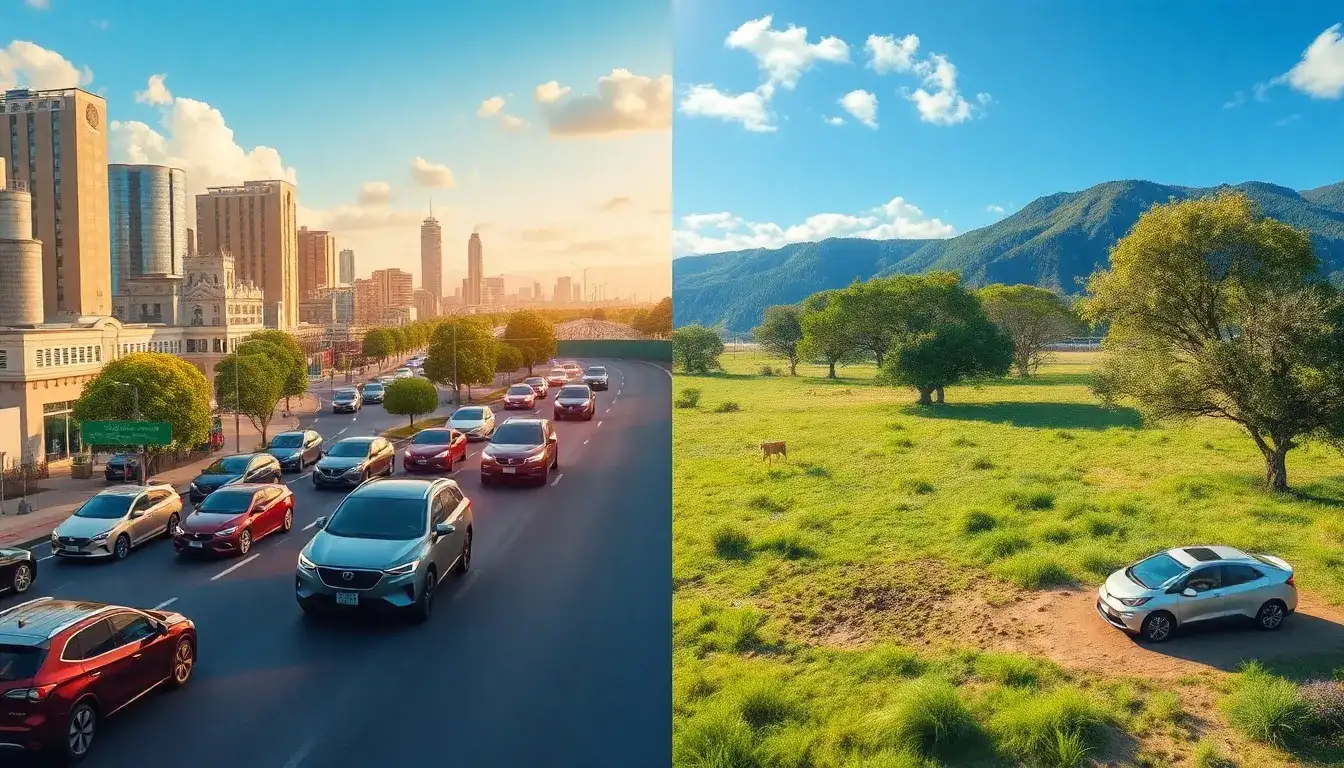
Both Hybrid Electric Vehicles (HEVs) and Plug-in Hybrid Electric Vehicles (PHEVs) offer reduced emissions compared to traditional gasoline-powered vehicles. Their performance in urban versus rural environments can be influenced by several factors.
Overview of HEVs and PHEVs
- Hybrid Electric Vehicles (HEVs): These vehicles use a gasoline engine and an electric motor. The battery is charged through regenerative braking and the engine. HEVs are designed to optimize fuel efficiency without the need for plug-in charging.
- Plug-in Hybrid Electric Vehicles (PHEVs): PHEVs have a larger battery that can be charged from an external power source. They operate primarily on electric power until the battery is depleted, at which point they switch to hybrid mode, similar to HEVs.
Emissions in Urban vs. Rural Environments
Urban Environments:
- HEVs: In urban settings, HEVs can be efficient as they often operate in conditions where their regenerative braking and electric assist capabilities are maximized. This results in lower emissions compared to conventional vehicles.
- PHEVs: PHEVs can also benefit from electric-only modes in urban areas, reducing emissions significantly during daily commutes.
Rural Environments:
- HEVs: In rural areas, HEVs may see less benefit from regenerative braking due to fewer stop-and-go driving conditions. However, they still offer better fuel efficiency and lower emissions than non-hybrid vehicles.
- PHEVs: PHEVs in rural settings may rely more on their gasoline engines as electric-only ranges may be exceeded more quickly on longer trips. Despite this, they generally still offer lower emissions compared to conventional vehicles.
Key Points on Emissions:
- Emissions Reduction: Both HEVs and PHEVs offer lower tailpipe emissions compared to gasoline vehicles.
- Lifecycle Emissions: PHEVs can have lower lifecycle greenhouse gas emissions, especially due to smaller batteries and less dependency on critical minerals.
- Grid Dependency: The emissions performance of both types depends on the grid’s carbon intensity and how much of the driving is done using the electric motor versus the gasoline engine.
Overall, both HEVs and PHEVs can provide significant emissions reductions in both urban and rural environments, though the specific benefits can vary based on driving patterns and the local energy mix.
Original article by NenPower, If reposted, please credit the source: https://nenpower.com/blog/how-do-hevs-and-phevs-perform-in-terms-of-emissions-in-urban-vs-rural-environments/

