

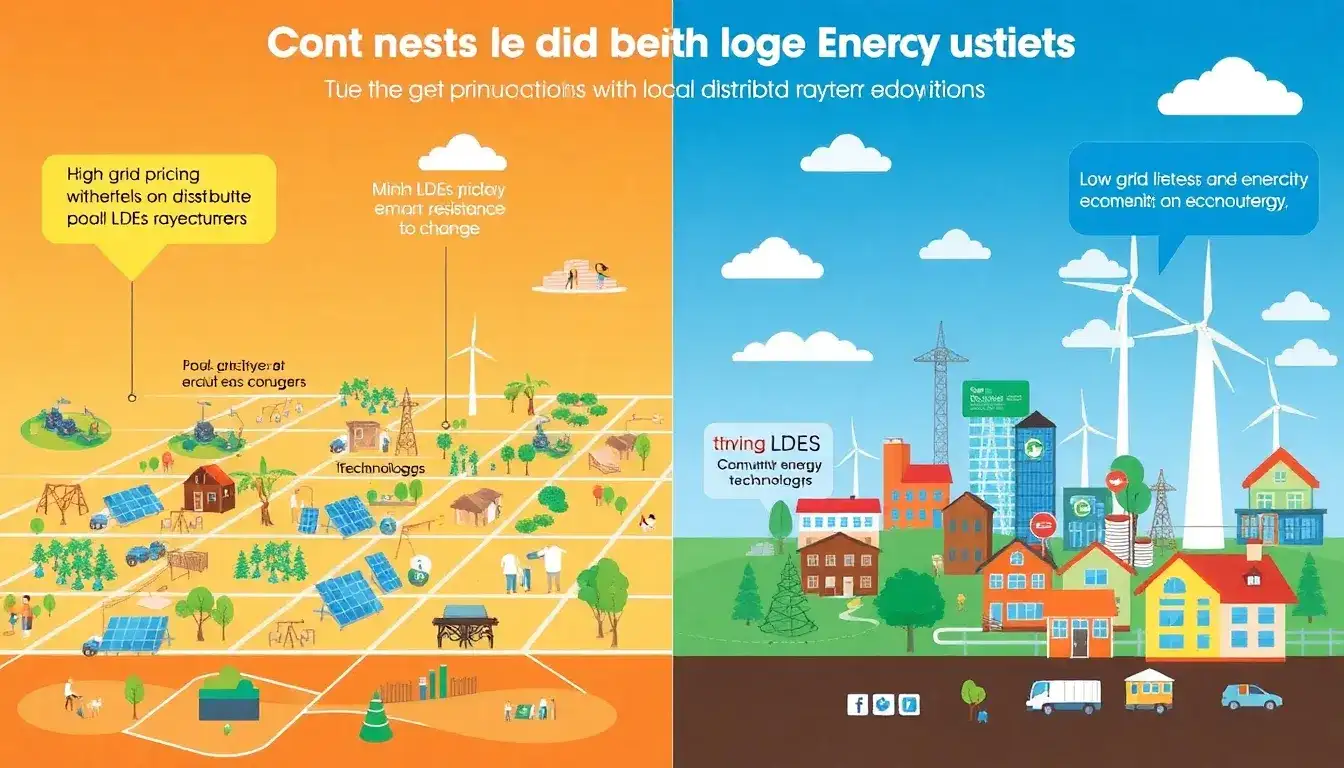
Grid pricing policies significantly influence the adoption of Long Duration Energy Storage (LDES) by shaping the economic incentives and market conditions under which LDES projects become viable and attractive investments.
Impact of Grid Pricing Policies on LDES Adoption
1. Market Mechanisms and Pricing Signals
Current electricity markets often undervalue the multiple services provided by LDES, such as energy arbitrage, frequency regulation, capacity adequacy, and grid resilience. Without proper grid pricing policies that create new market products and tariffs compensating LDES for these services, the full economic value of LDES cannot be realized. Effective market mechanisms that transparently and predictably reward these services encourage investment and deployment of LDES technologies.
2. Reduction of Price Volatility and Better Utilization
LDES can help reduce electricity price volatility by storing excess renewable energy when prices are low and discharging it when prices are high. Grid pricing policies that allow LDES to capture this arbitrage value provide a direct revenue stream and improve the business case for LDES deployment.
3. Regulatory Reforms and Grid Integration
Outdated grid interconnection rules and cumbersome permitting can hinder LDES adoption. Grid pricing policies coupled with streamlined regulatory frameworks facilitate easier integration of LDES into grid planning and operations, treating storage as a cost-effective alternative to traditional infrastructure upgrades, thereby accelerating adoption.
4. Procurement Mechanisms to Manage Costs and Risks
To manage utility and ratepayer costs while encouraging LDES investment, grid pricing frameworks can incorporate procurement programs with price floors, reverse auctions, or clean transition tariffs (CTTs). Such approaches can help balance cost sharing and price discovery, making LDES projects financially viable over the long term.
5. Economic and Environmental Benefits Encouraged by Pricing Policies
Regions with proactive and robust LDES pricing and regulatory policies tend to achieve higher renewable penetration at lower system costs. This reflects how grid pricing policies that value long-duration storage support decarbonization goals and grid resilience while fostering economic growth and job creation in the LDES sector.
6. Cost Reduction and Performance Improvement Incentives
Grid pricing policies that reward improved round-trip efficiencies and longer durations of storage encourage technology innovation and cost reductions that are critical for LDES commercial liftoff. For instance, targeted incentives aligned with cost and performance improvement goals (like a 45-55% cost reduction and efficiency gains by 2030) can accelerate LDES adoption at scale.
Summary Table: How Grid Pricing Policies Affect LDES Adoption
| Aspect | Impact on LDES Adoption |
|---|---|
| Market Pricing Signals | Proper valuation of LDES services encourages investment |
| Price Volatility Management | Enables revenue from energy arbitrage, stabilizing returns |
| Regulatory Frameworks | Simplifies interconnection and planning, accelerating deployment |
| Procurement Mechanisms | Shares risks/costs, encourages competitive LDES projects |
| Economic & Environmental | Supports higher renewables integration and economic growth |
| Cost & Performance Incentives | Drives technology improvements and cost reductions |
In conclusion, grid pricing policies that transform electricity markets to fairly compensate LDES for its diverse grid services, streamline regulatory processes, and incorporate intelligent procurement mechanisms are essential levers to accelerate LDES adoption. Such policies unlock the economic and environmental benefits of LDES while fostering technology advancement and scaling the storage needed for a net-zero grid by 2050.
Original article by NenPower, If reposted, please credit the source: https://nenpower.com/blog/how-do-grid-pricing-policies-impact-the-adoption-of-ldes/

