

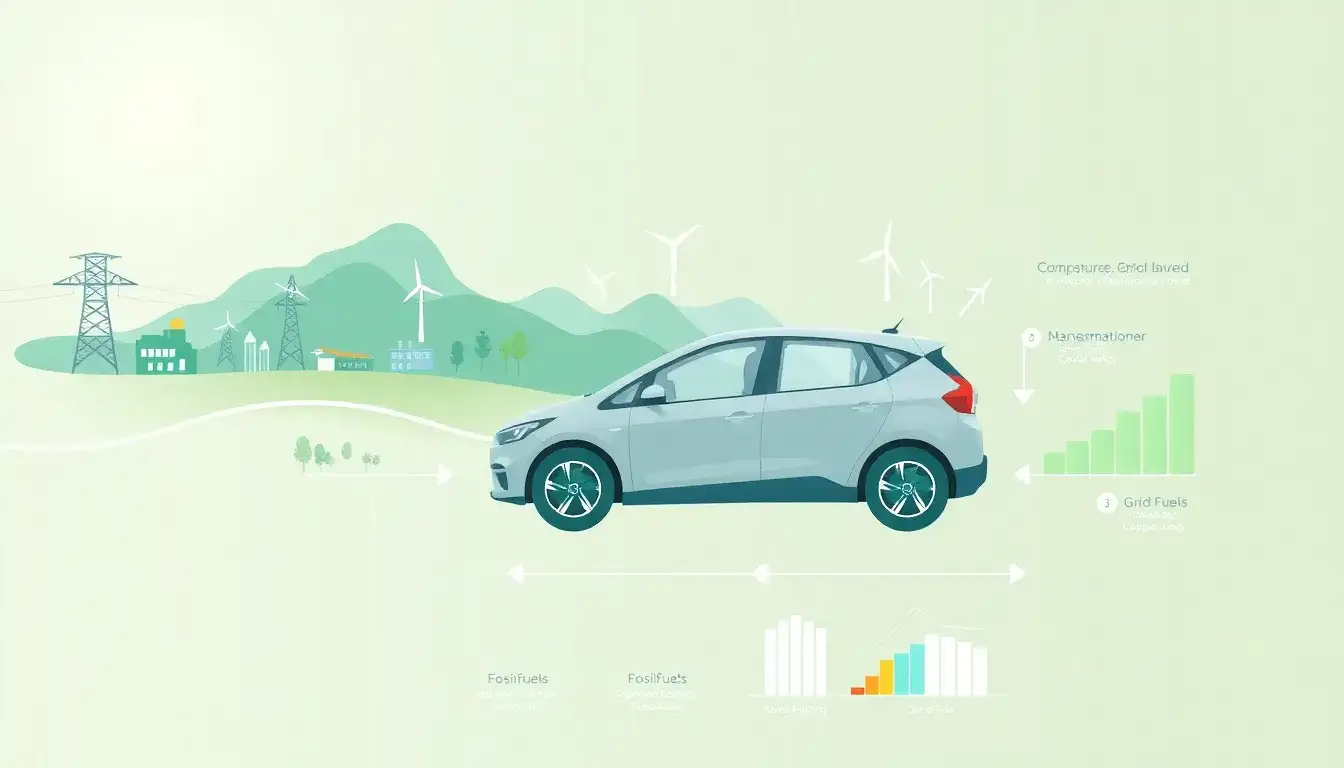
Grid emissions significantly affect the lifecycle greenhouse gas (GHG) emissions of electric vehicles (EVs), influencing how environmentally beneficial EVs are compared to internal combustion engine vehicles (ICEVs).
Impact of Grid Emissions on EV Lifecycle Emissions
- Electricity Generation Emissions Matter: While EVs produce zero tailpipe emissions during operation, the electricity used to charge them often comes from power plants that may emit greenhouse gases depending on the energy sources (coal, natural gas, renewables, nuclear) used in the grid. Consequently, regions with cleaner electricity grids (high shares of renewables or nuclear power) enable EVs to achieve a much greater life cycle emissions advantage over gasoline or diesel vehicles. Conversely, in areas with high-emission electricity generation (e.g., coal-heavy grids), the life cycle emissions benefits of EVs are less pronounced and in extreme cases may approach or exceed those of efficient hybrid vehicles.
- Lifecycle Emissions Comparison: Studies show that for medium-size cars over typical lifetimes (~200,000 km or 15 years), battery electric vehicles (BEVs) emit about half the emissions of equivalent ICEVs on average globally, largely due to lower well-to-wheel emissions in grids with moderate to low carbon intensity. When grids decarbonize over time, these benefits increase further. For example, emissions savings can rise by about 5 percentage points in more aggressive decarbonization scenarios, leading to BEV lifetime emissions roughly three times lower than ICEVs by 2035 in some projections.
- “Carbon Parity” or Payback Time: Due to the higher emissions embedded in the production of EVs and especially their batteries, EVs initially have a higher carbon footprint than conventional vehicles. However, once in use, EVs rapidly “pay back” this initial carbon debt through lower operating emissions. Typically, an EV reaches carbon parity with an ICE vehicle in about one year of driving (~15,000 miles or 24,000 km) when charged on average U.S. electricity grids. This payback period can extend beyond five years if the EV is charged primarily from coal-heavy grids.
- Grid Decarbonization Efforts Enhance EV Benefits: As electricity grids decarbonize by increasing renewables and reducing fossil fuel dependence, the lifecycle emissions of EVs improve substantially. For instance, forecasts indicate well-to-tank emissions (emissions associated with producing and delivering electricity) could fall by 25-35% by 2035 under current policies and even up to 75% under more ambitious decarbonization scenarios. This progress not only reduces the operational emissions but also lowers emissions embedded in battery production by about 10% by 2035.
Summary
- EV lifecycle emissions depend heavily on the carbon intensity of the power grid used for charging.
- Cleaner grids maximize EV environmental benefits, while coal- or fossil-heavy grids diminish them.
- EVs have higher manufacturing emissions but can offset these within a year on average grids.
- Ongoing grid decarbonization will further increase the emissions advantage of EVs over ICEVs over time.
Thus, grid emissions are a crucial factor in evaluating the true climate impact of electric vehicles, emphasizing the synergy between EV adoption and clean energy transition for maximizing emissions reductions.
Original article by NenPower, If reposted, please credit the source: https://nenpower.com/blog/how-do-grid-emissions-impact-the-lifecycle-emissions-of-evs/

