

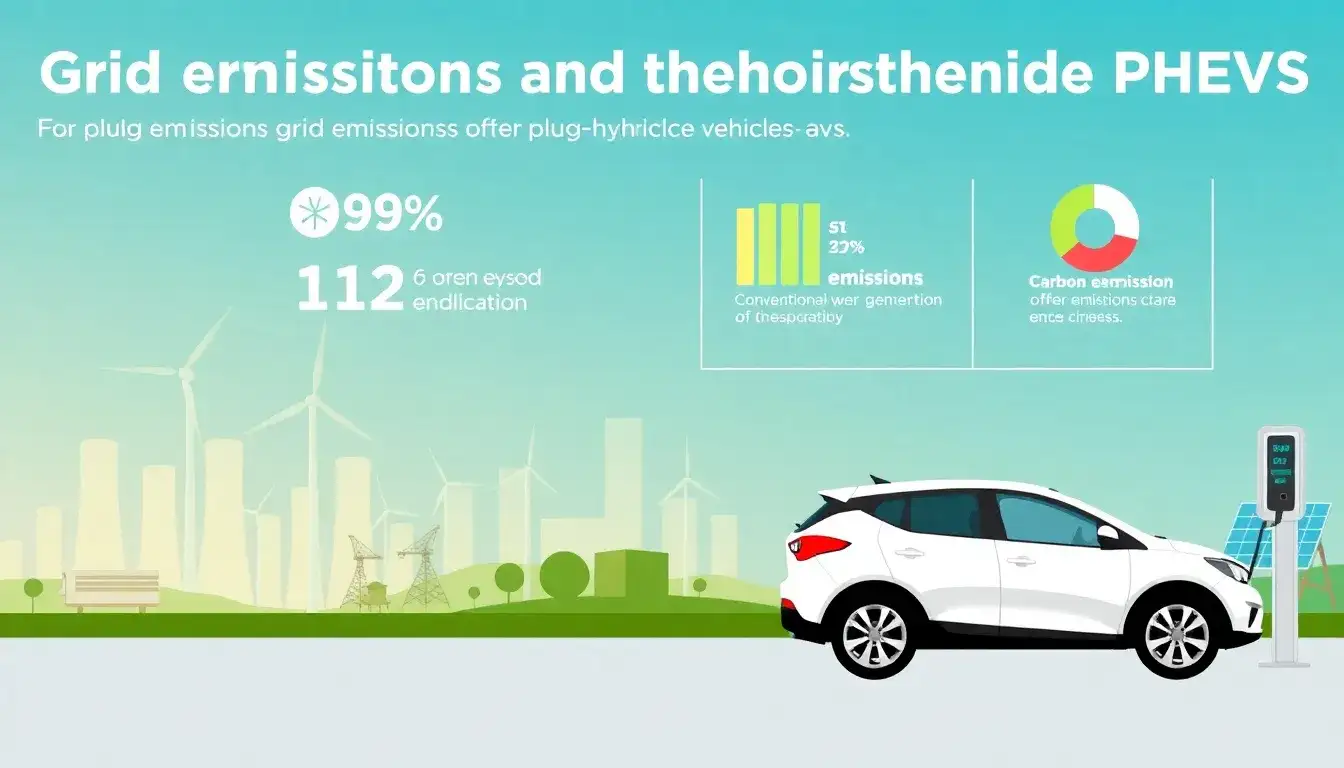
Grid emissions have a significant influence on the overall emissions profile of plug-in hybrid electric vehicles (PHEVs) because the emissions depend not only on the vehicle operation but also on how the electricity used to charge the batteries is generated. Here is a detailed explanation:
How Grid Emissions Impact PHEVs Emissions Profile
- PHEVs emit fewer direct tailpipe emissions than conventional vehicles (CVs) or hybrid electric vehicles (HEVs) because they can operate on electricity for part of their driving, which produces zero tailpipe emissions. However, the total emissions depend on the generation mix of the electricity grid from which they charge.
- Electricity generation emissions vary by region and time. If the grid relies heavily on fossil fuels such as coal or natural gas, charging a PHEV causes indirect emissions at the power plant. Conversely, grids with a higher share of renewables or nuclear power lead to substantially lower emissions for the same amount of electricity used to charge PHEVs.
- Charging timing and grid flexibility matter. Studies have shown that managing when PHEVs charge can optimize electric generator dispatch, increasing overall efficiency and reducing emissions. For example, on the Texas grid, flexible charging schedules can increase generator efficiency and may even reduce net nitrogen oxides (NOx) emissions during ozone season despite the additional electricity demand from PHEVs.
- Vehicle-to-Grid (V2G) services can further lower emissions. By providing grid services like spinning reserves and energy storage, PHEVs can help balance the grid and reduce the need for fossil-fueled peaking plants, thereby reducing CO2, SO2, and NOx emissions further.
- Lifecycle emissions reductions depend on grid carbon intensity. Overall, charging from the grid typically results in PHEVs having lower CO2 and other pollutant emissions over their full fuel cycle than CVs and HEVs. For example, the U.S. average results show substantial lifetime emissions reductions with PHEVs compared to internal combustion vehicles.
- Long-term grid impacts with large PHEV adoption. Scenario analyses for 2030 with millions of PHEVs indicate that their electricity demand could impact grid operation and emissions. The grid’s ability to accommodate this load efficiently and with a cleaner generation mix will be critical to maximizing emissions benefits from PHEVs.
Summary
The emissions profile of PHEVs is significantly influenced by the emissions characteristics of the electricity grid from which they charge. Cleaner grids with more renewables and nuclear power yield greater emissions benefits when charging PHEVs. Additionally, smart charging and vehicle-to-grid capabilities can improve grid efficiency and further reduce emissions. Therefore, the environmental benefits of PHEVs depend greatly on the grid’s energy mix and how PHEVs integrate into grid operations.
Original article by NenPower, If reposted, please credit the source: https://nenpower.com/blog/how-do-grid-emissions-impact-the-emissions-profile-of-phevs/

