

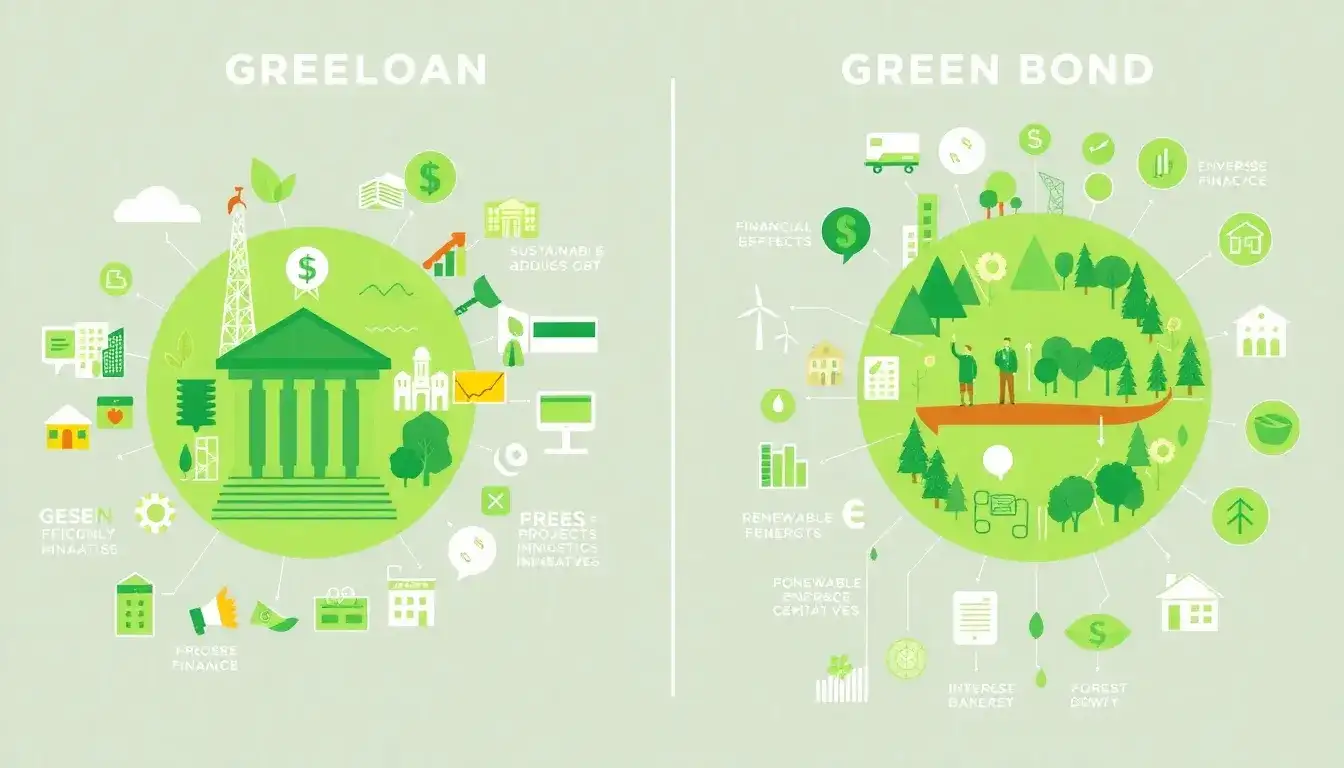
Differences Between Green Loans and Green Bonds
1. Source of Funding
- Green Bonds: These are publicly traded securities where funds are raised from the investor market. Investors buy bonds, providing capital for green projects.
- Green Loans: These are typically provided by banks or financial institutions directly to borrowers. They are not traded like bonds but are agreements between two parties.
2. Use of Proceeds
- Both green loans and green bonds are used exclusively for financing or refinancing green projects, such as renewable energy or energy-efficient retrofits.
- However, because loans are private agreements, their use of proceeds may be less publicly visible than bonds, which have market disclosure requirements.
3. Market Characteristics
- Green Bonds: These are widely traded in the capital markets, providing a broader investor base and higher liquidity.
- Green Loans: They are not traded, making them more suitable for private financing needs without the need for market liquidity.
4. Regulatory Framework
- Both are guided by voluntary principles: the Green Bond Principles (GBP) for green bonds, and the Green Loan Principles for green loans.
- Both sets of principles ensure transparency and proper allocation of funds to environmentally beneficial projects, though they differ in their market context.
Summary
Green loans and green bonds serve similar purposes—funding green projects—but differ in their funding sources, market characteristics, and regulatory frameworks. Green bonds provide broader market access and liquidity, while green loans are private agreements between lenders and borrowers.
Original article by NenPower, If reposted, please credit the source: https://nenpower.com/blog/how-do-green-loans-differ-from-green-bonds/

