

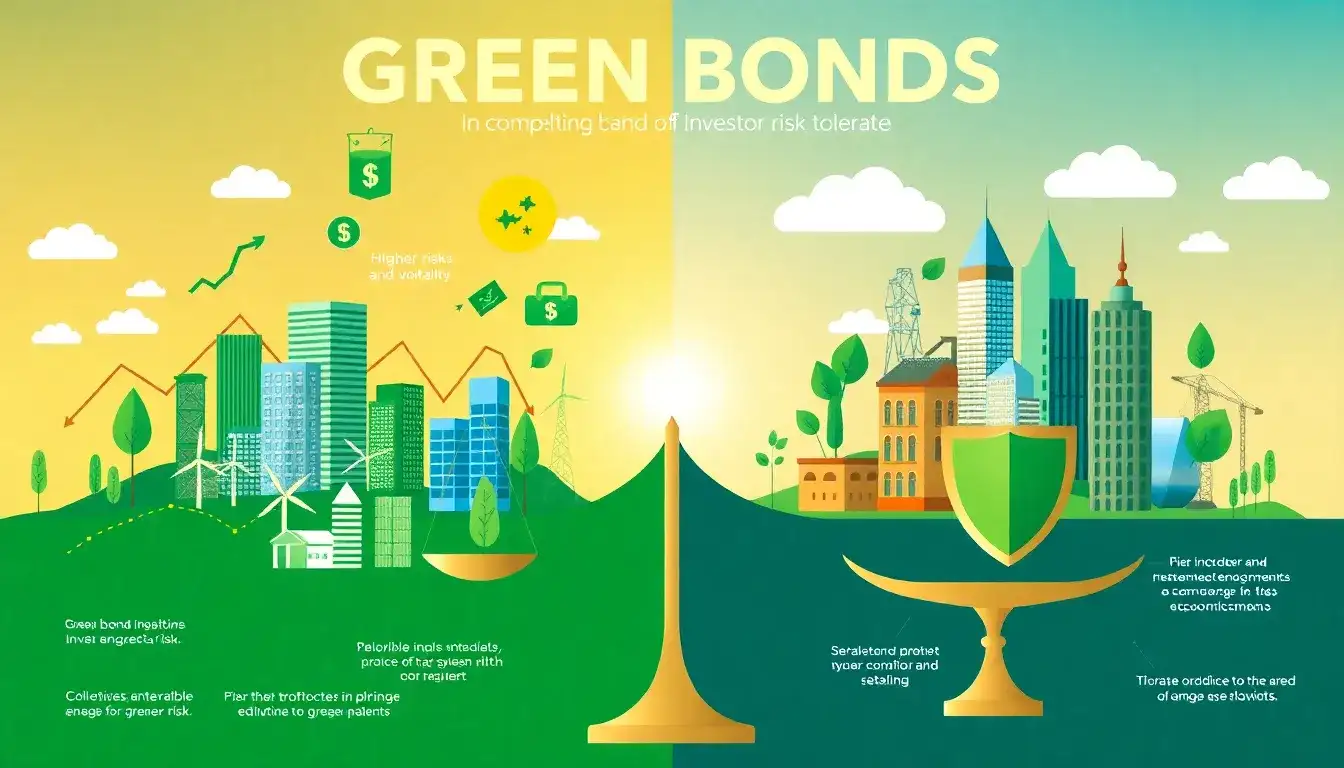
Impact of Green Bonds on Investor Risk Tolerance
Green bonds are a type of fixed-income security specifically designed to finance environmentally beneficial projects, such as renewable energy and sustainable infrastructure. They have distinct implications for investor risk tolerance, primarily through their risk profile and performance characteristics.
Reduced Risk Profile
- Lower Volatility: Green bonds generally exhibit lower volatility compared to conventional bonds, particularly in times of economic turmoil. This reduced volatility makes them attractive to investors seeking stable returns and minimizing drastic changes in portfolio value over time.
- Stability and Resilience: The focus on environmentally friendly projects often generates stable cash flows, which can act as a buffer against economic downturns. This stability enhances the appeal of green bonds as a safer investment option.
- Lower Default Rates: Studies indicate that green bonds have lower default rates compared to traditional bonds, likely due to their alignment with sustainable projects that attract responsible investors. This reduced credit risk adds to the overall stability of green bonds.
Investment Strategy Considerations
- Diversified Portfolios: Incorporating green bonds into a diversified portfolio can reduce overall risk. They complement traditional bond allocations by offering lower volatility and similar returns, which helps maintain portfolio stability during market fluctuations.
- Risk-Adjusted Returns: Green bonds can enhance risk-adjusted returns by providing consistent performance while reducing volatility. This characteristic is beneficial for investors aiming to balance financial goals with environmental responsibility.
- Greenwashing Risk: Despite their benefits, investors must be aware of potential “greenwashing” risks, where proceeds might not be used as intended. Ensuring clear definitions and transparent use of proceeds is crucial to mitigate this risk.
Long-Term Performance and Market Trends
- Historical Performance: Since their inception in 2007, green bonds have shown strong performance, often comparable to traditional bonds and even outperforming equities in certain periods like the COVID-19 pandemic.
- Growing Market Demand: The green bond market has grown significantly, driven by increased investor appetite for sustainable investments. However, liquidity can be a challenge in smaller markets.
- Regulatory Support: Green bonds are supported by government initiatives and regulatory frameworks that encourage sustainable investments, further enhancing their appeal as stable assets.
In summary, green bonds can help investors manage risk tolerance by offering a more stable and lower-volatility investment option compared to traditional bonds. While they face challenges such as greenwashing and liquidity risks, their alignment with environmental goals and stable performance make them an attractive addition to diversified portfolios.
Original article by NenPower, If reposted, please credit the source: https://nenpower.com/blog/how-do-green-bonds-impact-investor-risk-tolerance/

