

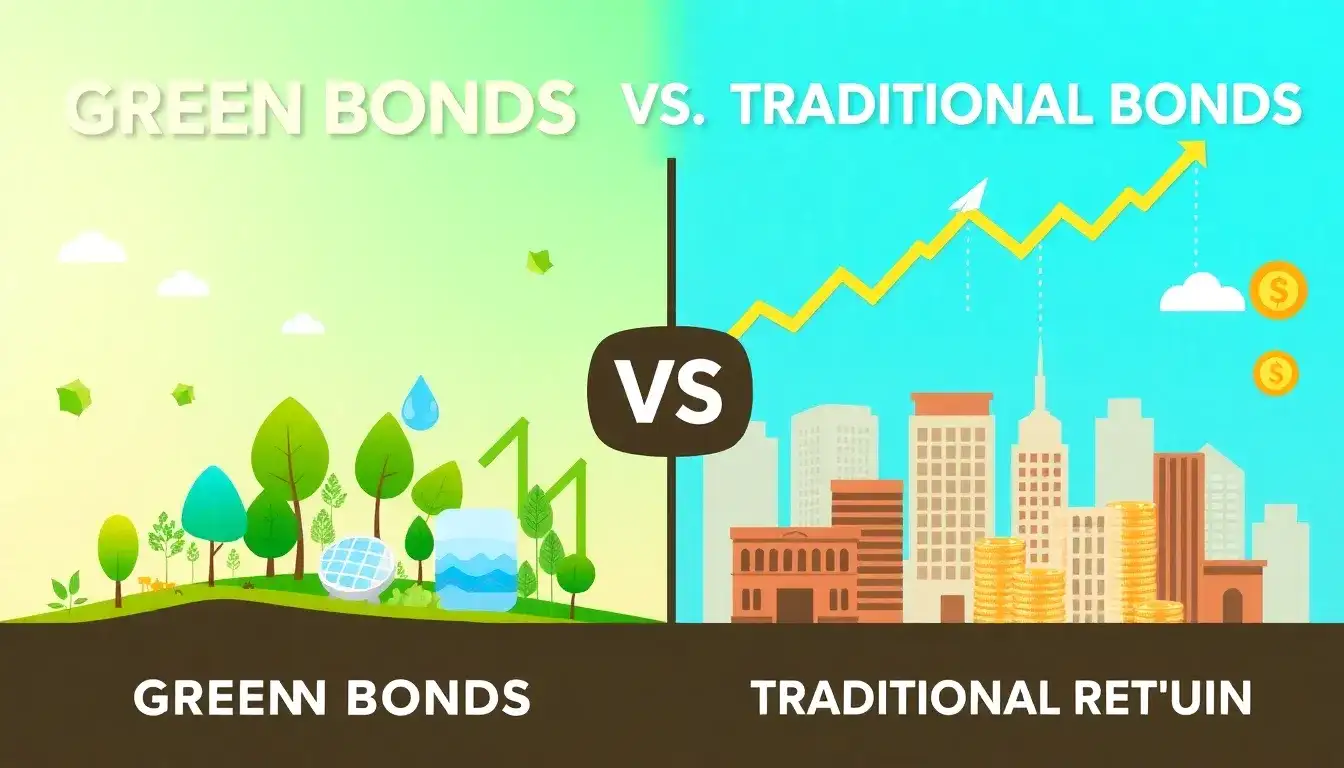
Green bonds and traditional bonds have several key differences in terms of risk and return, despite sharing similarities in core bond features.
Risk
- Credit Risk: Both types of bonds typically have the same credit risk since they are issued by the same entity. For example, a municipality issuing a green bond and a traditional bond shares the same credit risk for both instruments.
- ESG Risks: Green bonds often require greater transparency regarding environmental, social, and governance (ESG) risks compared to traditional bonds. This heightened transparency can influence investor perceptions of risk.
Return
- Yield: Green bonds often trade at lower yields compared to traditional bonds from the same issuer. This phenomenon is known as the “greenium,” which reflects investor willingness to accept lower returns in exchange for environmental benefits. However, the size of this greenium can vary significantly and is not always statistically significant.
- Performance: Studies have shown mixed results regarding the performance of green bonds versus traditional bonds. Some find no significant difference in yields when adjusted for features like callability and tax differences. Others suggest that green bonds may outperform conventional bonds under specific conditions, such as in markets with high demand for ESG-focused investments.
Market Dynamics
- Demand and Supply: The demand for green bonds is strong due to investor appetite for sustainable investments, which can drive down yields relative to traditional bonds.
- Regulatory Environment: Encouragement from regulators and central banks also supports the growth of the green bond market, potentially influencing investor preferences and market dynamics.
In summary, green bonds generally offer similar credit risk profiles to traditional bonds but may involve additional ESG considerations and potentially lower yields due to investor demand for sustainable investments.
Original article by NenPower, If reposted, please credit the source: https://nenpower.com/blog/how-do-green-bonds-compare-to-traditional-bonds-in-terms-of-risk-and-return/

