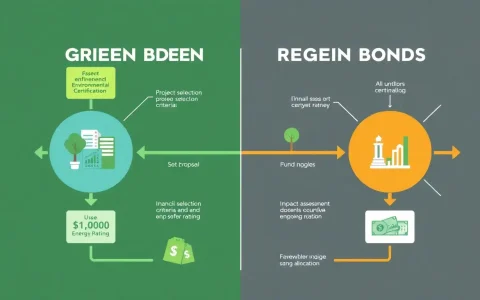
Green bonds and traditional bonds generally offer similar returns when it comes to financial yields, especially if they share the same credit ratings and maturities. The return on investment for both types is more influenced by the issuer’s credit quality and prevailing market interest rates than by their “green” or traditional nature.
Key Similarities and Differences
- Yield Similarity: Both green and traditional bonds typically provide yields that are comparable to their counterparts with similar credit ratings and maturities. For instance, if a green bond and a traditional bond have the same credit rating and term, they will likely offer similar interest rates.
- Credit Quality and Market Rates: The financial returns on both types of bonds are significantly influenced by the issuer’s creditworthiness and the prevailing interest rate environment in the market. This means that the green aspect does not inherently provide a different yield profile than traditional bonds.
- Investment Appeal: Green bonds might offer additional appeal to environmentally conscious investors who value supporting projects with environmental benefits. However, this appeal does not necessarily translate into higher financial returns compared to traditional bonds.
- Market Dynamics: Like traditional bonds, the prices of green bonds can fluctuate based on changes in interest rates. If interest rates rise, existing bonds (both green and traditional) may trade at a discount to adjust their yields to match the market conditions, and vice versa if rates fall.
Decision Factors
When choosing between green and traditional bonds, investors might consider factors such as:
- Environmental Impact: For investors prioritizing sustainability, green bonds provide a way to support environmentally friendly projects.
- Financial Return: Both types offer similar financial returns based on their credit and market conditions.
- Market Conditions: Investors should consider the overall economic environment and interest rate trends when deciding whether to buy, hold, or sell bonds.
In summary, green bonds do not inherently provide higher or lower financial returns compared to traditional bonds. The decision to invest in green bonds is often influenced by non-financial considerations such as environmental impact.
Original article by NenPower, If reposted, please credit the source: https://nenpower.com/blog/how-do-green-bonds-compare-to-traditional-bonds-in-terms-of-returns/