

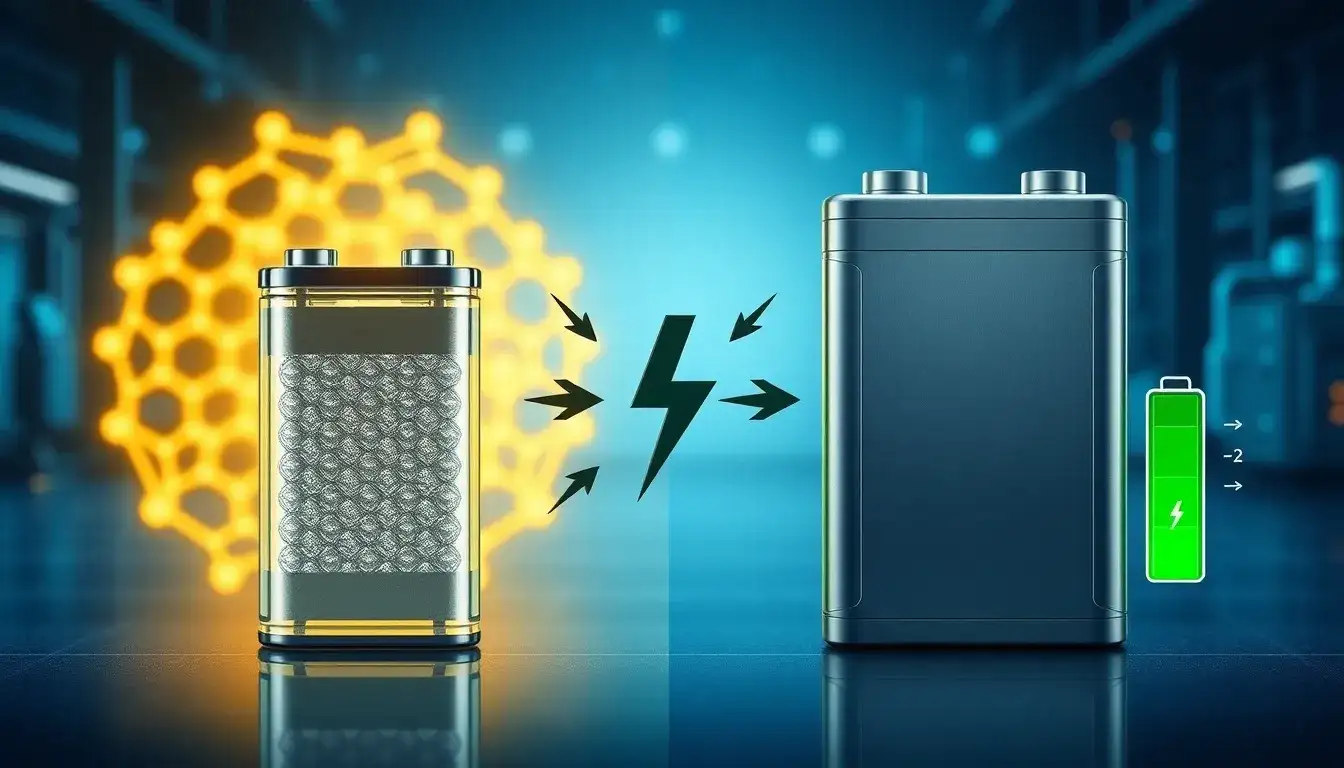
Graphene-Based Batteries vs. Traditional Lithium-Ion Batteries
Graphene-based batteries and lithium-ion batteries have significant differences in several key areas, including energy density, charging speed, lifespan, safety, cost, and environmental impact.
Key Features and Comparisons
- Energy Density:
- Graphene Batteries: Offer significantly higher energy density, potentially up to five times that of traditional lithium-ion batteries, allowing for more stored energy per unit mass or volume.
- Lithium-Ion Batteries: Currently max out at around 180 Wh/kg, making them less energy-dense compared to graphene.
- Charging Speed:
- Graphene Batteries: Exhibit fast charging capabilities due to graphene’s high electrical conductivity, reducing charging times significantly.
- Lithium-Ion Batteries: Charge more slowly compared to graphene batteries, though advancements are being made.
- Lifespan:
- Graphene Batteries: Have a longer lifespan due to graphene’s durability and resistance to degradation, requiring less frequent replacements.
- Lithium-Ion Batteries: Have a long cycle life but can degrade over time, especially if not properly maintained.
- Safety:
- Graphene Batteries: More stable and less prone to thermal runaway, which can cause fires or explosions in lithium-ion batteries.
- Lithium-Ion Batteries: While generally safe, there remains a risk of overheating or thermal runaway, especially if damaged.
- Cost and Maturity:
- Graphene Batteries: Currently more expensive and less commercially available due to the challenges in large-scale graphene production.
- Lithium-Ion Batteries: More affordable and widely used with established infrastructure.
- Environmental Impact:
- Graphene Batteries: Considered more environmentally friendly as they use carbon-based materials and lack toxic elements found in some lithium-ion chemistries.
- Lithium-Ion Batteries: Can contain toxic materials and have environmental concerns associated with their disposal.
Future Prospects
- Graphene Batteries: Hold significant promise for future applications, particularly in electric vehicles and high-performance electronics, but face scalability challenges.
- Lithium-Ion Batteries: Continue to evolve with advancements like hybrid graphene-enhanced versions, but are already widely adopted and face competition from emerging technologies.
In summary, graphene-based batteries offer superior energy density, charging speed, and safety compared to traditional lithium-ion batteries but are currently hindered by higher cost and production challenges. As technology advances, graphene batteries are likely to become more viable alternatives for future energy storage needs.
Original article by NenPower, If reposted, please credit the source: https://nenpower.com/blog/how-do-graphene-based-batteries-compare-to-traditional-lithium-ion-batteries/

