

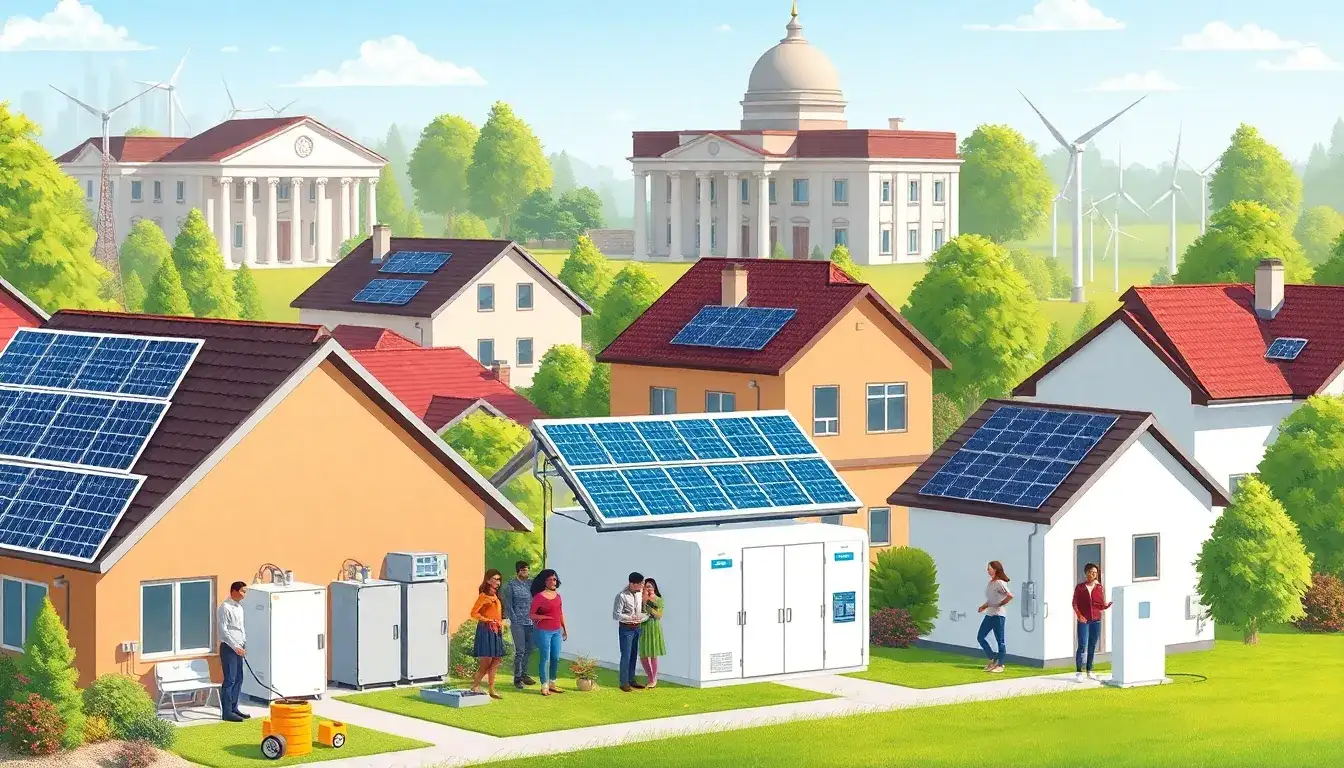
Government Incentives for Residential Energy Storage Systems
Government incentives significantly impact the overall cost of residential energy storage systems by offering financial benefits that help reduce the upfront expenses and long-term costs associated with these systems. Here’s how these incentives work:
Federal Incentives
- Residential Clean Energy Credit: This federal tax credit provides a 30% credit on the costs of new, qualified clean energy property, including battery storage systems, installed from 2022 through 2032. The credit percentage phases down to 26% in 2033 and 22% in 2034.
- Eligibility: The credit applies to systems installed in existing or new homes in the United States, as long as the home is used as a residence. You cannot claim the credit if you’re a landlord or if the property is used solely for business.
- Claiming the Credit: Use IRS Form 5695 to claim the credit. While the credit is non-refundable, any excess can be carried forward to future years.
State and Local Incentives
Various states and local governments also offer incentives:
- Colorado: Provides a state income tax credit for residential energy storage systems installed in Colorado. This credit can be assigned, and if assigned, any excess over the assignee’s tax due is refunded.
- New York: Offers an annual abatement for energy storage systems, typically the lesser of 10% of system costs or $62,500. Additionally, there are specific programs like the Long Island Energy Storage Incentive.
- California: The Self-Generation Incentive Program (SGIP) offers rebates on a per kilowatt basis for battery storage, with increased incentives for high fire threat districts and low-income households.
- Connecticut: Offers up to $16,000 in incentives for residential energy storage installations through the Energy Storage Solutions program.
- Massachusetts: Provides financial incentives and interest-free financing through programs like Mass Save Connected Solutions.
These incentives not only reduce the upfront cost of purchasing and installing residential energy storage systems but also encourage homeowners to invest in renewable energy technologies, ultimately lowering the overall cost of energy storage solutions.
Original article by NenPower, If reposted, please credit the source: https://nenpower.com/blog/how-do-government-incentives-impact-the-overall-cost-of-residential-energy-storage-systems/

