

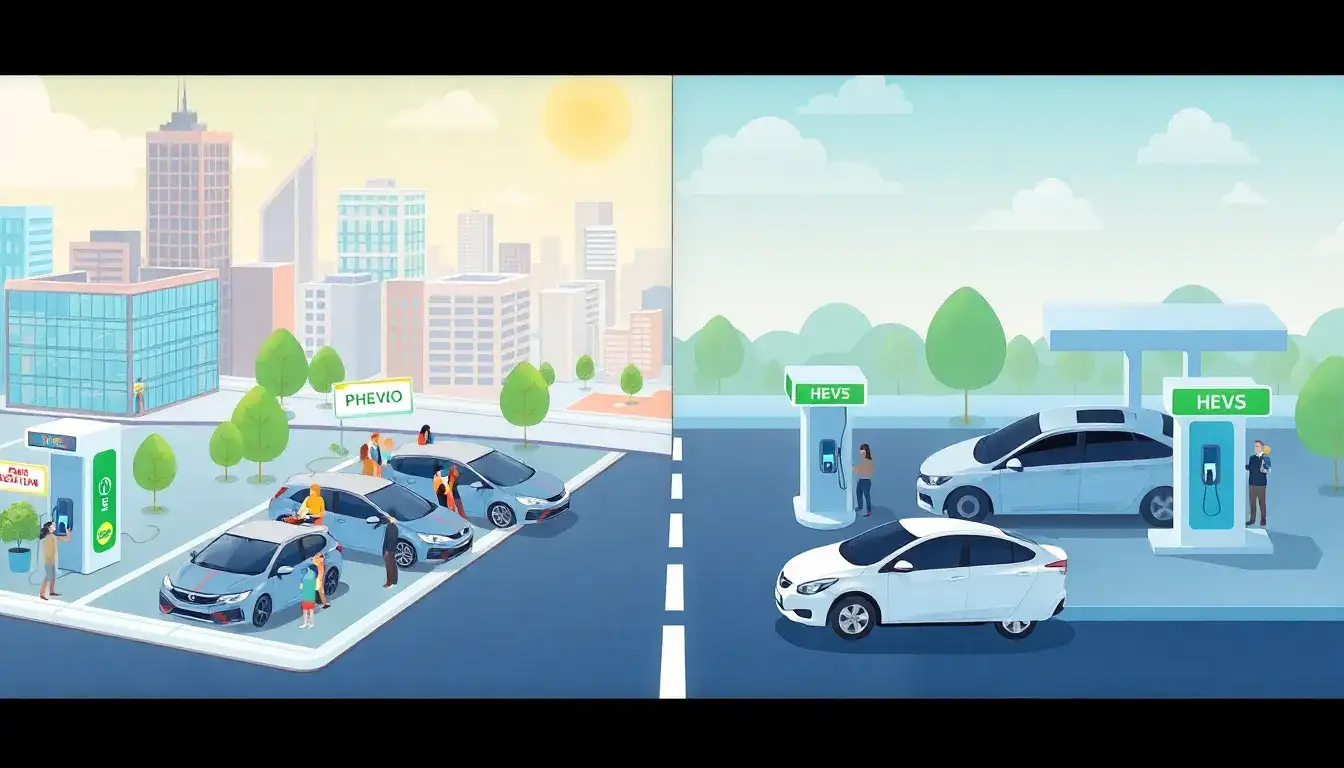
Government incentives significantly influence consumer decisions between plug-in hybrid electric vehicles (PHEVs) and hybrid electric vehicles (HEVs) by altering the cost-effectiveness and appeal of each option.
Impact of Government Incentives on PHEVs vs HEVs
- Federal Tax Credits Favor PHEVs More Substantially:
PHEVs often qualify for federal tax credits ranging from $3,700 up to $7,500 depending on the vehicle and eligibility criteria, including factors like where the battery is manufactured and assembled. For example, as of 2025, only certain PHEVs like the Chrysler Pacifica Plug-In Hybrid currently qualify due to new rules excluding batteries made or assembled in certain countries. In contrast, many HEVs do not qualify for such large federal tax credits or may have none at all, which can make PHEVs financially more attractive upfront. - State and Local Incentives Also Boost PHEV and HEV Appeal But Often Favor PHEVs More:
Some states provide additional rebates and grants that apply to both HEVs and PHEVs, but the amounts can differ—for example, in California, grants can be up to $7,500 for EVs and slightly less (~$7,000) for PHEVs, while HEV grants tend to be smaller. This means PHEVs often benefit from more substantial aggregate incentives. - Cost Differential and Incentives Influence Purchasing Decisions:
Since PHEVs typically cost more than HEVs, the availability of these federal and state tax credits and rebates can narrow or eliminate the price gap. As a result, consumers weighing the slightly higher initial cost but potential fuel savings and environmental benefits of PHEVs may be swayed by these incentives. Without incentives, consumers might lean toward HEVs for lower upfront cost and simplified fueling; with incentives, PHEVs become more financially competitive. - Incentives Encourage Transition Toward Greater Electrification:
Because PHEVs allow some electric-only driving and can be charged externally, strong government incentives are intended to accelerate adoption of vehicles with lower emissions and less dependency on gasoline compared to conventional HEVs, which have smaller or no tax advantages.
In summary, government incentives heavily impact the PHEV vs HEV choice by making PHEVs more affordable relative to HEVs, thereby encouraging consumers toward vehicles with larger electric driving capabilities and greater environmental benefits.
Original article by NenPower, If reposted, please credit the source: https://nenpower.com/blog/how-do-government-incentives-impact-the-decision-between-phevs-and-hevs/

