

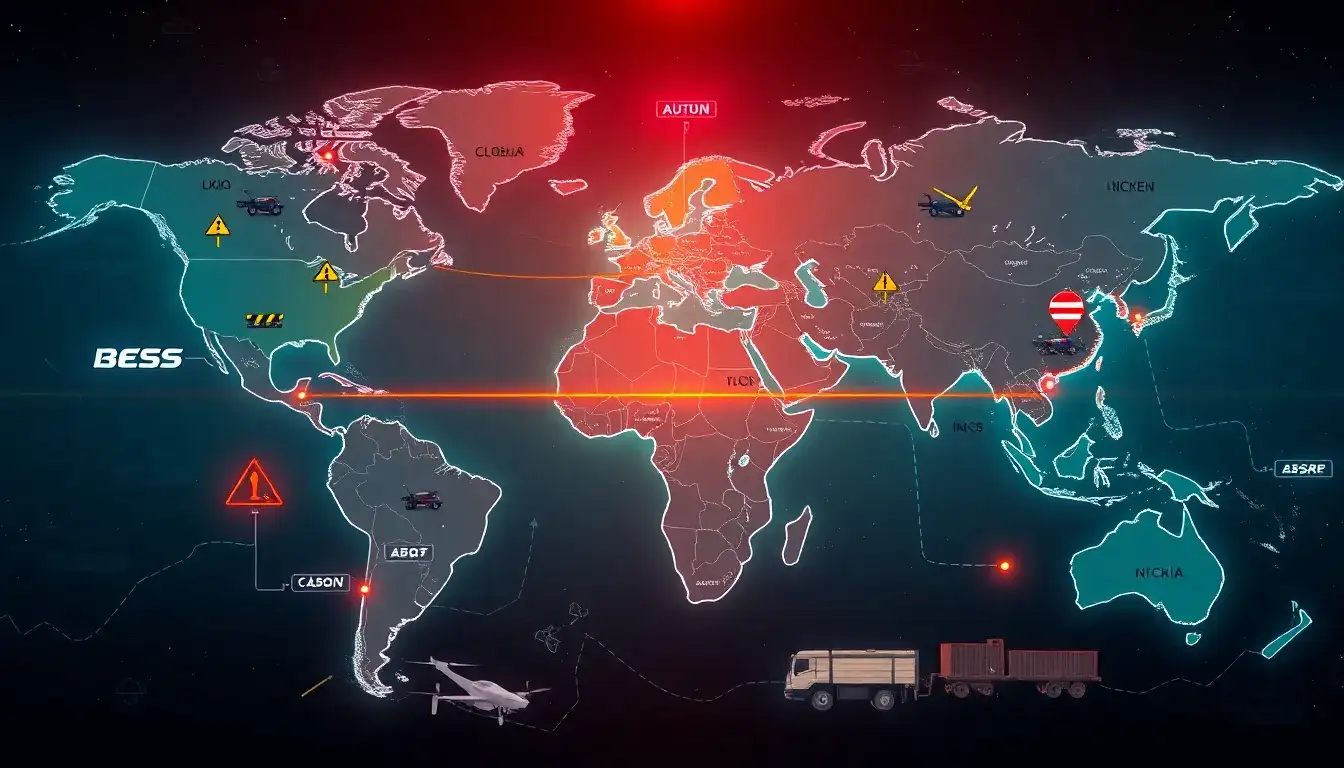
Geopolitical tensions significantly impact the Battery Energy Storage Systems (BESS) supply chain in several critical ways:
Concentration of Critical Materials and Geopolitical Hotspots
Key raw materials essential for BESS, such as lithium, cobalt, nickel, and graphite, are geographically concentrated in distinct regions that are often geopolitically sensitive:
- Lithium is predominantly sourced from the “Lithium Triangle” (Argentina, Bolivia, Chile) and Australia.
- Cobalt mainly comes from the Democratic Republic of the Congo (DRC), a region marked by political instability and ethical concerns around mining practices.
- Nickel supplies are abundant in Indonesia, the Philippines, and Russia.
- Graphite is largely controlled by China.
This uneven global distribution creates geopolitical hotspots where countries controlling critical nodes in the supply chain can exert significant influence over others dependent on these resources, impacting global battery production and energy sectors reliant on BESS.
Trade Restrictions and Supply Chain Disruptions
Geopolitical conflicts and tensions spur trade restrictions, export controls, and sanctions, which disrupt the flow of raw materials and finished battery products. For example, the U.S. government has banned its Department of Defense from purchasing batteries from China’s six leading manufacturers starting in 2027, forcing diversification and potential restructuring of supply chains. Such measures may lead to increased protectionism, where countries prioritize domestic production and raw material access, heightening tensions between resource-rich and resource-poor nations.
Strategic Shifts and Supply Chain Resilience Efforts
Countries are actively seeking to reduce vulnerabilities caused by the dominance of certain nations (notably China) in battery refining and production. Japan’s recent strategic pivot from lithium to sodium batteries exemplifies efforts to mitigate supply dependence and enhance supply chain resilience amid escalating geopolitical tensions. Similarly, Australia’s stable political climate and resource base position it as a critical player in efforts to diversify supply chains away from more volatile regions.
Impact on Prices and Supply Constraints
Rising geopolitical risks and resource nationalism contribute to supply constraints and price increases, especially for lithium, which is struggling to meet soaring demand from electric vehicles and energy storage. These bottlenecks strain the BESS supply chain and complicate long-term planning for renewable energy infrastructure.
Opportunities from Geopolitical Challenges
While geopolitical tensions pose challenges, they also drive innovation and local resource development. Diversifying sources and increasing domestic supply chains can foster economic development and reduce reliance on geopolitical hotspots, potentially leading to more resilient and sustainable BESS supply chains.
In summary, geopolitical tensions exacerbate supply chain vulnerabilities for BESS by concentrating critical materials in sensitive regions, causing trade disruptions through sanctions and restrictions, and triggering shifts in technology and sourcing strategies to boost resilience. These dynamics impact global production, pricing, and strategic competition around the rapidly growing battery storage sector.
Original article by NenPower, If reposted, please credit the source: https://nenpower.com/blog/how-do-geopolitical-tensions-impact-the-bess-supply-chain/

