

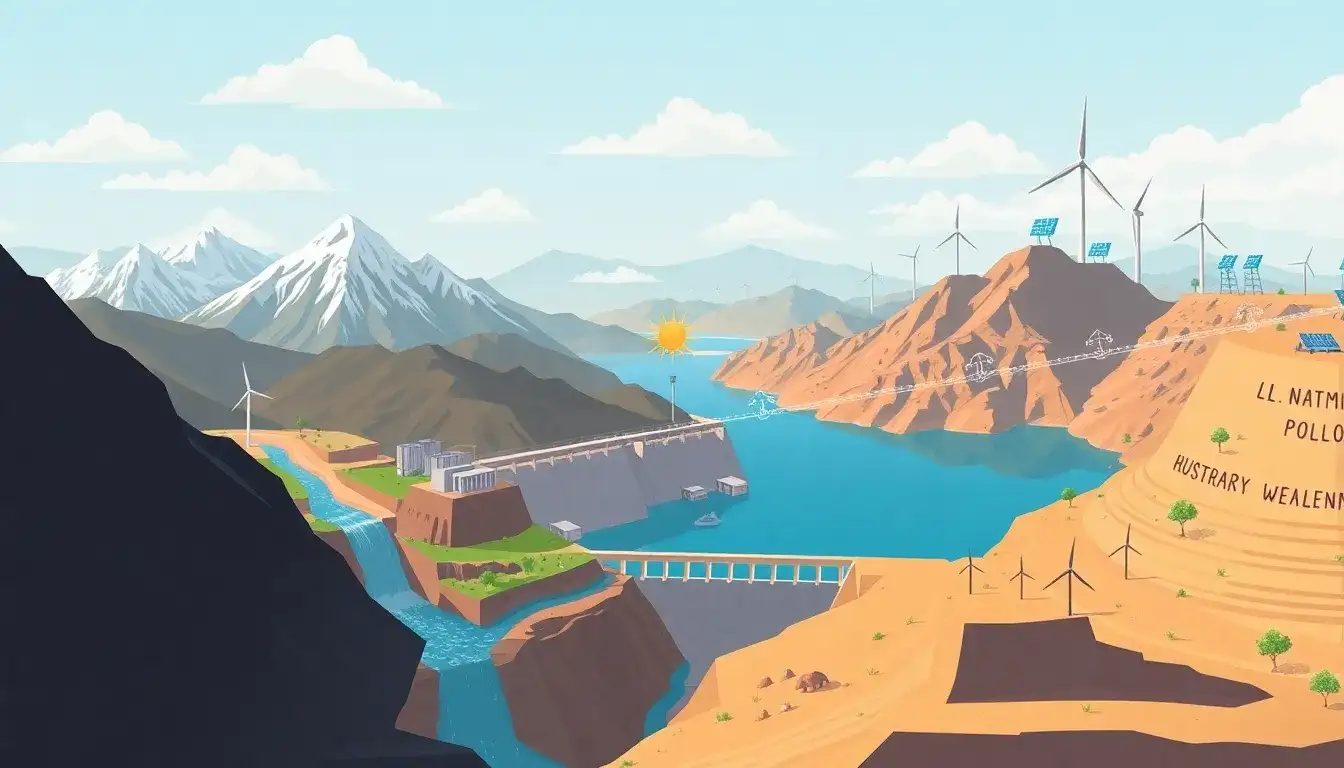
Geographical limitations significantly affect the scalability of Pumped Storage Hydropower (PSH) technologies due to their dependence on specific site characteristics and topological conditions. Key points about these limitations include:
- Siting Requirements: Traditional PSH requires suitable geographical conditions, such as two reservoirs at different elevations to store and release water for energy generation. Suitable sites include natural topography with enough vertical height difference and adequate water availability. This limits where new PSH plants can be built, as not all locations have the necessary geography to support such infrastructure.
- Topological Constraints: Steep terrains or mountainous areas are often necessary to achieve the elevation difference needed for efficient energy storage and recovery. Flat or urbanized areas generally cannot accommodate conventional PSH setups, restricting scalability in many regions.
- Impact on Development and Investment: The scarcity of ideal sites contributes to challenges in developing new PSH projects, including high capital costs, long construction timelines, and extensive permitting processes. These factors hinder the rapid expansion and scalability of PSH facilities.
- Innovations to Overcome Limitations: Emerging PSH technologies such as underground or underwater PSH aim to overcome geographical constraints by enabling sites in less suitable locations. Modular and hybrid PSH designs also seek to improve scalability by allowing smaller-scale deployments adaptable to a wider range of environments. For example, underground PSH could be feasible “in almost any geographical area,” helping expand potential sites beyond traditional mountainous locations.
- Environmental and Social Considerations: Geographical limitations are also tied to environmental impact and public acceptance, which can further constrain site selection and scalability.
In summary, the scalability of PSH technology is fundamentally constrained by geographical and topological limitations because traditional PSH depends on specific site characteristics that are not widely available. However, innovative approaches like underground and modular PSH hold promise to mitigate these geographical barriers and enable broader deployment in the future.
Original article by NenPower, If reposted, please credit the source: https://nenpower.com/blog/how-do-geographical-limitations-affect-the-scalability-of-psh-technologies/

