

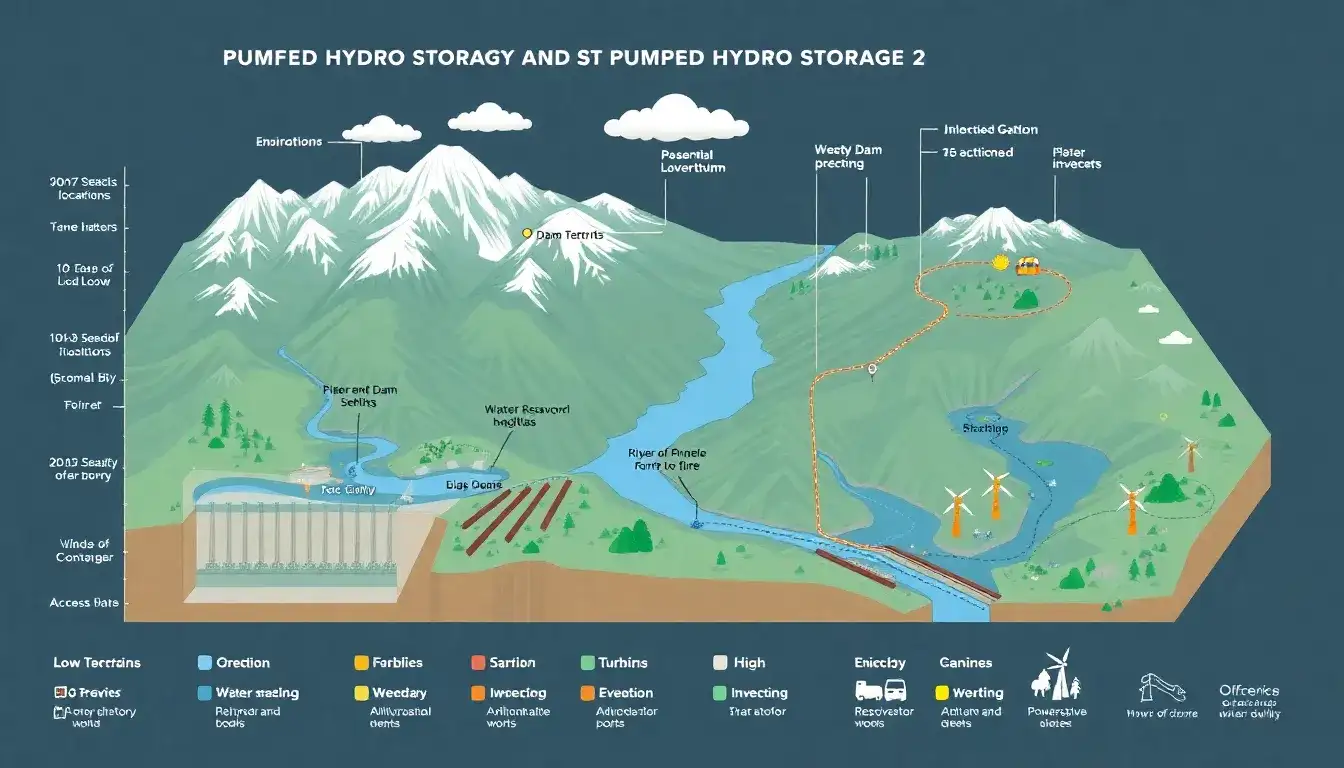
Geographical and terrain-specific factors significantly impact the cost of pumped hydro storage (PHS) projects. Here are some key considerations:
Impact of Geographical and Terrain-Specific Factors
1. Site Geology and Topography
- Geology: The geological conditions of a site can affect construction costs. Rocky or complex geologies may require more expensive drilling and excavation methods, increasing costs.
- Topography: Hilly or mountainous terrains are ideal for PHS as they allow for significant head height, which is crucial for efficiency. However, these terrains might also complicate construction and increase costs due to accessibility issues.
2. Water Reservoirs and Conveyance Systems
- Water Availability: Access to existing reservoirs (bluefield projects) or the potential to create closed-loop systems can reduce costs by eliminating the need for costly dam constructions.
- Conveyance Systems: The distance and complexity of conveyance systems, including tunnels or canals between reservoirs, can significantly impact costs. Longer distances increase construction costs.
3. Environmental and Social Factors
- Environmental Impact: While the environmental impact of PHS is generally low, projects in sensitive ecological areas may face additional costs due to environmental assessments and mitigation measures.
- Social Factors: Projects in areas with strong environmental or indigenous concerns may incur higher costs due to regulatory hurdles and community engagement efforts.
4. Head Height and Storage Duration
- Head Height: Higher head heights (the vertical distance between reservoirs) allow for more efficient energy storage with smaller reservoirs. However, achieving high head heights can sometimes result in higher construction costs due to more complex engineering requirements.
- Storage Duration: Longer storage durations benefit from economies of scale but may require larger reservoirs or more complex systems, affecting costs.
In summary, geographical and terrain-specific factors influence PHS project costs through site conditions, accessibility, and the complexity of required infrastructure. Understanding these factors is crucial for accurately estimating project costs and feasibility.
Original article by NenPower, If reposted, please credit the source: https://nenpower.com/blog/how-do-geographical-and-terrain-specific-factors-impact-the-cost-of-pumped-hydro-storage-projects/

