

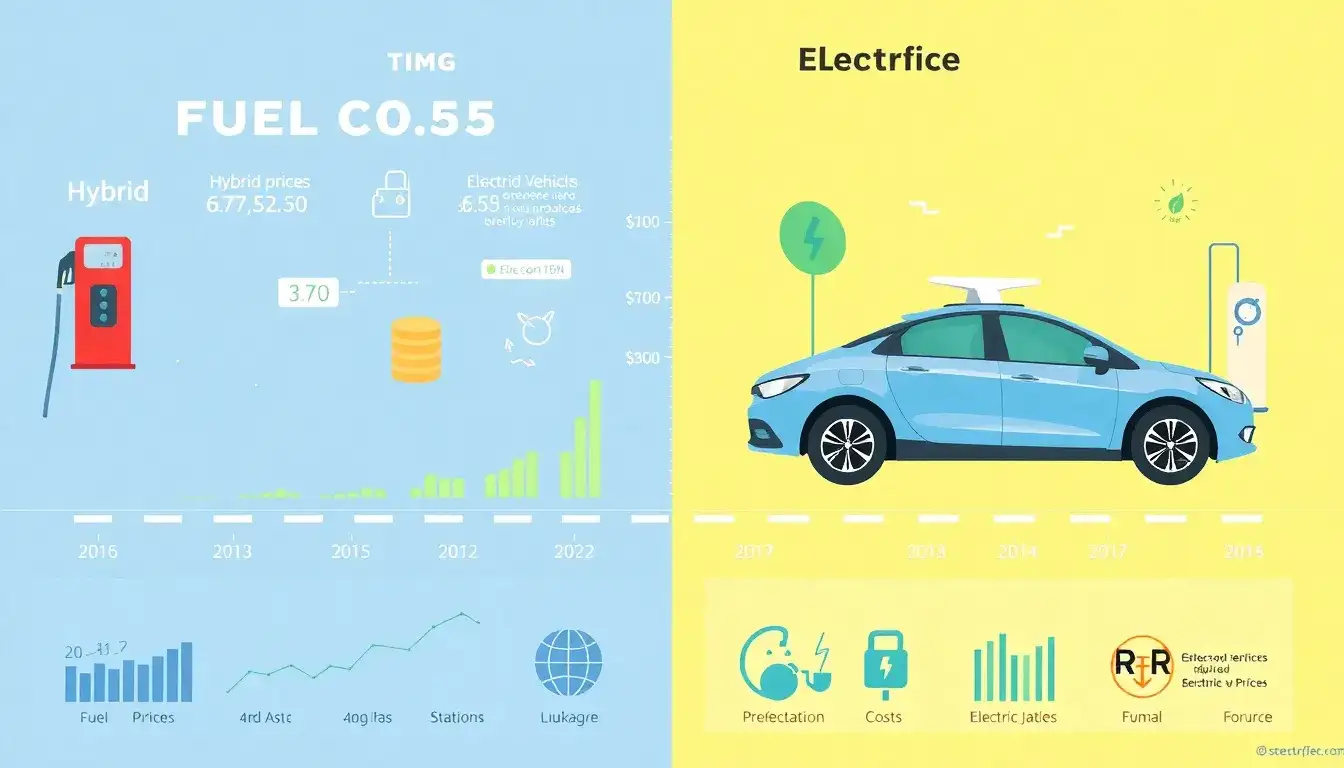
Comparing the Fuel Costs of Hybrid Vehicles and Electric Vehicles
Comparing the fuel costs of hybrid vehicles and electric vehicles over time reveals distinct advantages for both types of vehicles. Here’s a breakdown of their cost profiles:
Hybrid Vehicles
- Initial Purchase: Generally, hybrids are more affordable to purchase upfront compared to electric vehicles, but they are more expensive than traditional gasoline-powered cars.
- Fuel Efficiency: Hybrids achieve superior fuel efficiency compared to gas cars. They can offer up to 30% better fuel economy, especially in city driving, which leads to fewer trips to the gas station.
- Long-term Savings: While hybrids save on fuel, they may not offer as many incentives or rebates as electric vehicles. However, their overall fuel efficiency can provide significant long-term savings.
- Maintenance Costs: Hybrids have more complex systems (including both gas and electric components), which can result in higher maintenance costs compared to electric vehicles.
Electric Vehicles
- Initial Purchase: Electric vehicles are typically more expensive to buy initially due to the advanced battery technology, but they are often eligible for more rebates and incentives than hybrids.
- Fuel Costs: Electric vehicles are up to 70% cheaper to operate compared to gasoline-powered vehicles. Charging an EV is generally much cheaper than fueling a gas vehicle.
- Maintenance: Electric vehicles have fewer moving parts, which results in significantly lower maintenance costs over time.
- Charging Time and Range: Electric vehicles have varying ranges (typically between 80 to 420 miles) and can charge quickly at public DC fast-charging stations, reaching 80% charge in under an hour.
Comparison Over Time
- Hybrid Vehicles: While offering less upfront cost savings compared to electric vehicles, hybrids provide consistent fuel efficiency and long-term savings due to reduced fuel consumption.
- Electric Vehicles: Despite higher initial costs, electric vehicles offer substantial long-term savings through lower operational costs and maintenance expenses. They are often supported by government incentives, which can offset the initial purchase price.
In summary, electric vehicles offer more significant long-term fuel savings and lower maintenance costs despite their higher upfront costs. Hybrids provide a middle ground with better fuel efficiency than traditional gas vehicles but at a lower upfront cost than electric vehicles.
Original article by NenPower, If reposted, please credit the source: https://nenpower.com/blog/how-do-fuel-costs-for-hybrids-compare-to-electric-vehicles-over-time/

