

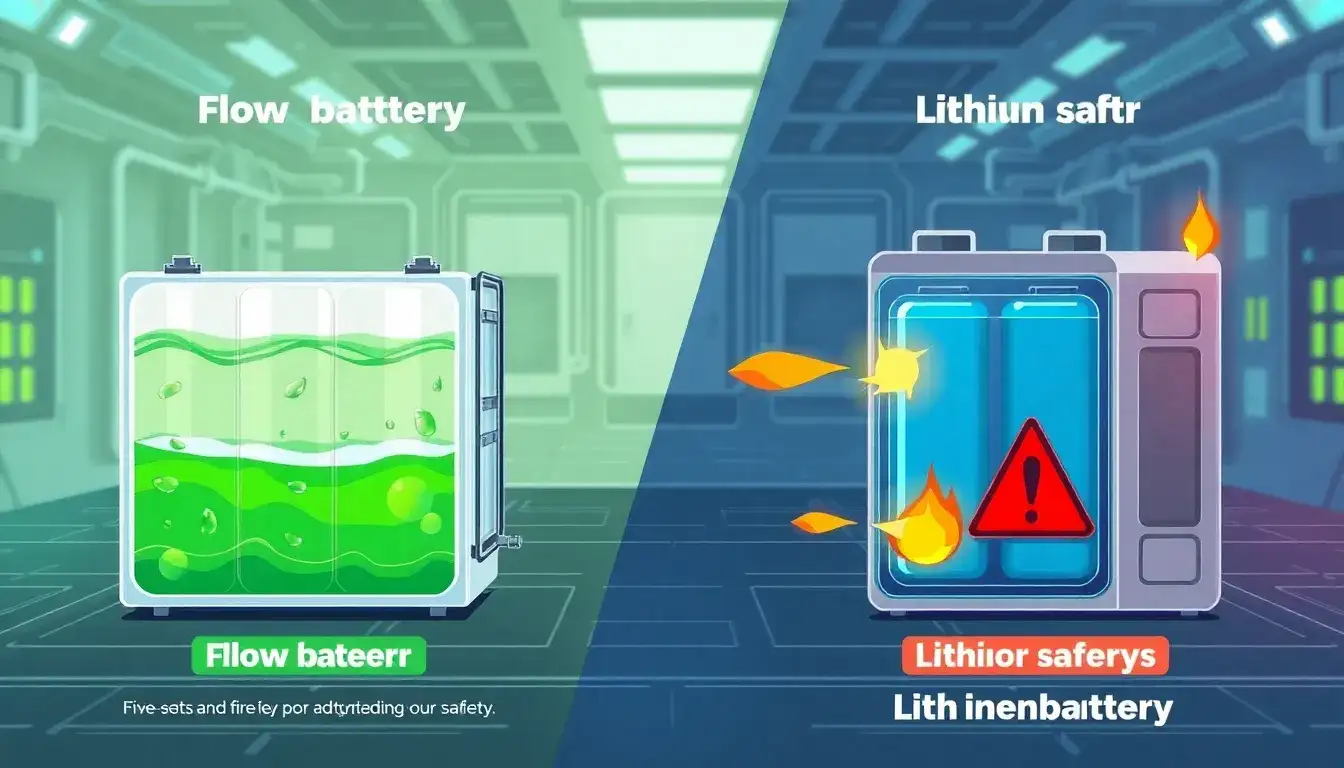
Key Safety Differences
- Fire Risk:
- Flow Batteries: These batteries are generally considered safer with no risk of fire. The aqueous electrolytes used are non-flammable, reducing the risk of thermal runaway or combustion.
- Lithium-Ion Batteries: They pose a significant fire risk due to thermal runaway, especially in grid-scale applications and consumer devices.
- Short-Circuit Safety:
- Flow Batteries: Even in the event of an electrical short circuit, flow batteries do not pose a significant risk. The electrolytes are isolated, and the system can continue to operate safely or be safely shut down.
- Lithium-Ion Batteries: Lithium-ion batteries are more susceptible to damage from short circuits, which can lead to fires.
- Chemical Stability:
- Flow Batteries: The electrolytes in flow batteries are chemically stable, which enhances safety and longevity. They can operate for decades with minimal performance degradation.
- Lithium-Ion Batteries: These have a higher risk of chemical instability leading to overheating or explosion.
- Electrical Shock Hazard:
- Flow Batteries: They do not produce voltage when the system is not in operation (e.g., when pumps are off), reducing the risk of electrical shock.
- Lithium-Ion Batteries: These batteries can retain hazardous voltages even when not in use, posing a shock hazard.
- Toxicity and Environmental Impact:
- Flow Batteries: The materials used are generally less hazardous and have a lower environmental impact. Vanadium can be recycled, and other materials like sodium chloride are abundant.
- Lithium-Ion Batteries: Can contain toxic materials and have higher environmental concerns due to mining of lithium and cobalt.
Conclusion
Flow batteries offer significant safety advantages over lithium-ion batteries, particularly regarding fire risk, electrical fault tolerance, and chemical stability. However, they have limitations in terms of energy density and efficiency compared to lithium-ion batteries. Despite these limitations, flow batteries are beneficial for long-duration energy storage applications where safety and longevity are paramount.
Original article by NenPower, If reposted, please credit the source: https://nenpower.com/blog/how-do-flow-batteries-compare-to-lithium-ion-batteries-in-terms-of-overall-safety/

