

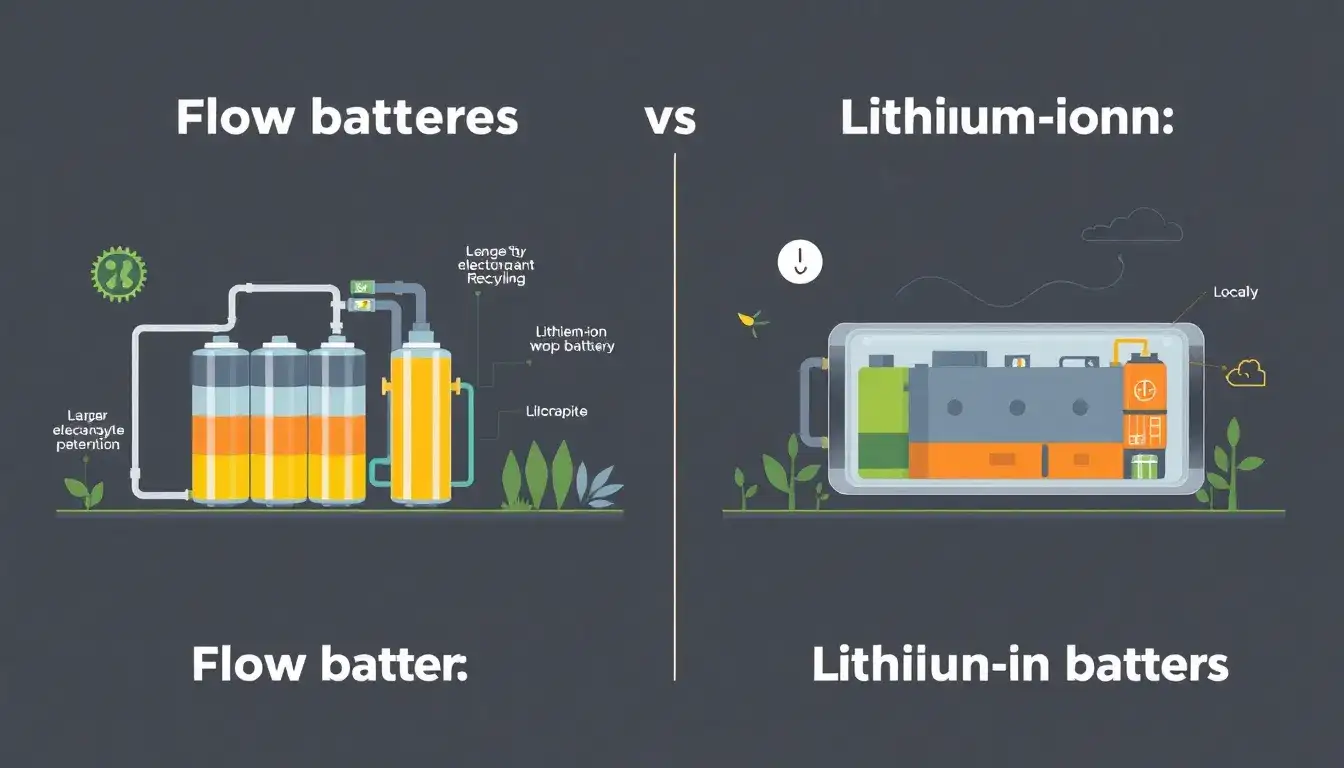
When comparing the lifespan of flow batteries and lithium-ion batteries, flow batteries generally have a significant advantage in terms of longevity and durability. They can be cycled thousands of times without significant degradation, often lasting more than 25 years, with some capable of handling over 20,000 charge-discharge cycles. This is because flow batteries do not undergo the same level of material degradation that lithium-ion batteries experience over time.
In contrast, lithium-ion batteries typically have a much shorter lifespan when cycled daily, lasting around 5 to 10 years, depending on usage and environmental conditions. While advancements continue to improve lithium-ion battery lifespans, they generally do not match the extended cycle life of flow batteries.
Here is a summary of the lifespans:
| Battery Type | Lifespan | Cycles |
|---|---|---|
| Flow Batteries | >25 years | >20,000 cycles |
| Lithium-ion Batteries | 5-10 years | 500-1,500 cycles |
Overall, flow batteries are more suitable for applications requiring long-term energy storage stability and minimal maintenance, while lithium-ion batteries are better for applications where high power density and portability are essential.
Original article by NenPower, If reposted, please credit the source: https://nenpower.com/blog/how-do-flow-batteries-compare-to-lithium-ion-batteries-in-terms-of-lifespan/

