Cost
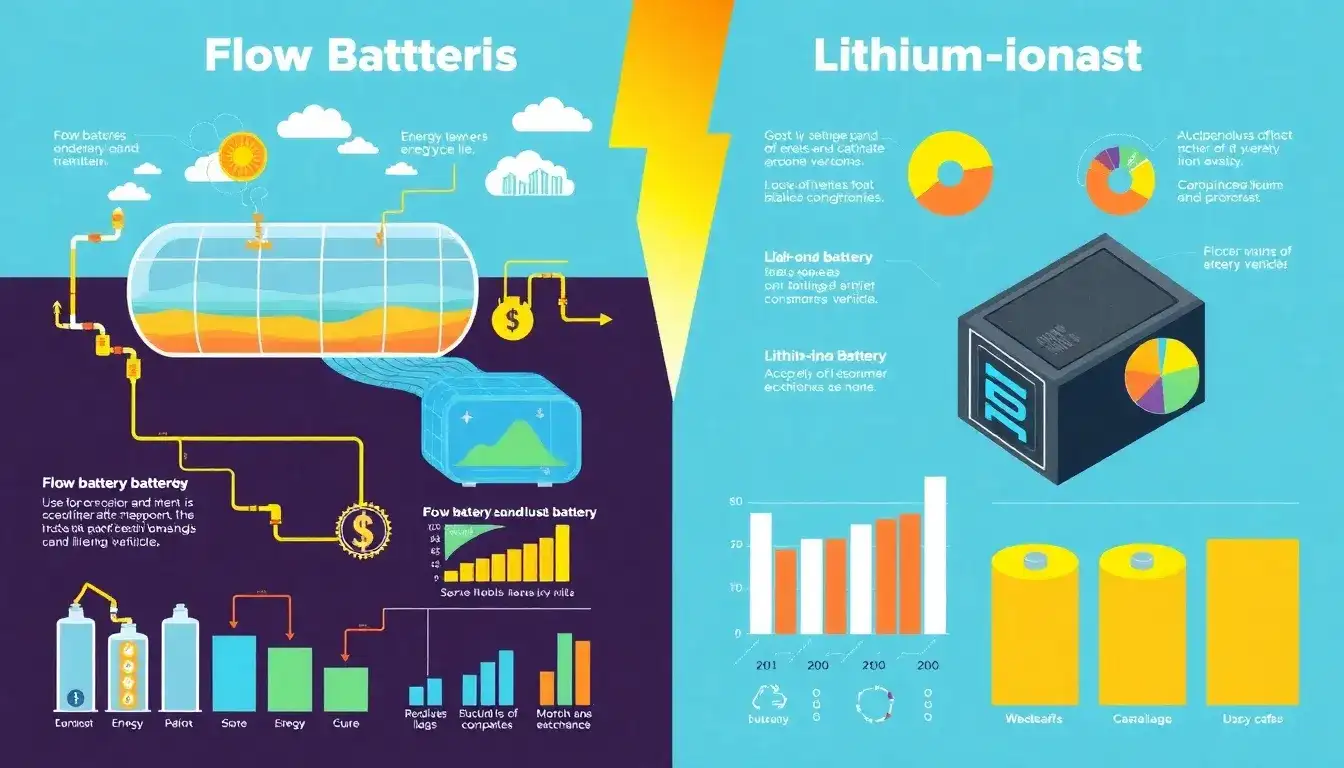
- Flow Batteries: They typically have higher initial costs due to the need for large tanks and complex systems. However, their long lifespan and low maintenance make them cost-effective over time. Flow batteries become more economical at larger scales because they can be expanded simply by adding more electrolyte, unlike lithium-ion batteries, which require more expensive cathode material.
- Lithium-ion Batteries: These are generally cheaper upfront, with lower material costs. However, their shorter lifespan and potential recycling costs can offset their lower initial price.
Efficiency
- Flow Batteries: They have an efficiency range of about 70% to 85% and are less efficient than lithium-ion batteries. However, they offer a longer duration of discharge, which is advantageous for stationary applications.
- Lithium-ion Batteries: They have a higher efficiency, typically between 85% and 95%, making them suitable for applications where energy density and power output are critical.
Overall, flow batteries are gaining traction for large-scale, long-duration energy storage due to their safety, scalability, and environmental benefits, while lithium-ion batteries remain preferred for high-power applications like electric vehicles and consumer electronics.
Original article by NenPower, If reposted, please credit the source: https://nenpower.com/blog/how-do-flow-batteries-compare-to-lithium-ion-batteries-in-terms-of-cost-and-efficiency/