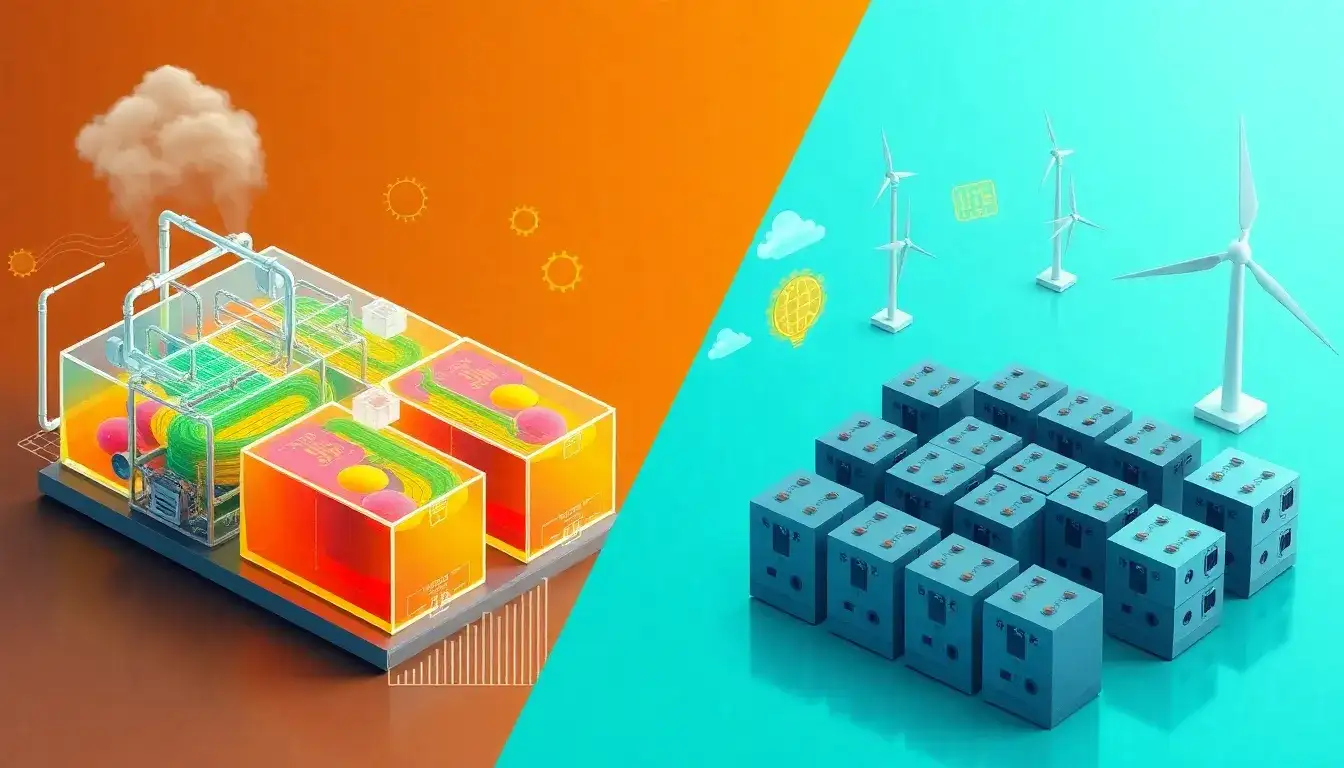
In grid-scale applications, flow batteries and lithium-ion batteries have distinct advantages and disadvantages that influence their suitability for large-scale energy storage.
Key Differences
1. Longevity and Cycle Life
- Flow Batteries: These have a significantly longer cycle life, often achieving more than 10,000 to 20,000 charge-discharge cycles. This translates to a lifespan of up to 20 years or more with minimal performance degradation.
- Lithium-Ion Batteries: Typically offer around 5,000 to 10,000 cycles, which equates to about 10 to 15 years of use in stationary applications.
2. Cost and Scalability
- Flow Batteries: Although initially more expensive for small-scale applications, their cost per unit of electricity decreases as the system size increases due to the ability to scale up by simply adding larger electrolyte tanks. This makes them competitive for long-duration energy storage.
- Lithium-Ion Batteries: Generally become more expensive as the system size grows due to the increased need for cathode materials. They are more cost-effective for short-duration applications.
3. Power Density and Discharge Time
- Flow Batteries: Have lower power density compared to lithium-ion batteries but can discharge energy over longer periods, typically 6 to 24 hours. This is ideal for applications requiring stable, long-duration energy supply.
- Lithium-Ion Batteries: Offer higher power density and can deliver a larger amount of energy quickly, but typically for shorter durations, often up to 4 hours.
4. Safety and Fire Risk
- Flow Batteries: Considered safer due to the use of aqueous electrolytes, which are non-flammable.
- Lithium-Ion Batteries: More prone to thermal runaway and fires, particularly in high-density pack configurations.
5. Space Efficiency
- Flow Batteries: Require more space due to the external tanks and pumping systems, making them less compact compared to lithium-ion batteries.
- Lithium-Ion Batteries: Are more space-efficient, making them suitable for a wider range of applications, including portable devices and electric vehicles.
Conclusion
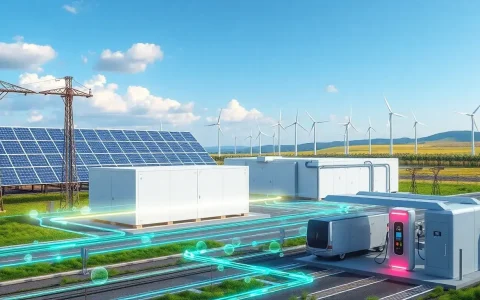
Flow batteries are well-suited for grid-scale applications where long-duration energy storage is needed, such as stabilizing renewable energy sources like wind and solar power. Their advantages in longevity, scalability, and safety make them competitive with lithium-ion batteries for these specific use cases. However, lithium-ion batteries remain preferred in applications requiring high power density and shorter discharge times.
Original article by NenPower, If reposted, please credit the source: https://nenpower.com/blog/how-do-flow-batteries-compare-to-lithium-ion-batteries-in-grid-scale-applications/