

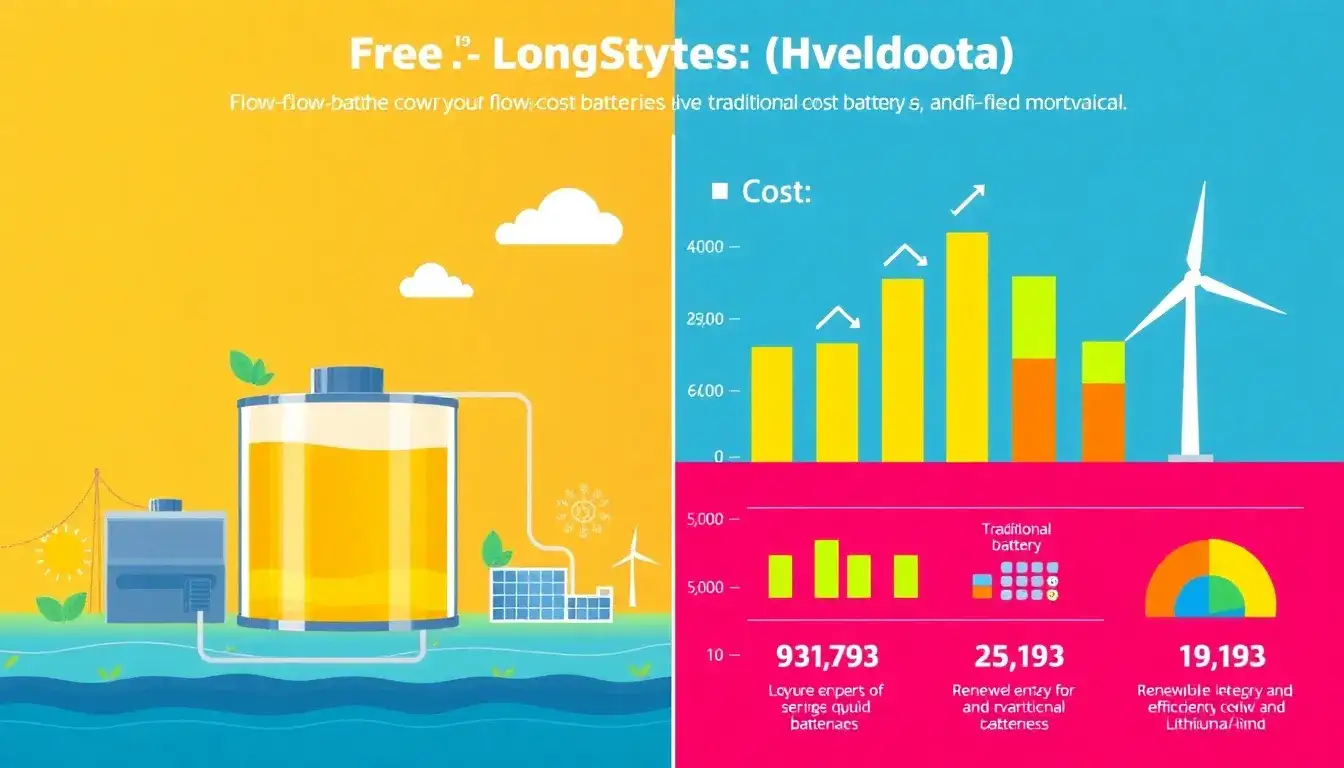
Flow batteries, particularly vanadium redox flow batteries (VFBs), present a compelling case for long-term cost-effectiveness in energy storage, especially when compared to more conventional options like lithium-ion batteries. Here’s how they measure up across various metrics:
Cost Structure
- Initial Investment: Vanadium flow batteries typically have a higher upfront capital expenditure, ranging from $3,000 to $4,000 per kilowatt (kW) installed compared to approximately $2,000 to $3,000 for lithium-ion batteries. This initial cost includes significant installation costs and the price of materials, with flow batteries costing around $150/kWh for materials against lithium-ion’s $200/kWh.
- Maintenance and Operational Costs: Flow batteries tend to have higher maintenance costs, estimated at around $300 annually, compared to $200 for lithium-ion batteries. However, their longer lifespan—up to 20,000 cycles or about 15-25 years—offsets these costs, as lithium-ion batteries are typically rated for about 10,000 cycles or 15 years.
Lifetime and Performance
- Cycle Life: Flow batteries excel with significantly longer lifespans, often more than double that of lithium-ion batteries. This enhanced durability makes them particularly well-suited for applications requiring extended discharge times, such as renewable energy integration with solar and wind.
- Scalability: A key advantage of flow batteries is their ability to scale. Capacity can be increased by enlarging the electrolyte tanks, making it more cost-effective as power demands grow. In contrast, lithium-ion systems become increasingly expensive as they scale up due to the need for additional materials.
Long-Term Economic Benefits
- Levelized Cost of Storage (LCOS): Studies have shown that the LCOS for flow batteries can become quite favorable, particularly for longer discharge periods exceeding 6-8 hours. The estimated LCOS for flow batteries is currently about $0.160/kWh, with projections suggesting it could drop to as low as $0.052/kWh by 2030 due to technological advancements and economies of scale. In contrast, while lithium-ion batteries offer lower initial costs, their long-term gains are becoming constrained by resource availability and rising material costs.
- Energy Return on Investment: Flow batteries are especially effective for applications that require energy storage ranging from 10 to 36 hours, which allows them to capture and deliver renewable energy more effectively than lithium-ion alternatives. In some scenarios, flow batteries can provide power at 25-30% lower costs than lithium-ion systems when accounting for their operational lifetime.
Conclusions
While flow batteries, particularly VFBs, face higher initial costs, their long-term economic viability is enhanced by their superior lifespan, lower degradation rates, and potential reductions in levelized cost of storage. As energy storage needs grow, particularly for long-duration applications, flow batteries are positioned to become increasingly cost-effective, especially when paired with renewable energy solutions. This makes them a strong candidate for future grid-scale energy storage solutions, potentially outpacing conventional battery technologies in specific applications.
Original article by NenPower, If reposted, please credit the source: https://nenpower.com/blog/how-do-flow-batteries-compare-in-terms-of-cost-effectiveness-over-the-long-term/

