

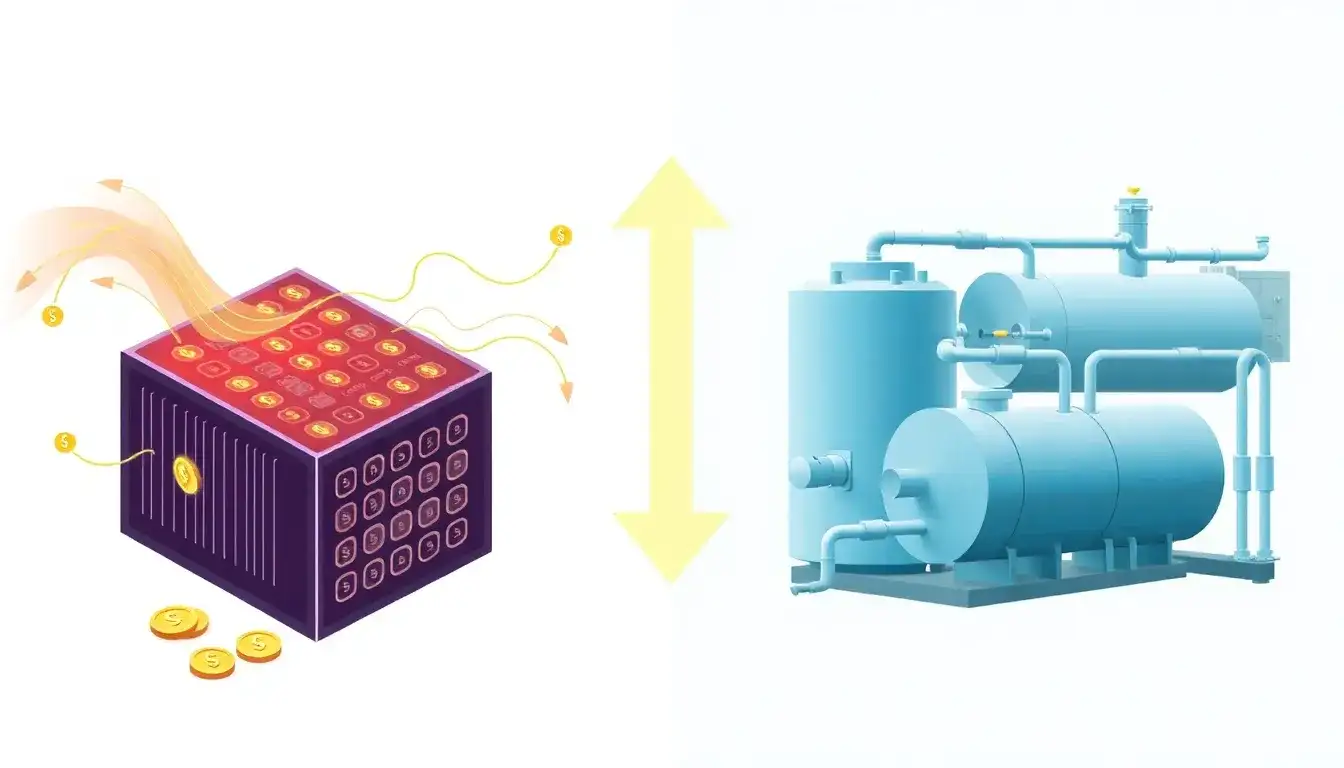
Flow Batteries vs. Compressed Air Energy Storage: Cost-Effectiveness and Scalability
Cost-Effectiveness
- Cost Comparison: Flow batteries are generally more expensive than compressed air energy storage (CAES) systems when it comes to initial installation costs. In recent analyses, CAES has shown potential to be cost-competitive, particularly for long-duration energy storage applications. For instance, BloombergNEF reported that CAES can have a lower capital expenditure (capex) compared to lithium-ion batteries for certain long-duration applications. In contrast, flow batteries are 66% more expensive compared to lithium-ion batteries in terms of installed LDES system costs.
- Operating Costs: Both technologies have different operational advantages. CAES requires minimal maintenance and can operate with low energy consumption during standby periods. Flow batteries, on the other hand, offer flexibility and scalability in terms of capacity and power output, but they may have higher operational costs due to the need for chemicals and potential leakage issues.
Scalability
- Scalability of CAES: Compressed Air Energy Storage systems are highly scalable and can be designed to meet large-scale energy demands. They are ideal for long-duration storage applications, providing energy over several hours or even days. However, they typically require specific geological conditions, such as underground caverns, which can limit their geographical scalability.
- Scalability of Flow Batteries: Flow batteries are also scalable but in a different manner. Their scalability is based on the ability to easily increase or decrease the size of the storage system by adding more tanks or cells, making them flexible for various applications, from small-scale residential to large industrial uses. This modular design allows for easier deployment in diverse environments without requiring specific geological formations.
Conclusion
- CAES is more cost-effective for long-duration energy needs and offers advantages in terms of minimal environmental impact and scalability in suitable locations.
- Flow Batteries provide flexibility and modularity, allowing them to scale up or down according to demand, though they are generally more expensive.
Both technologies have their place in the energy storage landscape, with CAES being preferable for large-scale, long-duration storage and flow batteries offering versatility across a range of applications.
Original article by NenPower, If reposted, please credit the source: https://nenpower.com/blog/how-do-flow-batteries-and-compressed-air-systems-compare-in-terms-of-cost-effectiveness-and-scalability/

