

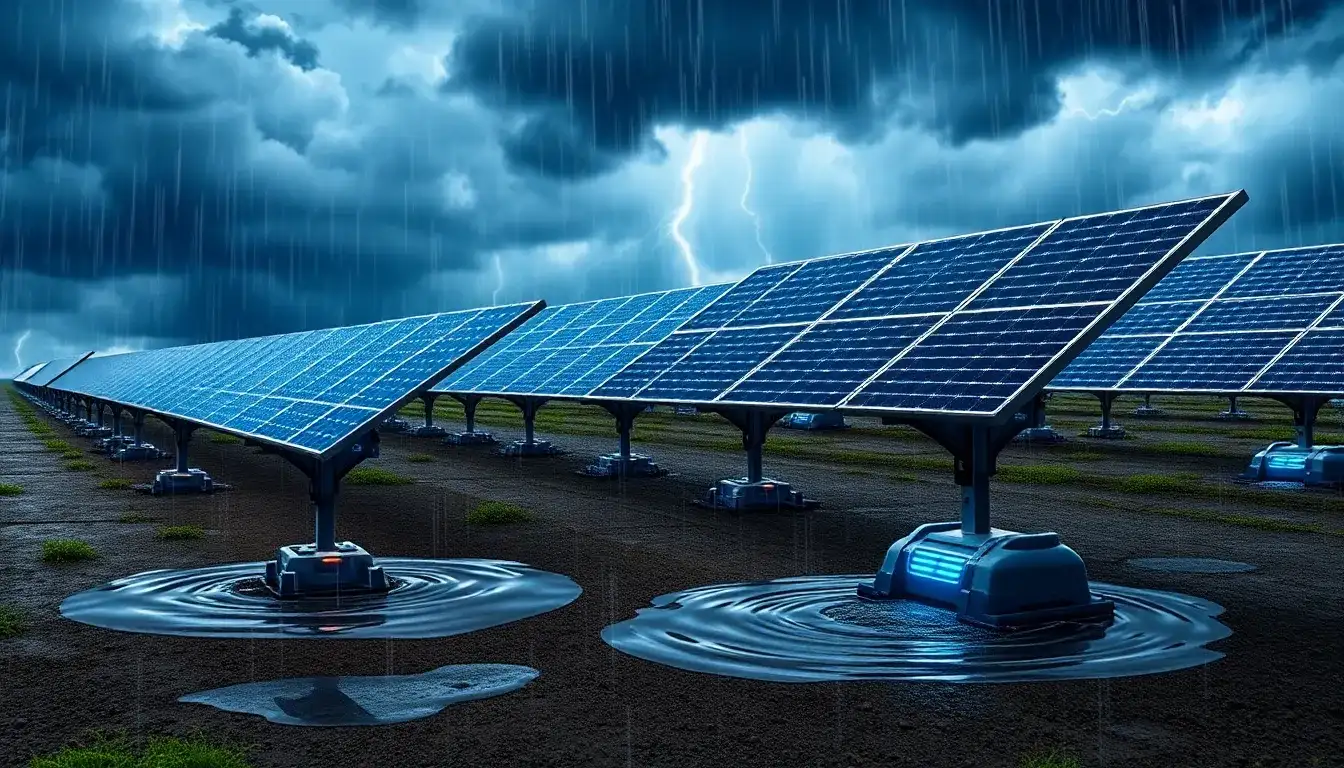
Flood sensors help protect solar trackers from extreme weather, particularly flooding, by detecting rising water levels and triggering automated responses that minimize damage to the solar arrays.
How Flood Sensors Protect Solar Trackers
- Detection of Rising Water Levels: Flood sensors monitor water levels beneath the solar tracker arrays, instantly detecting when flooding begins to pool under or around the system. Some sensors are highly sensitive and can detect minimal water accumulation.
- Automated Tracker Position Adjustment: Upon detecting flood conditions, the sensors communicate with the tracker controllers to dynamically adjust the position and inclination of the solar panels. This typically involves moving or “stowing” the panel rows into safer positions above the expected water surface level to avoid submersion and potential damage.
- Design Adaptation for Flood-Prone Areas: In areas prone to flooding, solar trackers can be installed with elevated post heights ensuring the panels remain above the floodplain, even at stow tilt positions. This preemptive design reduces the risk of modules being submerged during floods.
- Integration with Safety Algorithms: Flood sensors work in conjunction with advanced operating systems and safety algorithms that also respond to other weather elements (like wind and hail). These systems react automatically to environmental changes, providing real-time protection to the entire solar tracker system.
Benefits of Using Flood Sensors in Solar Tracker Systems
- Minimizes Physical Damage: By keeping solar panels above floodwaters, flood sensors prevent water damage to photovoltaic modules and electrical components, thereby extending the lifespan and reliability of the system.
- Maintains System Uptime: Automated adjustments help keep solar projects online and operational during adverse weather, reducing downtime caused by extreme weather events.
- Enhances Safety: Proper tracker positioning reduces the risk of structural damage that could pose hazards to surrounding equipment or personnel, particularly during severe floods combined with other weather factors like wind.
In summary, flood sensors form a critical component of modern solar tracker protection by actively monitoring water levels and dynamically adjusting panel positions to avoid flood damage, thereby safeguarding the investment and ensuring continuous energy production during and after extreme weather events.
Original article by NenPower, If reposted, please credit the source: https://nenpower.com/blog/how-do-flood-sensors-help-in-protecting-solar-trackers-from-extreme-weather/

