

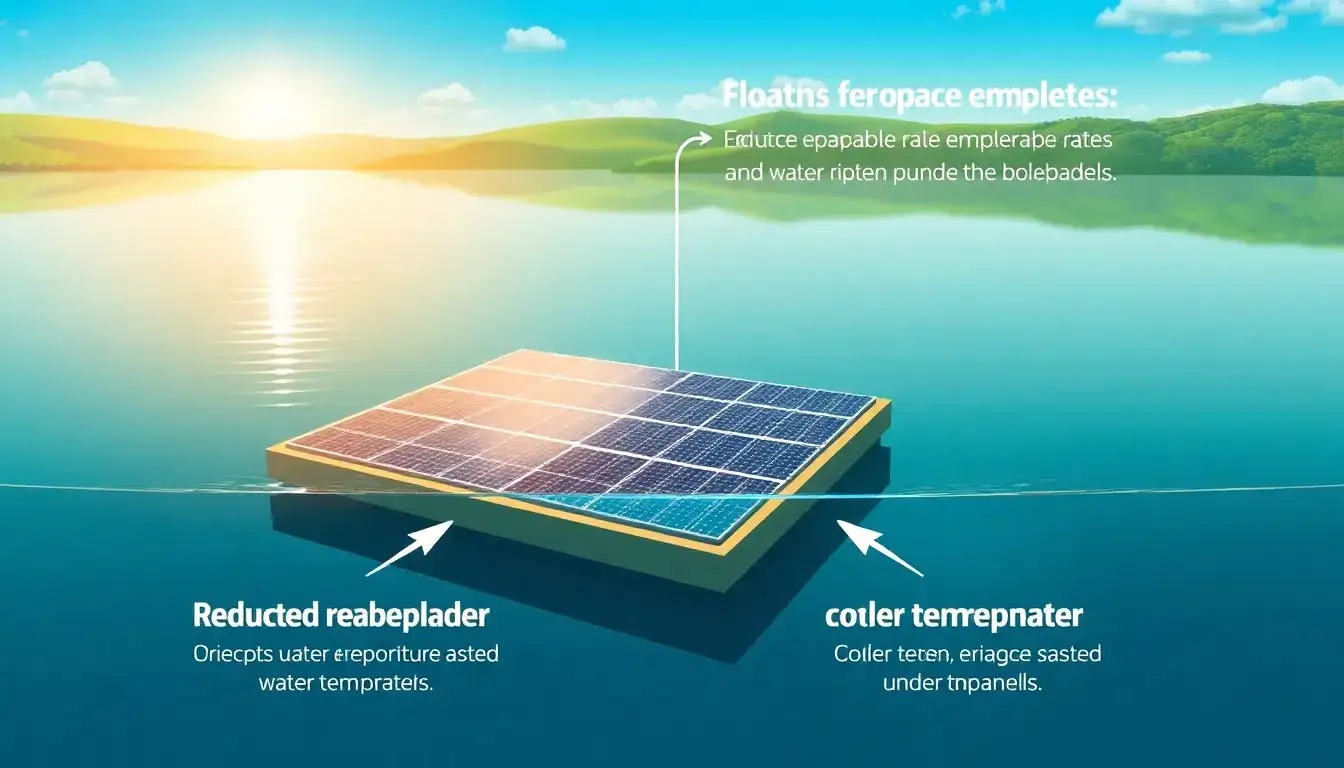
Floating solar panels significantly reduce water evaporation from water bodies where they are installed. The panels provide shading over the water surface, which lowers the heat and solar radiation reaching the water, thereby decreasing evaporation rates.
Key points on how floating solar panels impact water evaporation:
- Reduction in Solar Radiation and Shading Effect: Floating panels cover portions of the water surface, physically blocking sunlight and reducing water temperature and solar energy exposure. This shading effect curtails evaporation by limiting the energy available for water molecules to transition into vapor.
- Quantified Reduction Rates: Studies and case reports have shown evaporation reductions ranging widely around 30% to 70%, depending on the scale and density of solar panel coverage. For example, a Brazilian reservoir experienced a 60% evaporation reduction, while some evaluations claim decreases up to 70%.
- Additional Benefits: Besides reducing evaporation, floating solar panels can help prevent harmful algal blooms by limiting sunlight penetration, reducing the need for chemical treatments in water bodies. They also often cool the solar panels themselves, improving energy efficiency while conserving water.
In summary, floating solar panels act as a barrier that reduces water surface evaporation by shading the water and lowering heat absorption. This effect conserves water resources, especially important in reservoirs and regions facing water scarcity.
Original article by NenPower, If reposted, please credit the source: https://nenpower.com/blog/how-do-floating-solar-panels-impact-water-evaporation/

