

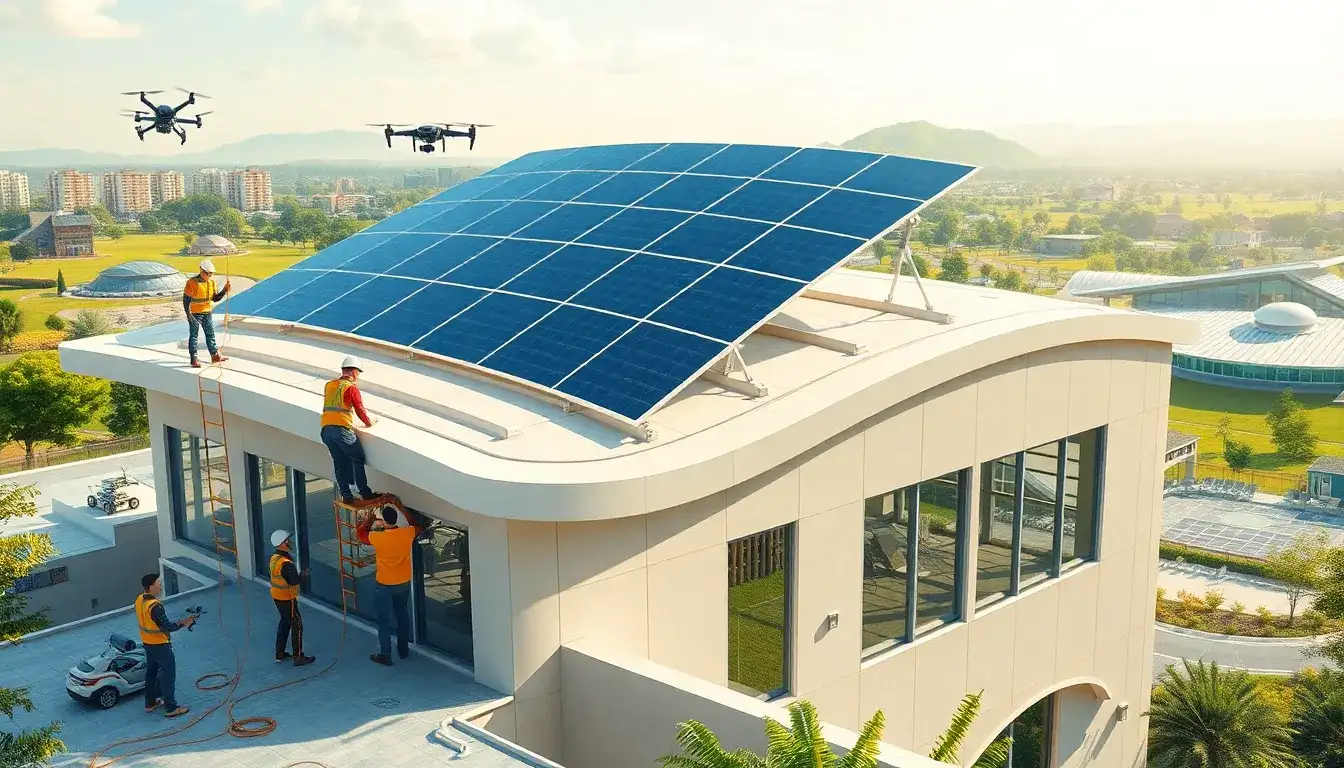
Flexible and lightweight solar panels significantly influence their installation and maintenance in several beneficial ways:
Impact on Installation
- Ease and Speed of Installation: Flexible solar panels are much lighter than traditional panels (weighing around 4-10 pounds compared to 40+ pounds for conventional panels) and can often be installed with adhesives like Velcro tape or industrial silicone instead of heavy mounting racks or drilling. This simplifies and speeds up the installation process, reducing labor intensity and cost.
- Adaptability to Surfaces: Their flexibility allows these panels to conform to curved, uneven, or delicate surfaces where rigid panels cannot be mounted effectively. This makes them ideal for vehicles (RVs, boats, buses), curved rooftops, or fragile structures that cannot support heavy loads.
- Reduced Structural Load: Due to their lightweight design, they impose minimal stress on roofs or mounting structures, eliminating the need for structural reinforcement. This advantage expands solar accessibility to older buildings or industrial rooftops with limited load-bearing capacity.
- Portability and Versatility: Their lightweight and flexible nature makes these panels highly portable and suitable for temporary or mobile use cases such as camping or remote trips, where traditional panels would be impractical to transport or install quickly.
Impact on Maintenance
- Reduced Wear and Tear on Roofs: The use of adhesives and absence of heavy racks reduce roof penetrations and mechanical stresses, lowering the risk of leaks and damage over time.
- Durability Considerations: While flexible solar panels are designed to be resilient to bending and impacts, they generally have lower durability compared to rigid panels, making them more susceptible to microcracks, damage from excessive bending beyond recommended limits, and shorter lifespans (typically warranties around 5 years vs. 25 years for rigid panels).
- Ease of Handling for Repairs or Replacement: Their light weight and form factor facilitate easier removal, repair, or replacement compared to heavy conventional panels, which can simplify maintenance logistics, especially in difficult-to-access locations.
- Material Innovations Increasing Durability: Some newer flexible panels use advanced polymers and patented cell technologies that improve impact resistance and fire safety, thus enhancing long-term performance and reducing maintenance frequency.
Summary Table
| Aspect | Flexible & Lightweight Solar Panels | Traditional Solar Panels |
|---|---|---|
| Weight | ~4-10 lbs per panel, very light | 40+ lbs per panel, heavy |
| Installation method | Adhesives, Velcro, magnets; no heavy racks or drilling | Requires racking systems and roof penetrations |
| Surface adaptability | Can bend up to 240°, fits curved and fragile surfaces | Rigid; only flat, strong surfaces |
| Structural load | Minimal, no structural reinforcement needed | Heavy, often needs roof reinforcement |
| Portability | Highly portable, suitable for mobile/off-grid use | Bulky and heavy, not portable |
| Durability | Less durable, more prone to damage, shorter lifespan | More durable, longer lifespan (20+ years) |
| Maintenance | Easier handling; less roof wear; may require careful use to avoid damage | Requires more effort to repair or replace |
In conclusion, flexible and lightweight solar panels make installation easier, faster, and possible on unconventional surfaces while reducing structural concerns. Maintenance benefits from simpler handling and less impact on roof integrity but requires attention to their generally lower durability compared to traditional rigid panels.
Original article by NenPower, If reposted, please credit the source: https://nenpower.com/blog/how-do-flexible-and-lightweight-solar-panels-impact-their-installation-and-maintenance/

