

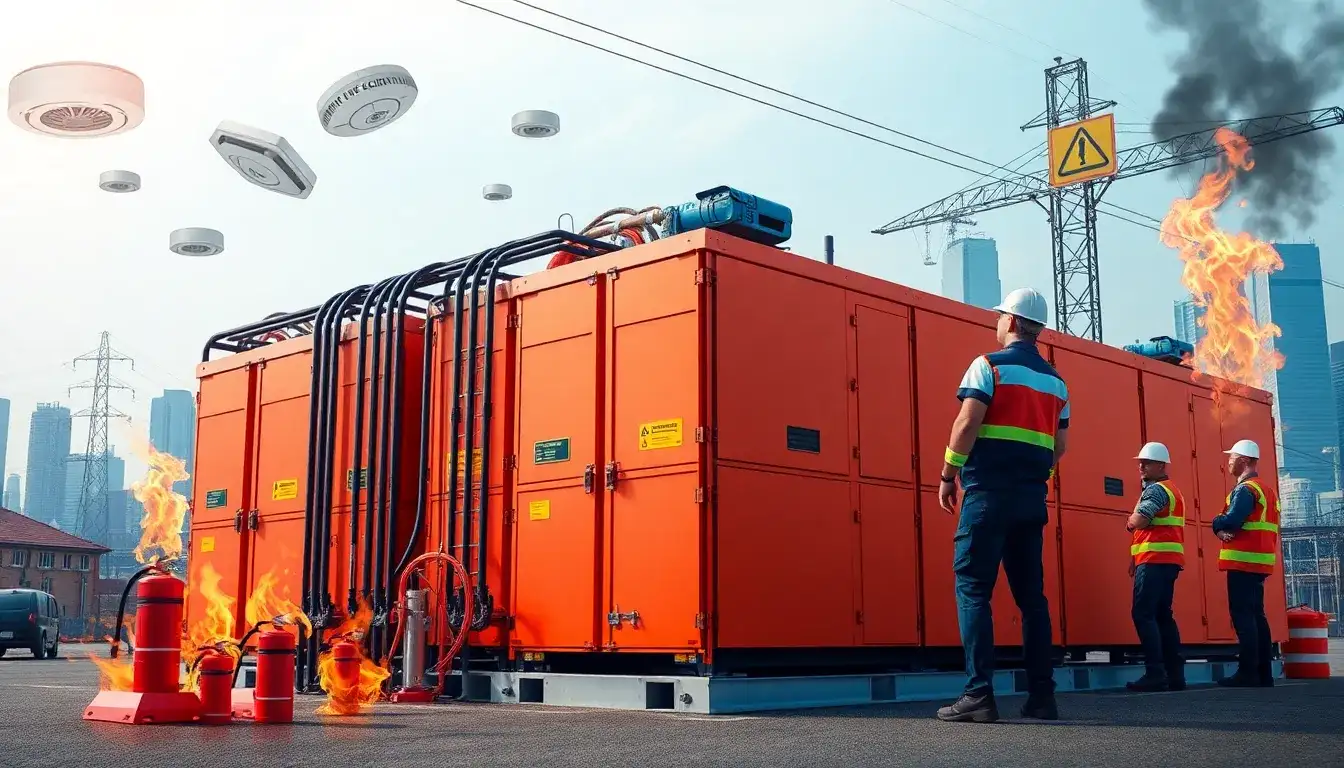
Fire safety concerns significantly influence the deployment of lithium-ion batteries in grid-scale energy storage systems (BESS), shaping regulations, design, and operational practices to mitigate risks such as thermal runaway, fire propagation, and explosions.
Key Fire Safety Risks for Lithium-Ion Batteries in Grid-Scale Systems
- Thermal Runaway: A failure mode in lithium-ion cells where internal short circuits cause rapid temperature rises, potentially leading to the venting of large amounts of flammable gases such as hydrogen and subsequent fires.
- Fire Propagation and Explosions: Once a cell ignites, fire can spread between cells rapidly, and explosions caused by gas accumulation have posed serious hazards, including injuries to first responders.
- Manufacturing Defects: Quality issues in fire safety components have been identified in a significant share of grid battery systems, increasing the risk of fire incidents if undetected.
Impact on Deployment and Regulatory Environment
- Stringent Safety Standards and Codes: The 2023 edition of NFPA 855 now includes requirements on maximum energy capacity, unit spacing, and fire suppression systems, designed to prevent thermal events and explosion hazards. The standard allows some flexibility for installations set back from buildings or public areas, subject to Authority Having Jurisdiction (AHJ) approval based on fire and explosion testing (UL9540A or equivalent).
- Explosion Prevention Emphasis: Newer safety codes emphasize explosion control and prevention over simply fire suppression, marking a shift toward containment strategies rather than extinguishment to manage thermal runaway and reduce risks to responders and infrastructure.
- Fire Suppression Systems: While some argue for mandatory fire suppression on all lithium-ion systems, consensus standards stress that suppression alone does not stop the underlying thermal runaway. Instead, containing fires within the affected unit and managing controlled burns prevent propagation and explosions.
Advanced Fire Detection and Mitigation Technologies
To enhance operational safety and allow early intervention, grid-scale BESS deployments increasingly integrate:
- Off-Gas Detection: Sensors detect the initial venting of electrolyte solvents before a thermal event escalates.
- Very Early Warning Smoke Detection: Ultra-sensitive smoke sensors provide early alerts to impending fire events.
- Thermal Imaging Cameras: These visually map temperature changes, identifying overheating cells before failure.
- Integrated Alarm Monitoring: Advanced systems enable rapid response protocols to isolate or shut down affected modules before fires spread.
These layered fire detection and prevention measures go beyond current code minimums, enabling safer large-scale deployments crucial for renewable energy integration.
Summary
Fire safety concerns impact grid-scale lithium-ion battery deployment by driving regulatory frameworks that mandate risk controls like spacing, explosion prevention, and containment-focused fire suppression strategies. Deployment decisions balance energy capacity with safety to limit fire hazards. Moreover, advanced early detection and monitoring technologies are increasingly essential components to mitigating risks, reducing the likelihood of catastrophic events, and protecting both infrastructure and personnel in large-scale energy storage applications.
Original article by NenPower, If reposted, please credit the source: https://nenpower.com/blog/how-do-fire-safety-concerns-impact-the-deployment-of-lithium-ion-batteries-in-grid-scale-systems/

