

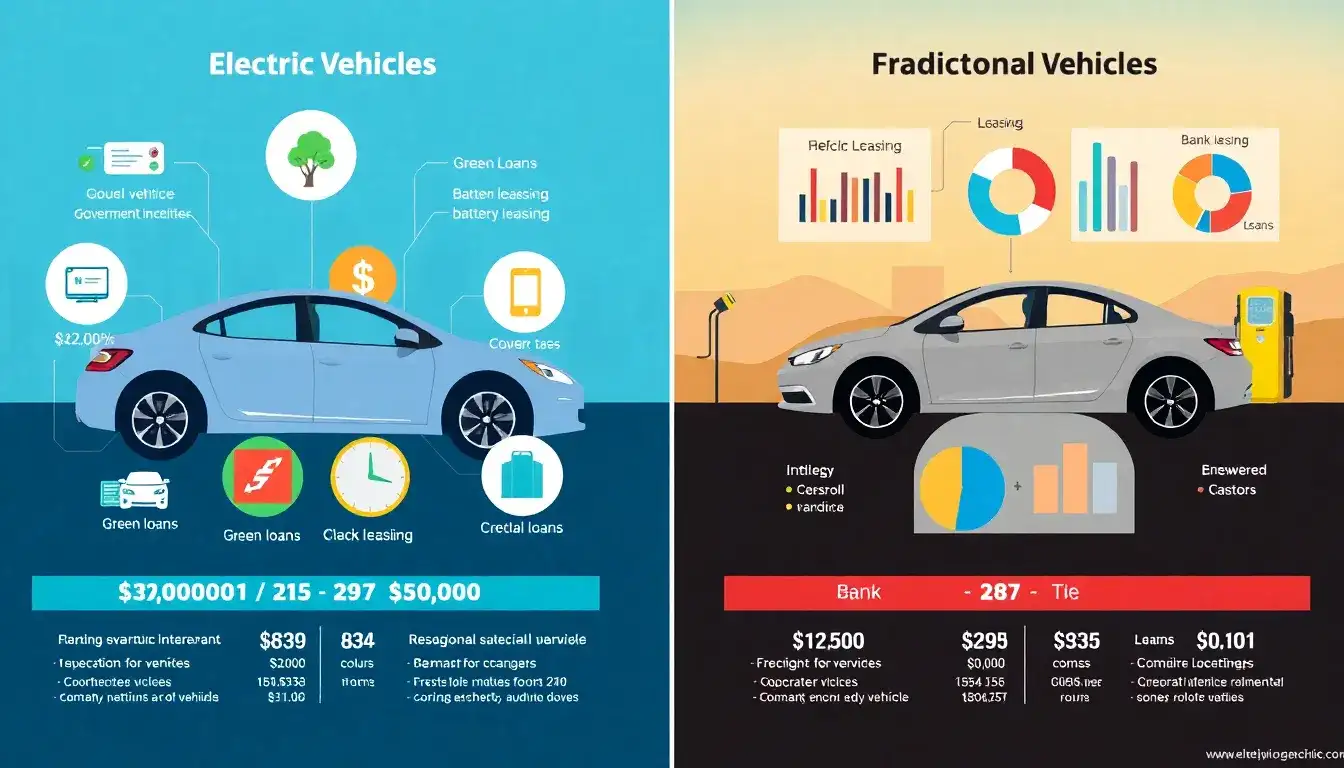
EV financing options increasingly mirror traditional vehicle loans but feature distinct differences in incentives, lender specialization, and additional cost coverage:
Key Comparisons
| Feature | EV Financing | Traditional Vehicle Financing |
|---|---|---|
| Interest Rates | Competitive rates (e.g., 4.74%–17.29% APR) | Typically 3%–10% APR (varies by credit) |
| Loan Terms | 36–72 months common | 24–84 months widely available |
| Additional Costs | Often covers chargers (e.g., Bank of America), taxes, warranties (up to 125% financing) | Rarely includes non-vehicle expenses |
| Specialization | Tailored for EVs (e.g., Tenet Energy, Clean Energy Credit Union) | Broad applicability |
| Promotions | Payment deferrals (90 days at Logix) | Occasional 0% APR deals on specific models |
Notable Differences
- Lender Focus: EV loans increasingly support green initiatives (e.g., Clean Energy Credit Union emphasizes environmental impact), while traditional loans lack such targeting.
- Flexibility: Some EV lenders offer extended cost coverage (chargers, tax/registration), whereas traditional loans typically finance only the vehicle.
- Deferrals: Payment pauses (e.g., Logix’s 90-day break) are more common in EV financing to accommodate higher upfront costs.
EV loans emphasize convenience and sustainability, while traditional loans prioritize vehicle acquisition. Always compare terms, as rates and incentives vary by lender.
Original article by NenPower, If reposted, please credit the source: https://nenpower.com/blog/how-do-financing-options-for-evs-compare-to-those-for-traditional-vehicles/

