

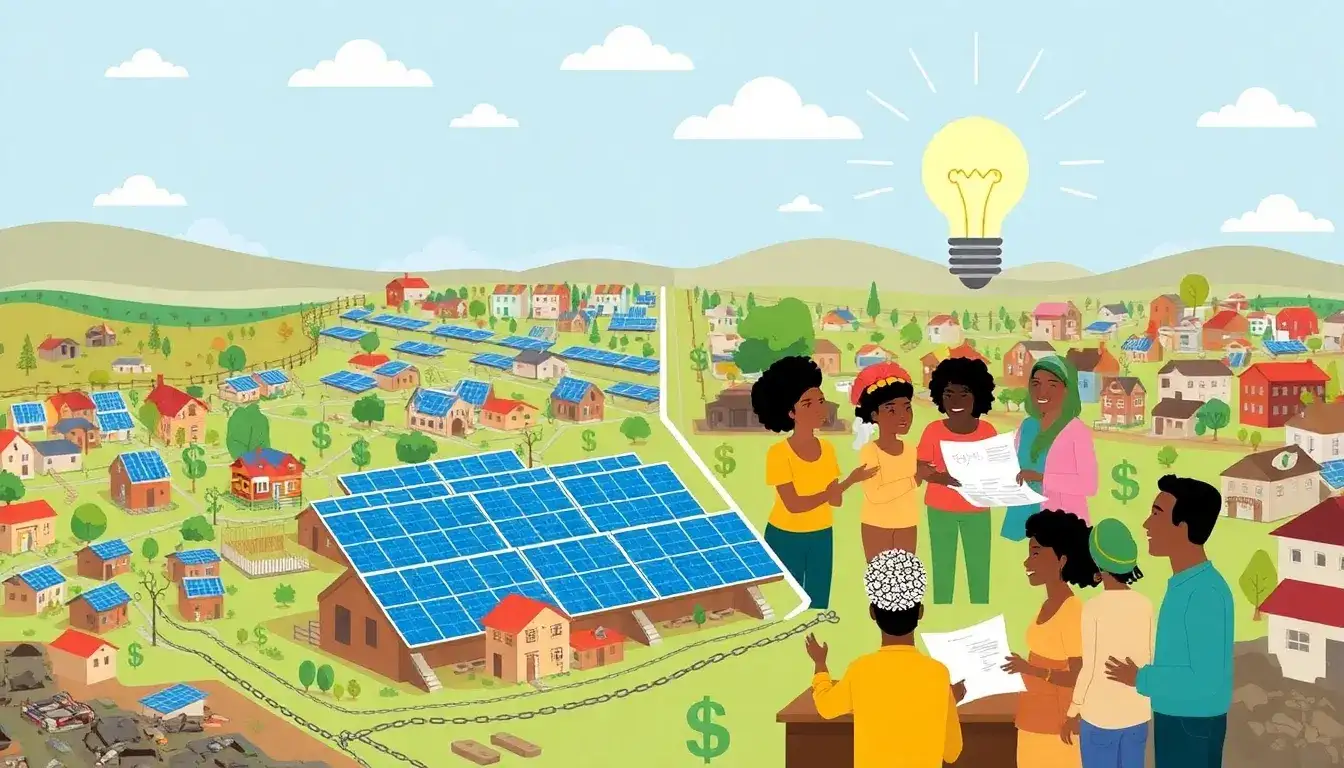
Financing limitations significantly impact the development of community solar projects by creating barriers that slow project initiation, complicate investment attraction, and restrict project scale and consumer access to renewable energy.
Key Financing Challenges Affecting Community Solar Development
- Project Size and Economies of Scale
Most community solar projects tend to be relatively small — often in the 1 to 5 MW range. This smaller scale makes it difficult to finance these projects individually because traditional lenders and tax equity investors often prefer larger, more predictable projects. The limited size reduces economies of scale, making transaction costs proportionally higher and complicating the ability to pool investments efficiently. - Complexity of Ownership and Tax Equity Structures
Community solar projects frequently require third-party ownership structures to attract tax equity investors, as these investors must own the project to claim tax benefits. However, community solar projects sometimes use purchase models where customers own panels, which are less conducive to typical tax equity investment. The need for pooled structures like master sale-leasebacks adds complexity in financing arrangements, making it more difficult to secure investment. - Investor Familiarity and Market Uncertainty
Many lenders, tax equity investors, and yield companies remain unfamiliar with the community solar market’s unique risk profile and structure. This lack of understanding causes hesitancy, leading to slower financing processes and sometimes higher costs of capital. Developers must often work harder to educate financiers and structure deals to mitigate perceived risks. - Credit Quality and Offtaker Risks
The creditworthiness of community solar project customers (offtakers) is critical for financing. Since community solar projects often serve a diverse set of subscribers, including low-to-moderate income households or multifamily affordable housing providers with limited credit, this increases perceived risk for lenders. Poor credit quality or complex utility billing arrangements can limit financing options or increase financing costs. - Limited Operating Reserves and Upfront Capital Constraints
Particularly for projects tied to multifamily affordable housing, providers often have limited operating reserves and credit to finance solar installations upfront. These projects may only be able to add solar during refinancing or recapitalization events, further delaying project development. Even when tax credits and incentives are available, identifying willing investor partners for smaller projects remains a challenge.
Consequences of Financing Limitations
- Delayed or Scaled-Down Projects
Financing challenges contribute to slower development timelines or smaller project sizes, preventing projects from reaching their full potential in scale and impact. - Barriers to Broader Consumer Access
Financing barriers limit the ability of community solar to expand access to renewable energy to a broader, including underserved, customer base. - Increased Transaction and Capital Costs
The need to bundle projects, structure complex ownership, and mitigate risks raises transaction costs and capital costs, which can affect project economic viability.
In summary, the development of community solar projects is hindered by financing limitations related to small project scales, complex ownership and tax equity structures, investor unfamiliarity, credit quality concerns of subscribers, and capital constraints of housing providers. These challenges lead to slower, smaller, and more expensive projects, ultimately restricting the growth and accessibility of community solar as a renewable energy option.
Original article by NenPower, If reposted, please credit the source: https://nenpower.com/blog/how-do-financing-limitations-impact-the-development-of-community-solar-projects/

