

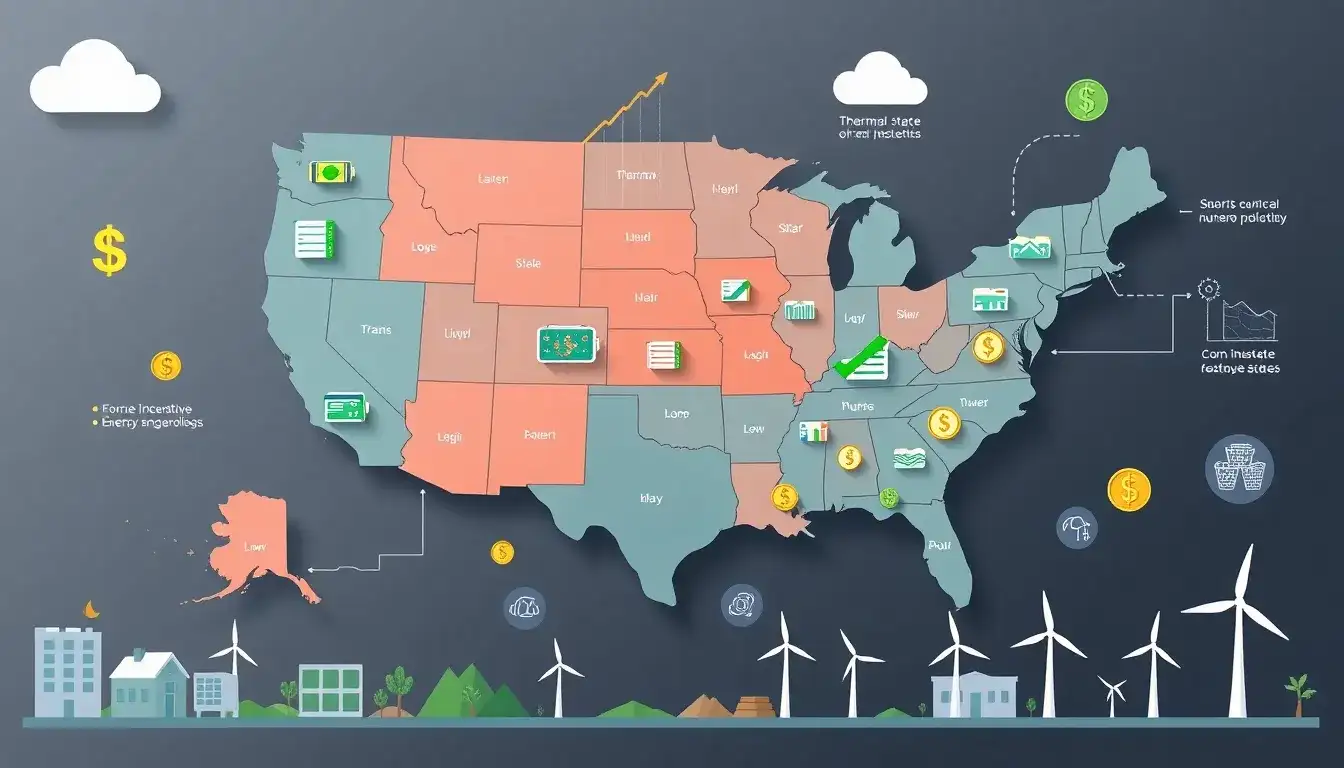
Financial incentives significantly boost energy storage adoption by reducing upfront costs and creating revenue opportunities for participants. Key impacts vary across states based on program structures and funding availability:
1. Upfront Cost Reduction
- Federal incentives: The Inflation Reduction Act (IRA) provides a 30% Investment Tax Credit (ITC) for standalone storage, eliminating the previous solar-pairing requirement. Additional bonuses exist for projects meeting domestic content requirements or serving low-income communities.
- State-level rebates:
- California’s SGIP offers per-kilowatt rebates, prioritizing high-fire-risk areas and low-income households.
- Connecticut’s Energy Storage Solutions provides up to $16,000 for residential installations and 50% upfront incentives for commercial systems.
- Maryland’s tax credits cover up to $5,000 (residential) and $75,000 (commercial) annually.
2. Performance-Based Incentives
- New Jersey’s 2024 program ties behind-the-meter storage compensation to annual installments and load reduction/grid support performance, encouraging grid participation.
- Connecticut offers businesses bi-annual payments over 10 years based on peak power contributions.
- Massachusetts’ Connected Solutions compensates users for discharging batteries during grid stress periods, supplemented by 0% interest financing.
3. Market Participation Enablement
- Demand response/VPP programs (e.g., PowerFlex) allow storage owners to earn revenue by providing grid services.
- Federal Direct Pay empowers tax-exempt entities like nonprofits to monetize the ITC as cash payments, improving project economics.
- Capacity markets in states like New Jersey incentivize front-of-meter storage through competitive solicitations.
4. Targeted Policy Objectives
- Equity-focused incentives: California and Massachusetts prioritize low-income and high-risk communities to enhance resilience.
- Private investment: New Jersey’s updated policy explicitly encourages third-party ownership to accelerate deployment.
- Grid modernization: TOU rate structures in leading states create economic signals for storage adoption.
Original article by NenPower, If reposted, please credit the source: https://nenpower.com/blog/how-do-financial-incentives-impact-the-adoption-of-energy-storage-policies-in-different-states/

