

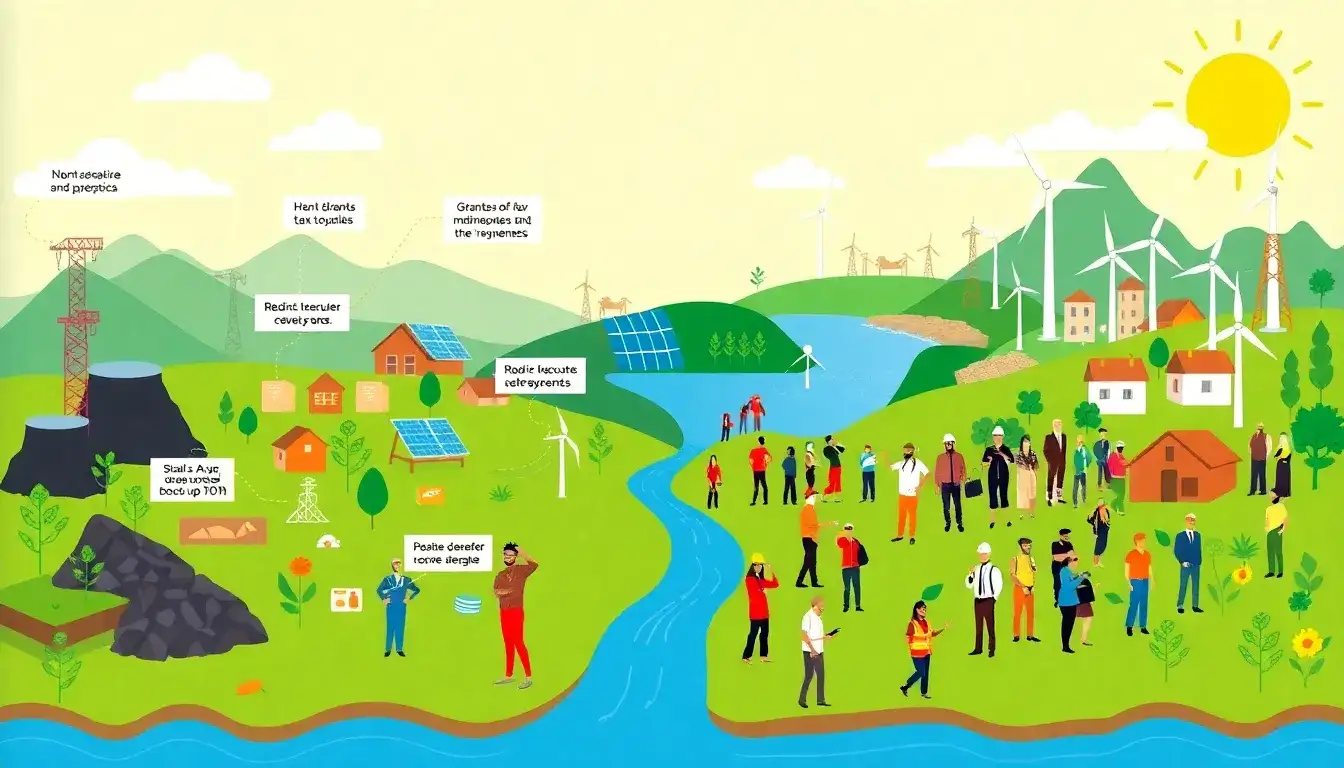
Financial incentives significantly impact job creation in the renewable energy sector by stimulating investment, expanding production and installation activities, and fostering innovation and skill development. These incentives effectively drive economic growth and employment across multiple segments of the renewable energy industry.
How Financial Incentives Drive Job Creation in Renewable Energy
1. Expanding Deployment and Installation Jobs
Financial incentives such as tax credits, rebates, grants, and loan programs lower the cost and risk for renewable energy projects, leading to increased deployment of solar panels, wind turbines, and bioenergy plants. This expansion creates numerous jobs in manufacturing, installation, and construction, including roles for engineers, technicians, and construction workers. Ongoing operation and maintenance of these facilities provide long-term employment opportunities as well.
2. Boosting Manufacturing and Supply Chains
Incentives encourage manufacturers to produce components such as solar panels, wind turbines, batteries, and other clean technology products domestically. For example, clean manufacturing tax credits under the Inflation Reduction Act in the U.S. are expected to create over 670,000 jobs in manufacturing clean energy technologies in the next decade. This reduces dependence on overseas supply chains while creating high-quality manufacturing jobs.
3. Catalyzing Innovation and Skills Development
Funding innovations and research in renewable energy technologies generate jobs in research institutions, universities, and startups focused on new energy solutions. The growth in renewable energy also necessitates new green skills, leading to the creation of specialized training and educational programs to equip workers for emerging sustainability jobs, supporting workforce transitions from traditional energy industries.
4. Supporting Local Economies and Rural Communities
Renewable energy projects frequently develop in rural or economically disadvantaged areas, thus providing new economic opportunities and local job creation outside urban centers. Loan programs targeted at rural electric cooperatives facilitate clean energy deployment and economic development, resulting in tens of thousands of rural jobs.
Examples from Recent Policy and Data
- The U.S. Department of Energy highlights that funding energy innovations not only creates well-paying jobs but also drives broader economic growth and industry competitiveness.
- According to the International Renewable Energy Agency (IRENA), global renewable energy employment continues to grow annually as the sector expands worldwide.
- The Inflation Reduction Act in the U.S. is projected to create nearly 5 million jobs over the next decade from clean energy tax credits, grid modernization, and rural cooperative loans, illustrating the powerful impact of targeted financial incentives.
In summary, financial incentives are a key lever used by governments to accelerate renewable energy deployment, stimulate manufacturing, foster innovation, and generate extensive employment opportunities across the clean energy value chain. This results in substantial job creation, economic growth, and support for the just transition to a sustainable energy future.
Original article by NenPower, If reposted, please credit the source: https://nenpower.com/blog/how-do-financial-incentives-impact-job-creation-in-the-renewable-energy-sector/

