

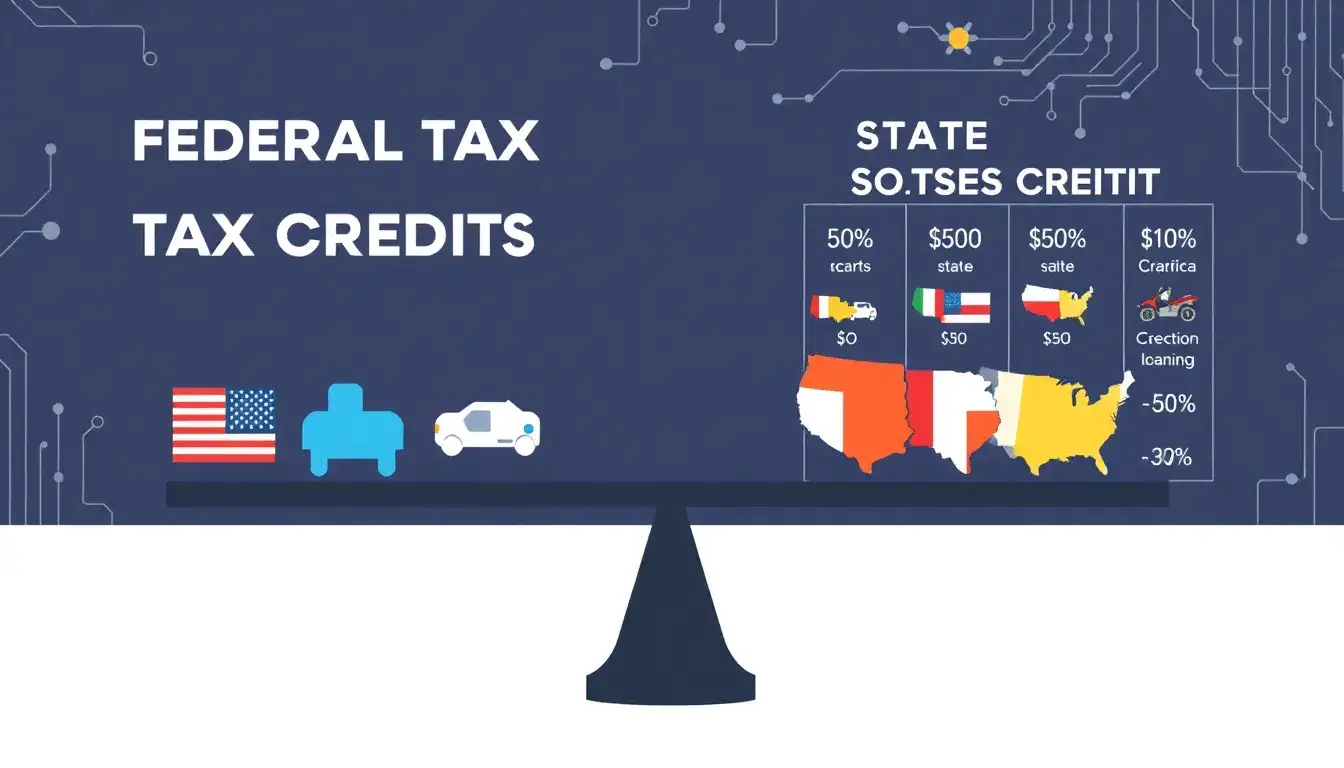
Federal and state tax credits for electric vehicles (EVs) differ in scope, eligibility, and amounts, often complementing each other. Here’s a comparison:
Federal Tax Credits
- New EVs: Up to $7,500 for qualifying purchases, split into:
- $3,750 for meeting North American battery component thresholds
- $3,750 for critical mineral sourcing requirements
- Percentages rise annually through 2032
- Used EVs: 30% of sale price (up to $4,000), with:
- $25,000 purchase price cap
- Model year must be ≥2 years older than current calendar year
- Income limits (varies by tax year) and MSRP caps for certain vehicle types.
State-Specific Tax Credits
- Amounts and types vary widely:
- Cash rebates (e.g., California’s up to $7,500 for low-income buyers)
- Tax credits/deductions (e.g., Colorado’s $5,000 credit)
- Sales tax exemptions (e.g., New Jersey, Washington)
- HOV lane access (e.g., Arizona, Georgia)
- Common features:
- Often stackable with federal credits
- May prioritize low-income households or specific vehicle types (e.g., hydrogen fuel cells)
| Feature | Federal Credits | State Credits |
|---|---|---|
| Max Credit | $7,500 (new), $4,000 (used) | $200–$7,500 (varies by state) |
| Income Limits | Yes | Some states (e.g., CA, NY) |
| Vehicle Criteria | Battery sourcing, MSRP, assembly | Often less restrictive |
| Refundability | Nonrefundable | Varies (e.g., CA rebates refundable) |
Key Takeaway: Federal credits focus on battery sourcing and affordability, while state incentives often address local adoption goals through additional rebates or perks. Always check state-specific programs for eligibility details.
Note: No state-specific program details exist in provided sources. This reflects common state-level practices as of 2024.
Original article by NenPower, If reposted, please credit the source: https://nenpower.com/blog/how-do-federal-tax-credits-compare-to-state-specific-tax-credits-for-evs/

