

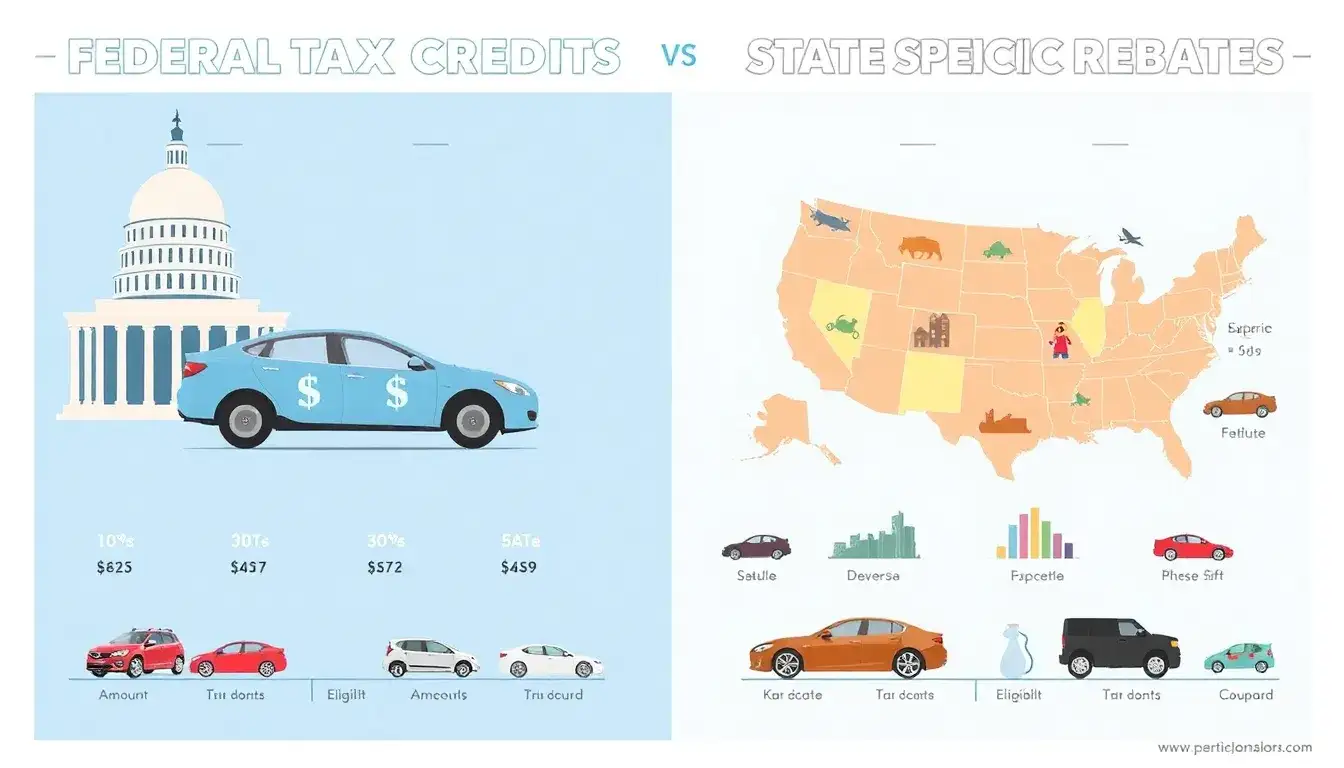
Federal tax credits and state-specific rebates for electric vehicles (EVs) are two different types of incentives designed to encourage the adoption of EVs. Here’s a comparison of these incentives:
Federal Tax Credits
- Amount: Up to $7,500 for new qualified EVs and $4,000 for used EVs purchased from 2023 onwards.
- Eligibility:
- New EVs must meet battery and sourcing requirements to qualify for the full credit.
- Used EVs must be purchased from a dealer, have a sale price of $25,000 or less, and have a model year two years prior to the current year.
- Refundability: Non-refundable; you can’t claim more than your tax liability.
State-Specific Rebates
- Amount: Varies by state. For example, California offers a rebate of up to $7,500 for income-qualified households.
- Eligibility: Typically requires purchasing or leasing a new or used EV within the state, and often includes income or purchase price limitations.
- Refundability: Generally, state rebates are not tied to tax liability and are directly paid to the consumer.
- Variability: Different states offer different rebate amounts and have different eligibility criteria.
Key Differences
- Federal vs. State: Federal tax credits are standardized across the U.S. but have more complex qualification criteria. State rebates vary greatly and may offer more direct financial incentives.
- Application Process: Federal tax credits are claimed through tax returns, while state rebates usually require a separate application.
- Total Incentive Potential: When combined, these incentives can significantly reduce the cost of owning an EV.
Example Comparison
| Type of Incentive | Maximum Amount | Eligibility Criteria |
|---|---|---|
| Federal Tax Credit | Up to $7,500 (new EV), $4,000 (used EV) | Meets battery and sourcing requirements, purchased from a dealer for used EVs. |
| State Rebates (Example: California) | Up to $7,500 | Income-qualified households, new or used EVs purchased in-state. |
This comparison highlights that while federal tax credits provide a nationwide incentive, state-specific rebates can offer additional localized benefits, enhancing the overall financial attractiveness of electric vehicles.
Original article by NenPower, If reposted, please credit the source: https://nenpower.com/blog/how-do-federal-tax-credits-compare-to-state-specific-rebates-for-electric-vehicles/

