

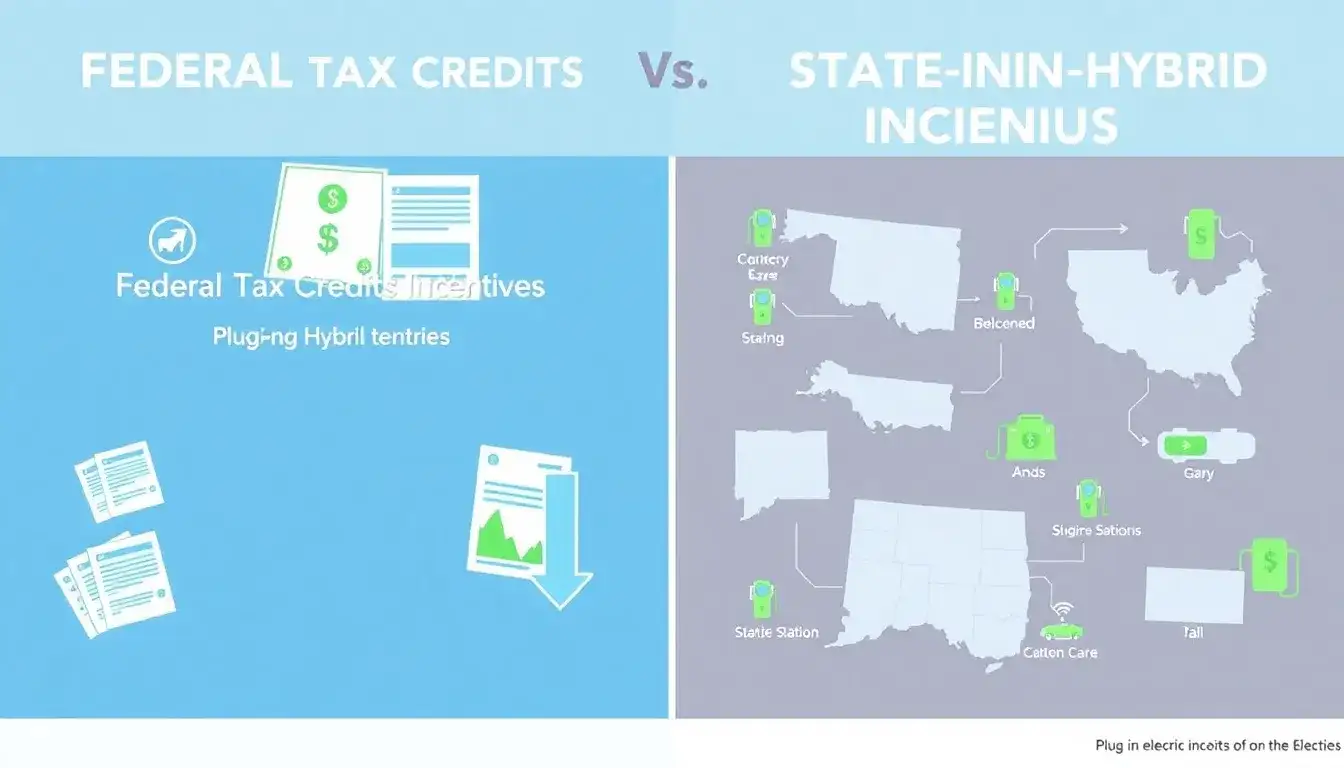
Federal tax credits for plug-in hybrids (PHEVs) generally offer a substantial incentive, potentially up to $7,500 for new qualified vehicles purchased in 2023 or later under IRC Section 30D, depending on factors such as vehicle MSRP, battery sourcing, assembly location, and the buyer’s income. This credit amount may be partial (around $3,750) for some PHEVs based on eligibility criteria and recent supply-chain rules, such as restrictions on battery components from certain countries starting in 2025.
In comparison, state-specific incentives for plug-in hybrids vary widely but typically provide additional reductions on top of the federal credit. Many states offer rebates, tax credits, reduced registration fees, or access to carpool lanes, which can range from a few hundred dollars to several thousand dollars, though usually less than the federal maximum. These state incentives are designed to complement federal credits to make PHEVs more affordable regionally.
Comparison Summary
| Aspect | Federal Tax Credits | State-Specific Incentives |
|---|---|---|
| Maximum Value | Up to $7,500 (new vehicles), $4,000 (used) | Varies widely; generally from a few hundred to several thousand dollars |
| Eligibility Criteria | Vehicle MSRP, assembly, battery sourcing, income limits; strict supply chain rules from 2024/2025 | Varies by state; may include vehicle type, price limits, income, residency requirements |
| Application Process | Claimed on federal tax return after purchase; some require dealer “time-of-sale” reporting from 2024 | Often claimed through state programs or at time of purchase; processes vary |
| Availability | Nationwide | State-dependent, with some states offering no incentives and others being very generous |
| Types of Incentives | Tax credit reducing federal tax liability | Tax credits, rebates, reduced fees, HOV lane access, and local perks |
Key Points
- The federal credit is fixed and structured, with a clear maximum amount but subject to complex eligibility rules, including new geographic and manufacturing restrictions on batteries.
- State incentives are inconsistent across the U.S. and can significantly impact the overall savings but are usually smaller than the federal credit. For example, some states might provide cash rebates of $1,000 to $2,500, while others might offer additional tax credits or perks such as reduced tolls or registration fees.
- Buyers should consider both federal and state incentives together to calculate total potential savings when evaluating the cost of a plug-in hybrid.
In summary, federal tax credits for plug-in hybrids provide a major financial benefit standardized across the country, while state incentives add an additional layer of savings and vary widely by location, often making PHEVs more affordable depending on the state’s policies.
Original article by NenPower, If reposted, please credit the source: https://nenpower.com/blog/how-do-federal-tax-credits-compare-to-state-specific-incentives-for-plug-in-hybrids/

