

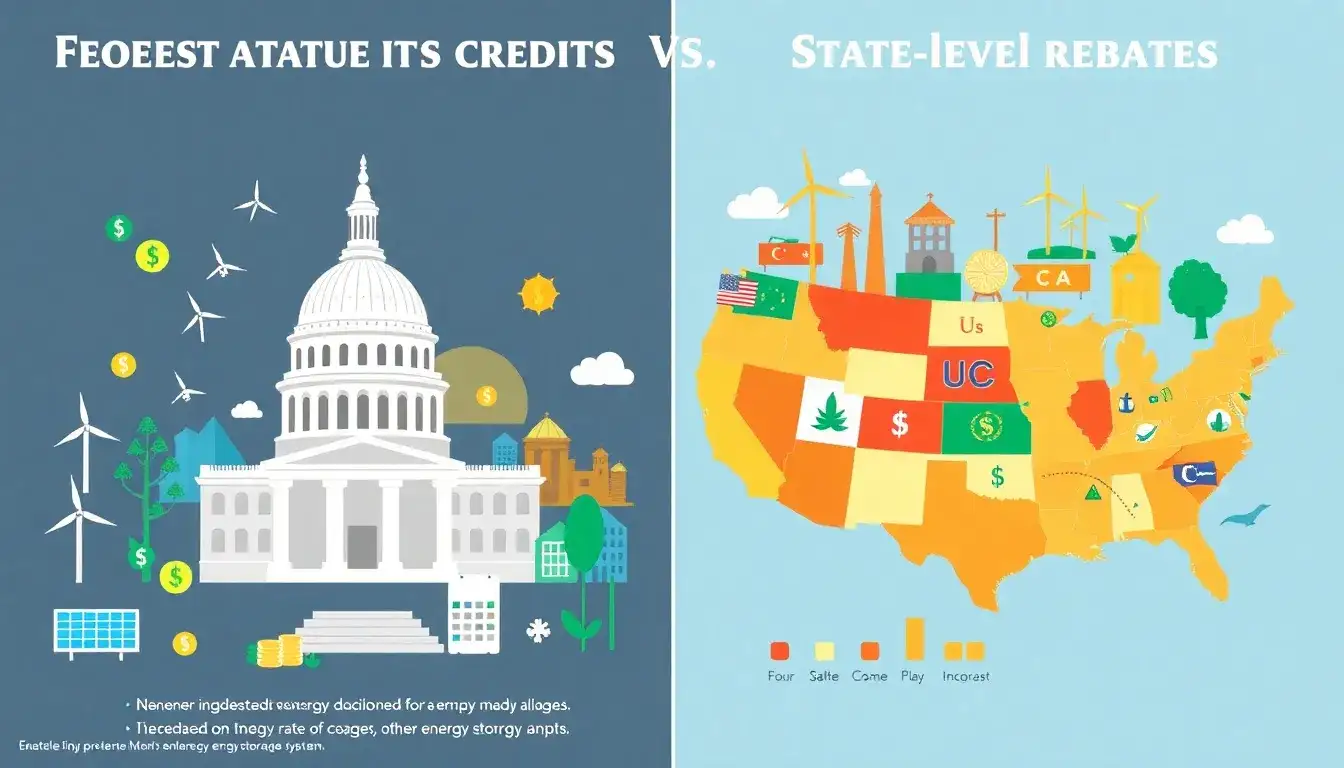
Federal tax credits and state-level rebates for energy storage each offer distinct incentives to encourage the adoption of energy storage technologies. Here is a comparison of these incentives:
Federal Tax Credits
- Eligibility: The Residential Clean Energy Credit offers a 30% tax credit for qualified battery storage technology with a capacity of at least 3 kilowatt-hours, applicable to both new and existing homes used as residences in the U.S.
- Implementation Period: The 30% tax credit applies to systems installed between December 31, 2021, and January 1, 2033. After this period, the credit will decrease gradually.
- Claiming Credits: Homeowners claim these credits using IRS Form 5695. Credits reduce federal tax liability but are not refundable.
State-Level Rebates
- Variability: Incentives vary by state, with some offering upfront rebates and others providing performance-based incentives. These programs often target specific groups or areas, such as low-income families or high fire threat districts.
- Examples:
- California: The Self-Generation Incentive Program (SGIP) provides rebates based on the capacity of energy storage installed, with enhanced benefits for certain groups.
- Connecticut: Offers up to $16,000 for residential installations, with additional incentives for businesses that reduce grid stress.
- Massachusetts: Mass Save Connected Solutions offers financial incentives and zero-percent financing to reduce costs and support grid stability.
- New York: Long Island residents can receive rebates per kilowatt of storage capacity installed.
- Application Process: Typically involves applying through state-specific programs and meeting their criteria, which can include connecting the storage system to the grid.
Comparison Points
- Applicability: Federal tax credits are available nationwide for qualified residential energy storage systems, while state rebates have specific eligibility criteria and geographic focus.
- Financial Impact: Federal tax credits can significantly reduce the upfront cost by offering a percentage of the total expenditure, whereas state rebates provide direct monetary incentives or performance-based incentives.
- Accessibility: Federal credits are available to all eligible homeowners across the U.S., while state rebates are restricted to residents of participating states and may target specific demographics or regions.
Both federal tax credits and state-level rebates can be used together to maximize savings, making energy storage more accessible by reducing upfront costs and providing ongoing financial benefits. However, it’s essential to consult with a tax advisor or state program representatives to ensure compliance with the specific eligibility criteria and application processes.
Original article by NenPower, If reposted, please credit the source: https://nenpower.com/blog/how-do-federal-tax-credits-compare-to-state-level-rebates-for-energy-storage/

