

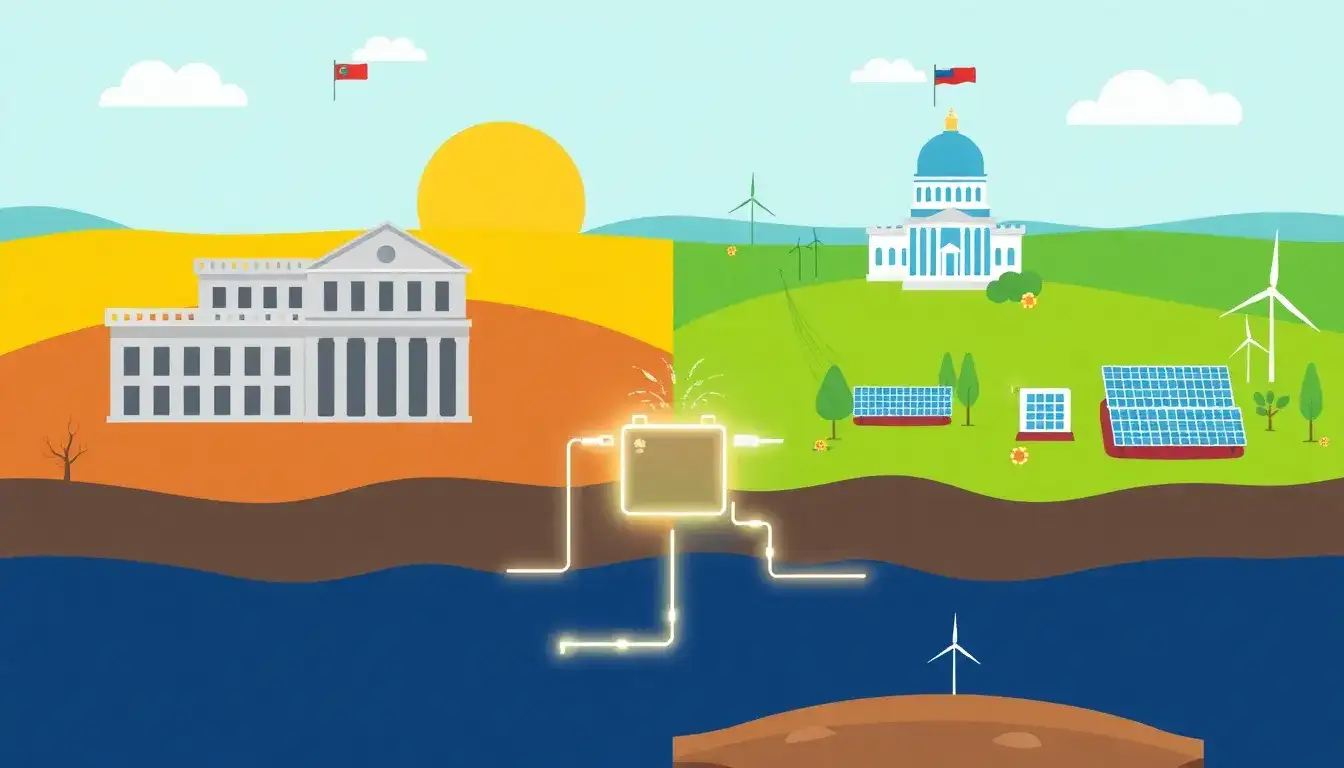
Federal incentives for battery storage complement state programs by providing a comprehensive framework that supports the adoption of energy storage technologies across the United States. Here’s how federal incentives interact with state-level programs:
Federal Incentives
- Residential Clean Energy Property Credit (25D): This federal tax credit offers homeowners a 30% rebate on the cost of purchasing and installing eligible home battery systems, which includes most home energy storage solutions. This incentive is available through 2032 for installations from 2022 onwards.
- Commercial Sector: The Clean Electricity Investment Credit (CEIC) provides incentives for commercial and industrial projects, offering up to 50% of the project cost if the project meets certain criteria. This credit applies to energy storage installations that meet specific requirements.
State Programs
State-level incentives complement federal programs in various ways, often providing additional financial benefits or specialized rebates:
- California: The Self-Generation Incentive Program (SGIP) offers a rebate based on the system size, with additional incentives for high fire threat districts and low-income households.
- Connecticut: Offers up to $16,000 for residential installations and provides 50% savings for businesses through the Energy Storage Solutions program.
- Massachusetts: The Mass Save Connected Solutions program includes financial incentives and financing options to reduce the cost of battery installation.
- New York: Long Island residents can receive a $250 per kilowatt rebate for battery storage systems under the Long Island Energy Storage Incentive.
How Federal Incentives Complement State Programs
- Cumulative Benefits: Homeowners and businesses can benefit from both federal and state incentives, which can significantly reduce the upfront costs of battery storage installations.
- Broadened Accessibility: By combining federal credits with state incentives, a wider range of consumers can afford energy storage solutions, including those in different income brackets or geographic locations.
- Encouraging Innovation: The combination of incentives can spur technological advancements in energy storage by making it economically viable for more companies to invest in research and development.
Overall, federal incentives provide a uniform, nationwide framework for supporting energy storage adoption, while state programs offer targeted support based on local needs and priorities. This combination helps accelerate the transition to cleaner energy sources and supports grid stability and efficiency.
Original article by NenPower, If reposted, please credit the source: https://nenpower.com/blog/how-do-federal-incentives-complement-state-programs-for-battery-storage/

