

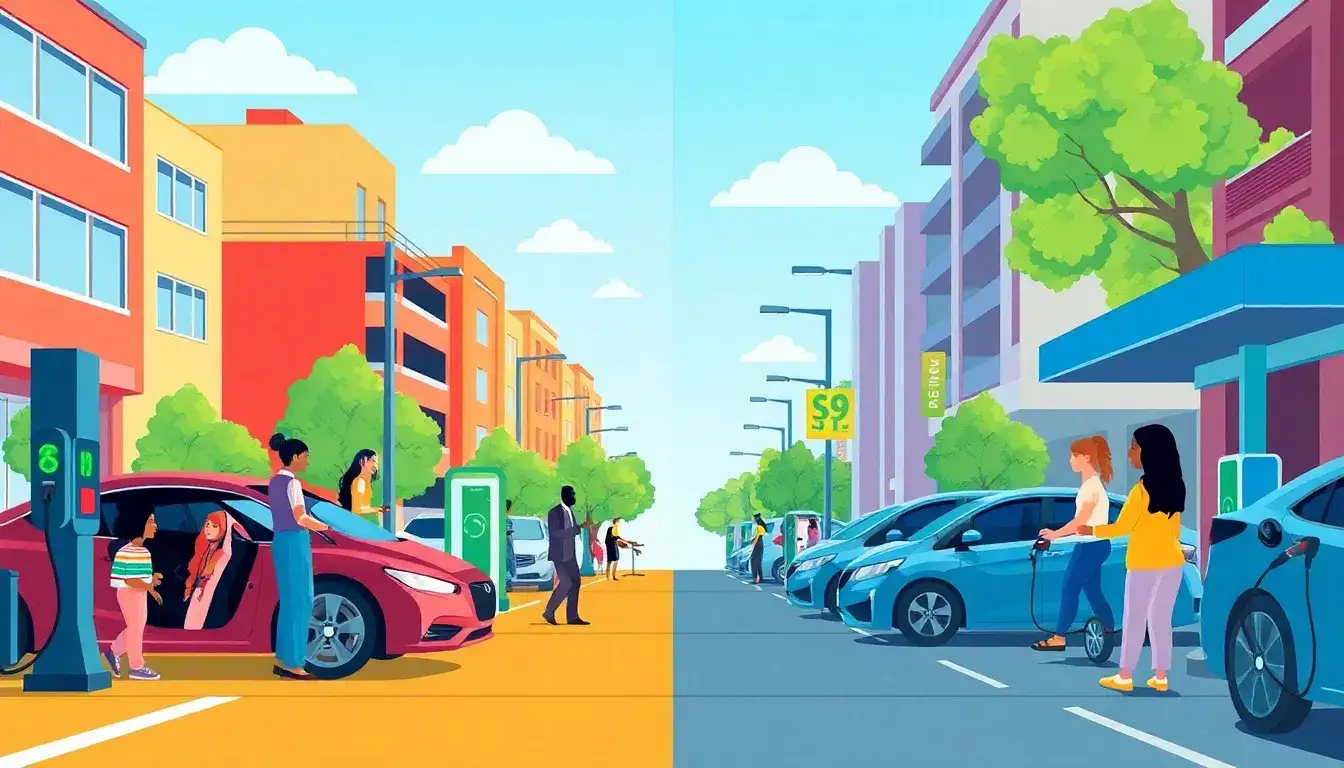
Federal funding programs like the National Electric Vehicle Infrastructure (NEVI) Formula Program significantly impact EV infrastructure development in low-income and underserved areas by providing targeted financial resources and strategic planning requirements to states.
NEVI Program Overview and Its Role
- The NEVI program, created under the Bipartisan Infrastructure Law (BIL), allocates $5 billion over five years (FY 2022–2026) to states, D.C., and Puerto Rico for deploying EV charging stations. Initially, funding focuses on building out EV charging stations along designated Alternative Fuel Corridors (AFCs), with DC fast chargers spaced every 50 miles. After corridor buildout, funds can be used for stations on any public road or publicly accessible location.
- States must submit annual plans detailing how NEVI funds will be strategically and equitably applied to EV infrastructure deployment, including soliciting public input from Tribal Governments and organizations to ensure equitable allocation.
Impact on Low-Income and Underserved Areas
- Several states explicitly use NEVI funding to address disparities in EV charging infrastructure access, especially where private investment has lagged, such as rural, disadvantaged, and low-income communities.
- Texas dedicates about half its NEVI funds to rural communities to support long-range travel, countering initial investments concentrated in urban, wealthier areas.
- Florida highlights that half of its alternative fuel corridors run through disadvantaged communities and uses NEVI funds to fill gaps and innovate solutions for rural, disadvantaged, and underserved areas.
- New York targets rural areas and urban locations with multi-unit dwellings where EV charging coverage gaps exist, using NEVI funds to serve drivers in these more vulnerable communities.
- California commits at least 50% of NEVI funding to build EV chargers in underserved and low-income neighborhoods, aiming to increase accessibility where EV adoption—and hence private investment—has been low.
Broader Effects
- By mandating equity-focused planning and directing funds toward underinvested areas, NEVI helps reduce the urban-rural and income-based disparities in EV infrastructure availability.
- This enables low-income communities to participate more fully in the transition to electric vehicles, providing essential charging access for residents who may rely on public or multi-unit housing, and supporting equitable access to clean transportation benefits.
In summary, NEVI and similar federal funding programs drive investment in EV infrastructure that consciously targets underserved and low-income areas, helping to close the equity gaps in EV charging access across the country.
Original article by NenPower, If reposted, please credit the source: https://nenpower.com/blog/how-do-federal-funding-programs-like-nevi-impact-ev-infrastructure-in-low-income-areas/

