

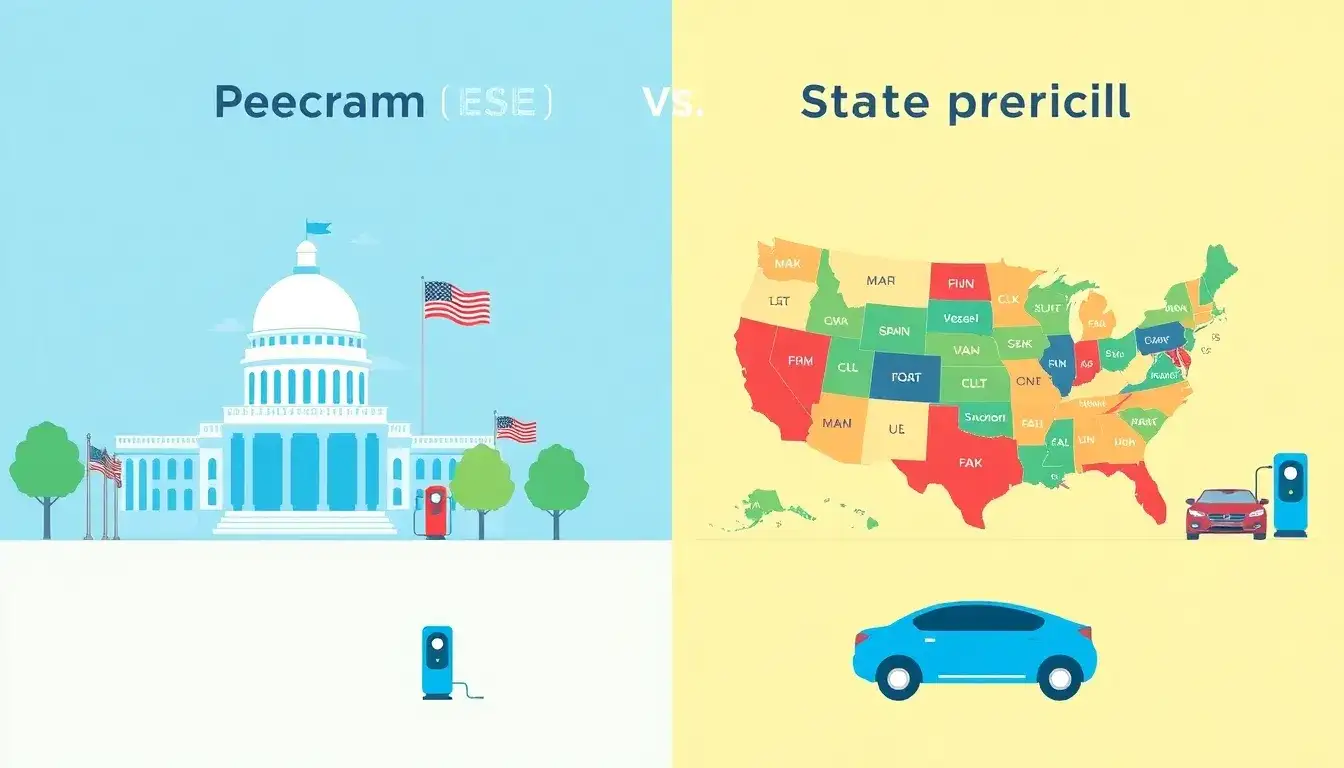
Federal EV Tax Credits
- The federal government offers a tax credit of up to $7,500 for new qualified plug-in electric vehicles or fuel cell electric vehicles purchased in 2023 or later.
- This credit is structured in two parts: up to $3,750 for meeting battery assembly/manufacturing requirements in North America, and up to $3,750 for meeting critical minerals sourcing requirements, which increase over time until 2032.
- For used EVs purchased from a dealer starting in 2023, a federal tax credit of up to $4,000 is available, which equals 30% of the sale price capped at $4,000; the vehicle must cost $25,000 or less and be at least two model years old.
- The federal credit is nonrefundable, meaning it can only reduce tax liability to zero but cannot result in a refund exceeding taxes owed.
State-Specific EV Tax Credits
- Unlike the uniform federal credit, state EV tax credits and incentives vary widely by state and can include tax credits, rebates, reduced registration fees, and other benefits.
- State incentives may be structured as upfront rebates or tax credits and can differ significantly in amount and eligibility criteria.
- Since state credits and incentives are state-specific, their availability and value depend on the state where the vehicle is purchased or registered.
Comparison
| Feature | Federal EV Tax Credit | State-Specific EV Tax Credits |
|---|---|---|
| Maximum credit amount | Up to $7,500 (new EV), up to $4,000 (used EV) | Varies widely by state, often less than federal amount but sometimes combined with rebates |
| Eligibility criteria | Battery sourcing and manufacturing requirements, vehicle price limits for used EVs | Varies by state; often includes income limits, vehicle price caps, or particular vehicle models |
| Credit type | Nonrefundable tax credit | May be tax credit, rebate, or other financial incentive |
| Application | Federal income tax return | State tax return or point-of-sale rebate, depending on state program |
In summary, the federal EV tax credit provides a standardized, potentially substantial tax benefit for new and some used EV purchases nationwide, with eligibility tied to manufacturing and sourcing conditions. State-specific credits vary by jurisdiction and often complement federal credits but differ in form, requirements, and benefit amounts. To maximize savings, buyers should consider both federal and their state’s incentives.
Original article by NenPower, If reposted, please credit the source: https://nenpower.com/blog/how-do-federal-ev-tax-credits-compare-to-state-specific-ones/

