

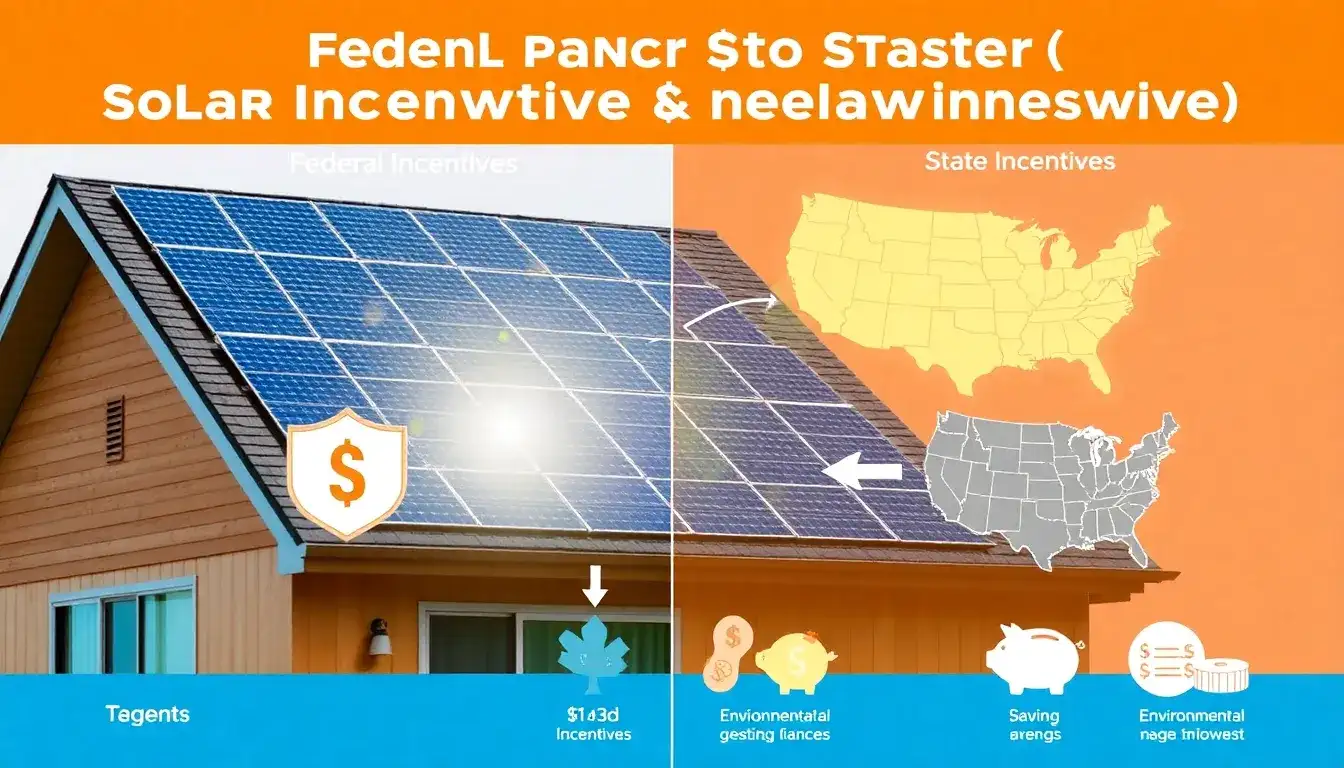
Combining federal and state solar incentives can significantly enhance the savings from installing solar panels, making renewable energy more accessible and affordable. Here’s how these incentives work together:
Federal Solar Incentives
- Federal Solar Investment Tax Credit (ITC): The ITC provides a 30% tax credit on the total cost of a solar panel system installed from 2022 through 2032. This credit can be applied to both residential and commercial installations and includes expenses like panels, inverters, racking, and labor.
- Tax Credit Flexibility: The ITC allows unused credits to be carried forward for up to five years if the taxpayer’s liability is insufficient to claim the full credit in the year of installation.
State Solar Incentives
- State Rebates and Credits: Various states offer additional rebates or tax credits. For instance, some states like Arizona provide a 25% state tax credit up to $1,000 for homeowners. New York offers a 25% tax credit on system costs, up to $5,000.
- Sales and Property Tax Exemptions: Some states, like Arizona, offer 100% property tax exemptions for renewable energy equipment, meaning homeowners’ property taxes won’t increase due to solar installations. Additionally, there might be exemptions on sales taxes for solar equipment purchases.
Combining Incentives for Maximum Savings
Steps to Combine Incentives:
- Identify Federal and State Incentives: Determine the federal ITC and any applicable state incentives available in your area. Use resources like the IRS website for federal credits and your state’s energy department for local incentives.
- Calculate Total Savings: Add the federal ITC savings (30% of the system cost) to any state rebate or credit. For example, a system costing $30,000 with a federal ITC of $9,000 (30%) and a state rebate of $1,000 could reduce the upfront cost significantly.
- Stack Additional Benefits: Consider other local benefits such as utility rebates or property tax exemptions. These can further reduce costs or prevent tax increases.
- Consult Professionals: Engage with tax professionals or solar installers familiar with both federal and state incentives to ensure you maximize your savings and comply with all requirements.
Benefits of Stacking Incentives
- Reduced Upfront Costs: By combining federal and state incentives, homeowners can reduce the cost of installing solar panels by 50% or more, depending on the specific incentives available.
- Increased Financial Viability: Lower upfront costs make solar installations more attractive, allowing homeowners to recoup their investment faster through reduced electricity bills and potential net metering benefits.
- Environmental Impact: Encourages a shift towards renewable energy sources, contributing to a more sustainable future.
In summary, combining federal and state solar incentives effectively lowers the financial barrier to going solar, providing significant savings and boosting the adoption of renewable energy across the U.S. Homeowners should research local options and act promptly as many incentives are set to expire or decrease over time.
Original article by NenPower, If reposted, please credit the source: https://nenpower.com/blog/how-do-federal-and-state-solar-incentives-combine-for-maximum-savings/

