

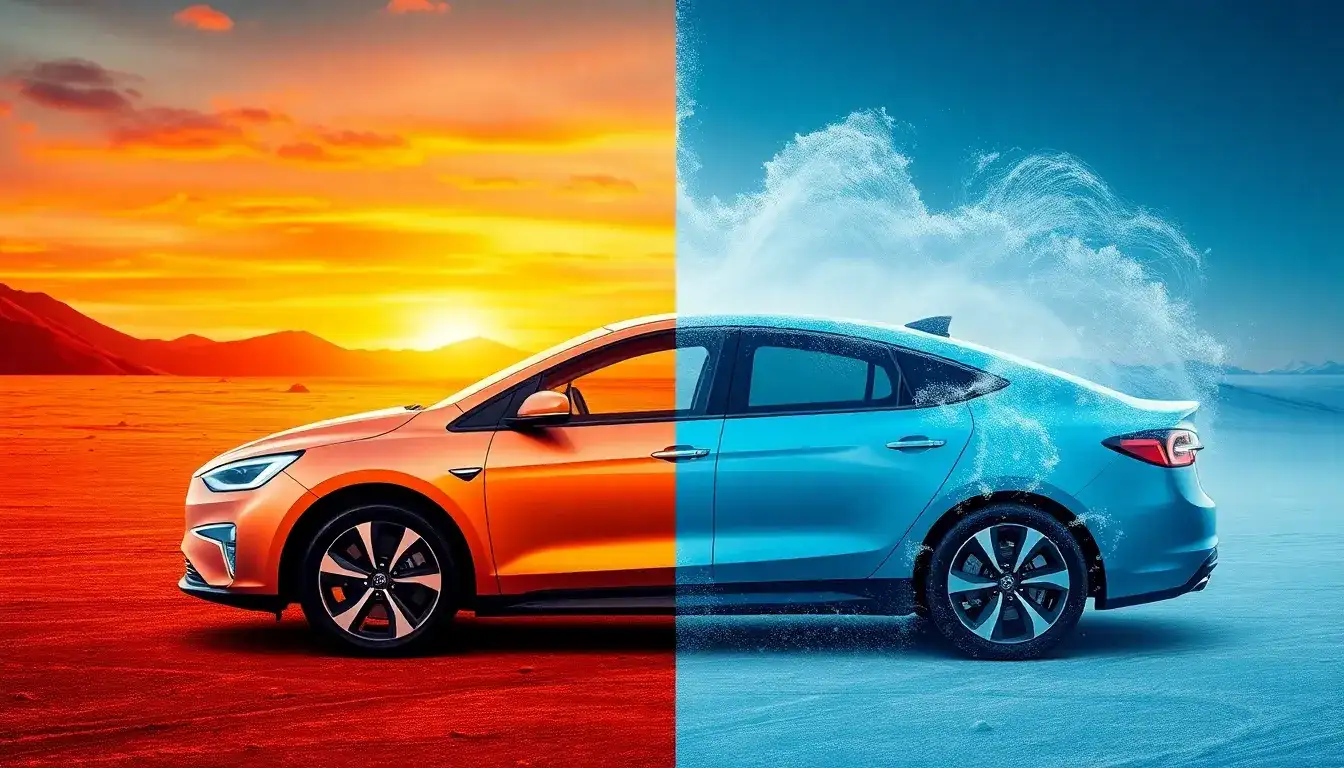
Extreme temperatures significantly influence the emissions-related performance of electric vehicles (EVs), primarily through their impact on battery efficiency and energy consumption, which in turn affects the overall range and indirectly the emissions associated with electricity generation to recharge them.
How Extreme Temperatures Affect EV Battery Performance and Range
In High Temperatures:
- When ambient temperatures rise above about 95°F (35°C), EV battery performance declines because heat slows down the movement of electrons within the battery, reducing power availability. This can lead to a range drop of up to 15%, or even 17% if air conditioning is heavily used to cool the cabin.
- Prolonged exposure to extreme heat (around 40°C and above) can accelerate battery degradation by causing overheating, potentially damaging battery cells and shortening battery life.
In Low Temperatures:
- Cold weather drastically decreases EV range, with research showing a reduction of around 12% at 20°F (-7°C) just from temperature effects on the battery. When heating systems are used to warm the cabin and battery, range can drop by as much as 41%.
- Cold temperatures slow chemical and physical reactions within the battery, acting as resistance that reduces power output. Additionally, energy must be diverted to heat the battery to maintain optimal functioning, further reducing range.
- At very cold temperatures (e.g., -4°F), EVs can experience up to a 50% reduction in driving range compared to manufacturer ratings, depending on the model and conditions.
Impact on Emissions
- Although EVs produce zero tailpipe emissions, the reduction in driving range due to extreme temperatures means they require more frequent charging. If the electricity used to recharge comes from fossil fuel sources, this can increase indirect emissions associated with EV operation.
- Battery efficiency loss and increased HVAC energy demand (heating and cooling) mean the vehicle consumes more electricity per mile, raising the effective environmental footprint under extreme temperature conditions compared to moderate climates.
Summary
Extreme temperatures—both hot and cold—reduce the effective driving range of electric vehicles by affecting battery chemistry and increasing the use of energy-intensive cabin climate control systems. This reduction in range causes more frequent charging cycles, which can indirectly lead to higher emissions depending on the electricity source. High heat also risks accelerating battery degradation, potentially decreasing battery lifespan and increasing environmental costs related to battery replacement.
Original article by NenPower, If reposted, please credit the source: https://nenpower.com/blog/how-do-extreme-temperatures-influence-the-emissions-of-electric-vehicles/

