

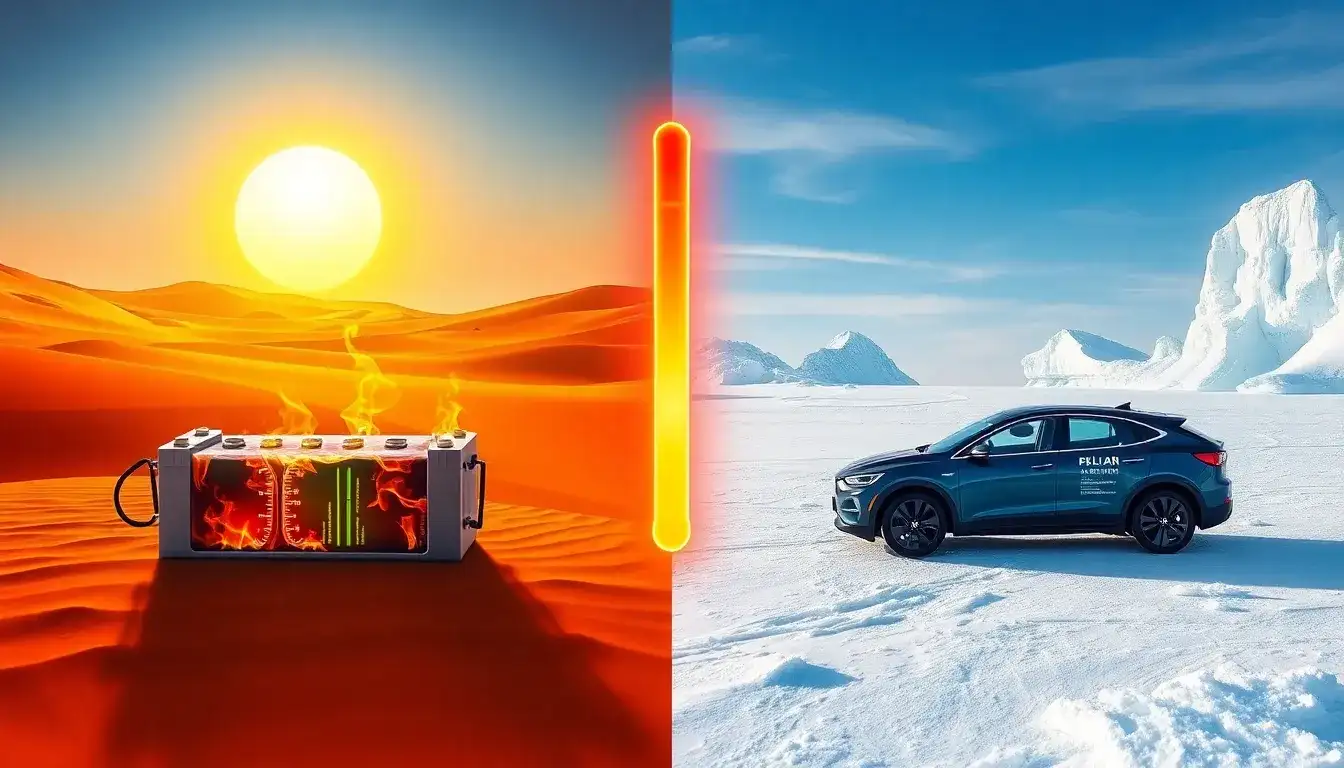
Extreme temperatures—both very hot and very cold—have significant effects on the longevity and performance of electric vehicle (EV) batteries:
Effects of Extreme Heat on EV Batteries
- Accelerated degradation and aging: When temperatures exceed roughly 85°F (about 29°C), lithium-ion batteries in EVs age faster and experience increased degradation. At temperatures around 40°C (~104°F) or higher, this accelerated wear becomes more pronounced, leading to loss of battery capacity over time and reduced lifespan.
- Chemical impacts: Heat causes ions in the battery to move more rapidly, which can prevent them from attaching properly to the anode or cathode. This leads to chemical inefficiencies, small cracks in battery cells, and diminished usable battery life. The extreme heat stresses the battery’s internal chemistry, likened to a “slow-moving cancer” or “heart disease” for the battery.
- Thermal management usage and energy cost: Most modern EVs have active thermal management systems to cool the battery, which helps to reduce damage and slow degradation. However, cooling systems consume additional energy, thereby slightly reducing driving range. These systems tend to operate more during charging or when plugged in, but batteries can still be vulnerable to heat when idle outside of those times.
Effects of Extreme Cold on EV Batteries
- Reduced driving range: In freezing conditions, batteries become less efficient, and EVs often expend extra energy to heat the battery cells to maintain optimal operating temperature. This heating reduces the net energy available for driving, cutting down the vehicle’s range.
- Performance and adaptation: Despite cold conditions impacting efficiency and range, EVs in very cold climates (e.g., Norway) perform adequately with suitable thermal management technologies that recover heat from other vehicle components to warm the battery cells.
Overall Impact on Battery Longevity
- EV batteries typically last between 15 to 20 years under moderate conditions, with an average annual degradation rate of about 1.8%. However, exposure to extreme temperatures accelerates this degradation, potentially shortening the practical lifespan of the battery.
- Extreme heat is more damaging over time compared to cold, causing irreversible capacity loss and chemical damage that lowers the battery’s effective life.
In summary, while EVs are designed with thermal management systems to mitigate the effects of temperature extremes, persistent exposure to very high temperatures causes accelerated battery degradation and reduces their longevity, and very cold temperatures reduce range and efficiency mainly through increased energy use to heat the battery.
Original article by NenPower, If reposted, please credit the source: https://nenpower.com/blog/how-do-extreme-temperatures-affect-the-longevity-of-electric-vehicle-batteries/

