

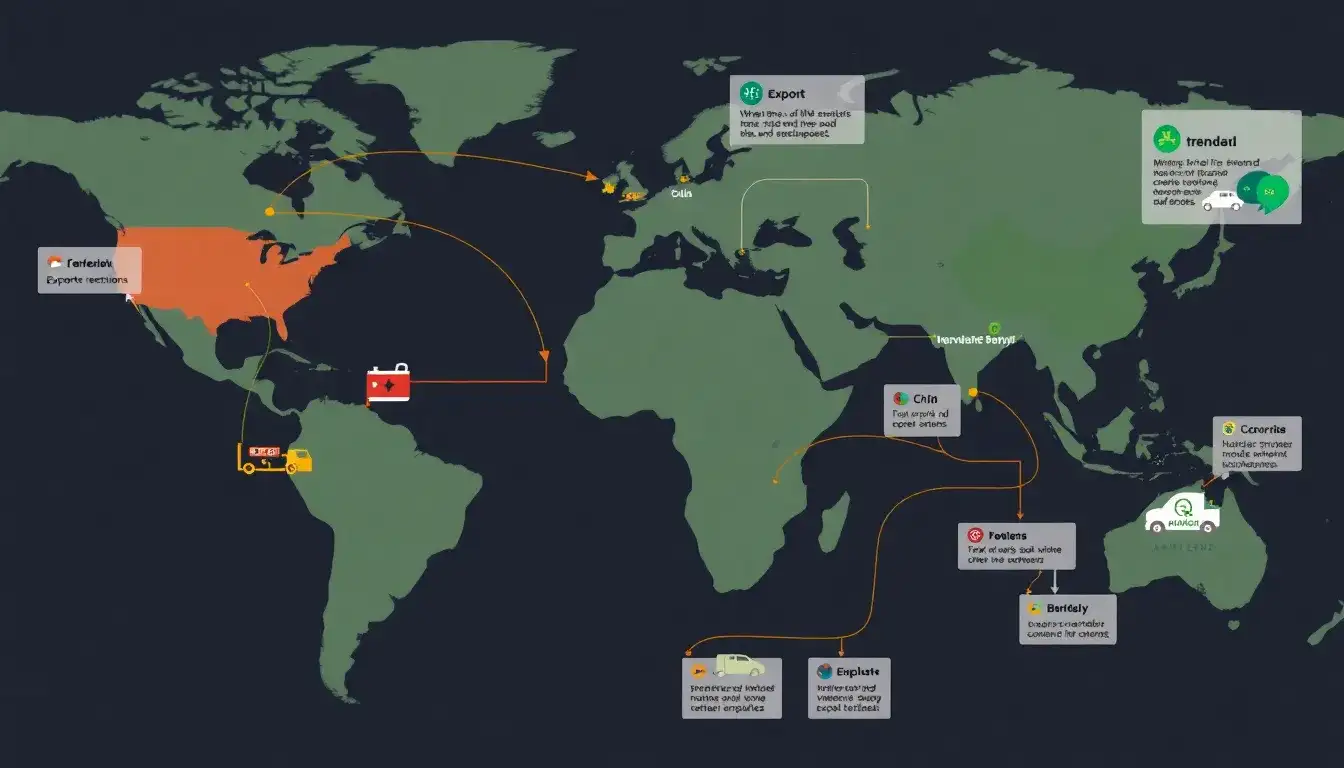
Export restrictions on rare earths imposed by China can significantly impact global electric vehicle (EV) supply chains in several ways:
- Supply Disruption: The restrictions, which require special export licenses for critical rare earth elements like dysprosium, terbium, and others, can cause a temporary halt or reduction in exports. This can disrupt the supply chain as companies wait for licenses or seek alternative sources.
- Component Production Challenges: Rare earths are essential for the production of permanent magnets used in EV motors. The lack of a consistent supply of these materials can hinder motor manufacturing and, subsequently, EV production.
- Diversification and Investment: These export controls are expected to drive investment outside of China, as companies look to establish alternative supply chains. This could lead to a more diversified global rare earth market, potentially mitigating long-term supply risks.
- Price Pressures: While the cost of rare earths is a small fraction of overall EV production costs, restrictions can lead to price increases. However, these are unlikely to significantly affect overall EV production costs.
- Resilience and Buffer Stocks: Similar to previous restrictions on materials like graphite, the market may exhibit resilience. Companies typically maintain buffer stocks, which can help manage short-term supply shocks. It is expected that it may take around two months for supply chains to normalize as companies secure export licenses.
Overall, while there are challenges ahead, the impact of these restrictions is not insurmountable, and global EV supply chains are likely to adapt through diversification and strategic stock management.
Original article by NenPower, If reposted, please credit the source: https://nenpower.com/blog/how-do-export-restrictions-on-rare-earths-impact-global-ev-supply-chains/

