

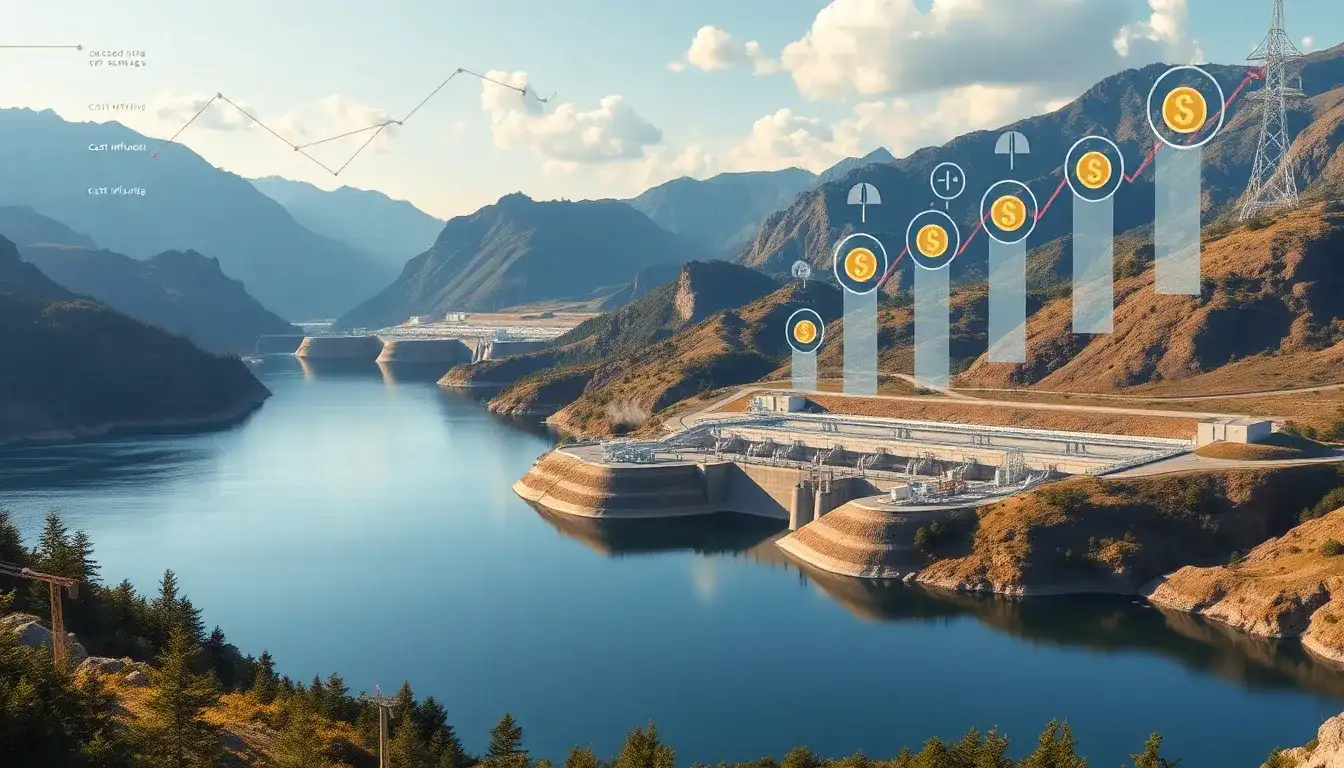
Existing reservoirs significantly reduce the costs of new pumped hydro storage (PHS) projects compared to constructing entirely new closed-loop systems. Here’s how:
Cost Advantages of Using Existing Reservoirs
- Lower infrastructure expenses: Projects incorporating an existing reservoir eliminate the need for constructing one of the two required reservoirs, reducing dam-construction, land-acquisition, and environmental-mitigation costs.
- Reduced environmental permitting: Retrofitting existing hydropower infrastructure minimizes land-use changes and environmental impacts, streamlining regulatory approvals compared to new dam projects.
- Operational efficiency: Existing reservoirs often integrate with pre-built transmission lines and hydropower facilities, lowering grid-connection costs.
Comparison: Closed-Loop vs. Existing Reservoir PHS
| Factor | Closed-Loop (Two New Reservoirs) | Existing Reservoir Projects |
|---|---|---|
| Capital Costs | Higher due to full-scale construction | Lower (existing infrastructure reduces costs) |
| Environmental Impact | Higher (new land disturbance) | Lower (minimized land-use changes) |
| Regulatory Timeline | Longer (permitting complexity) | Shorter (repurposing existing assets) |
Case Example
The Big Creek hydropower system in California demonstrates the feasibility of retrofitting existing reservoirs for pumped storage, avoiding the $12.5–20 billion costs of new projects by leveraging existing dams and reservoirs. Similar retrofits in Europe and the U.S. show how this approach balances cost-efficiency with grid reliability.
Closed-loop PHS remains relevant for regions without suitable existing reservoirs but faces higher costs due to dual-reservoir construction.
Original article by NenPower, If reposted, please credit the source: https://nenpower.com/blog/how-do-existing-reservoirs-influence-the-cost-of-new-pumped-hydro-storage-projects/

