

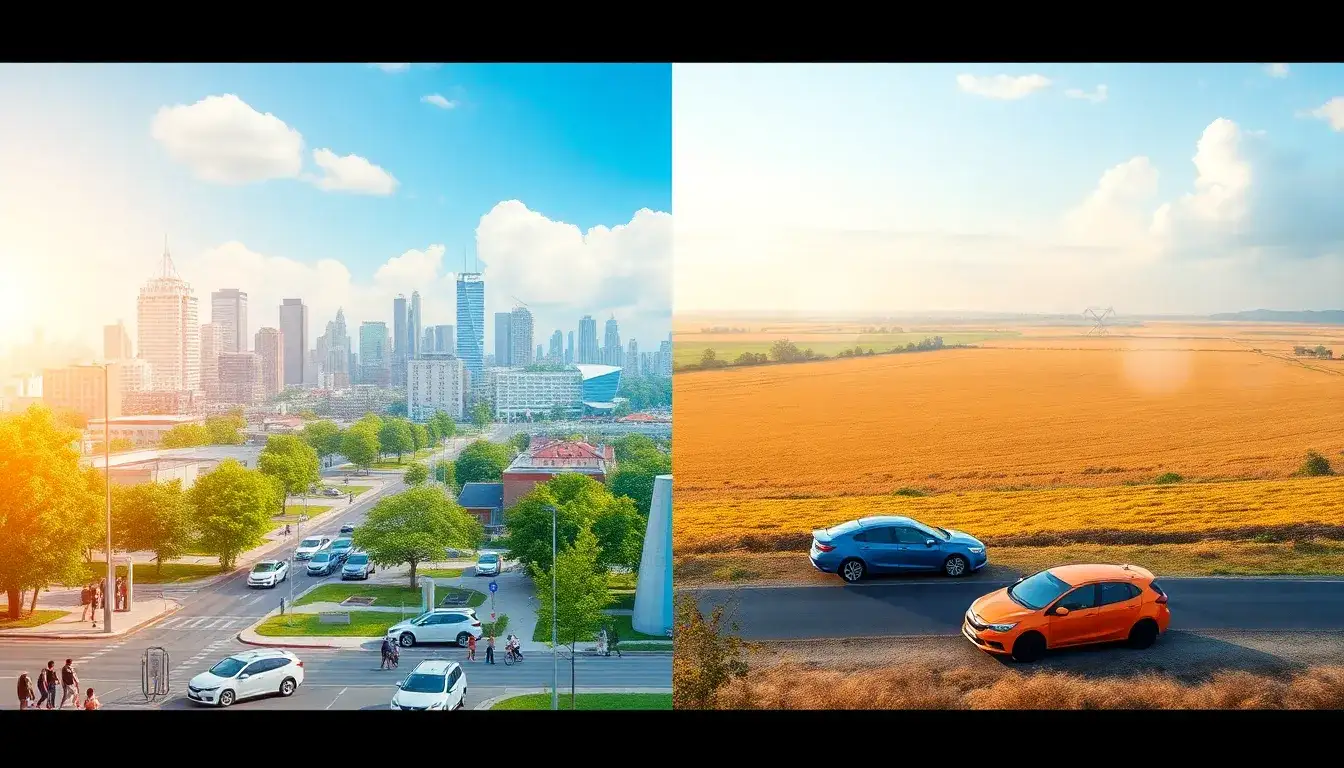
Electric vehicles (EVs) have a more pronounced impact on urban air quality compared to rural areas, though benefits and challenges vary by region. Here’s a breakdown:
Urban Areas
- Direct pollution reduction: EVs eliminate tailpipe emissions of nitrogen oxides (NOx), particulate matter (PM2.5), and other pollutants in cities, which are heavily concentrated due to traffic density.
- Public health benefits: Urban areas see significant health improvements. For example:
- New York, Chicago, and Houston could prevent hundreds of premature deaths monthly with widespread EV adoption.
- London models suggest a 30% reduction in air pollution-related deaths.
- Equity gaps: While EVs reduce pollution across all urban communities, disadvantaged neighborhoods near major roads still face higher baseline pollution from remaining gas-powered traffic, despite experiencing 40% greater relative reductions.
Rural Areas
- Lower baseline pollution: Vehicle-related emissions are less concentrated in rural regions, so EV adoption yields smaller absolute air quality improvements compared to cities.
- Grid dependency: Rural areas might rely more on fossil-fuel-heavy electricity grids, potentially offsetting some EV emission benefits during charging.
- (Note: The provided studies focus on urban impacts; rural data is inferred from broader principles.)
Key Exceptions
- Los Angeles: Full electrification could increase PM2.5 and ozone under certain conditions due to its unique atmospheric chemistry.
- Charging infrastructure: Urban areas often have better charging access, accelerating EV adoption and compounding air quality benefits.
Comparative Summary
| Aspect | Urban Impact | Rural Impact |
|---|---|---|
| Pollution Reduction | High (dense traffic) | Moderate (dispersed sources) |
| Health Benefits | Significant (e.g., fewer deaths) | Limited (lower baseline) |
| Equity | Mixed (disparities persist) | Less studied |
While EVs universally reduce emissions, urban centers gain the most immediate and measurable air quality improvements due to higher traffic density and pollution exposure. Rural benefits, though present, are less pronounced and understudied in the literature provided.
Original article by NenPower, If reposted, please credit the source: https://nenpower.com/blog/how-do-evs-impact-urban-air-quality-compared-to-rural-areas/

