

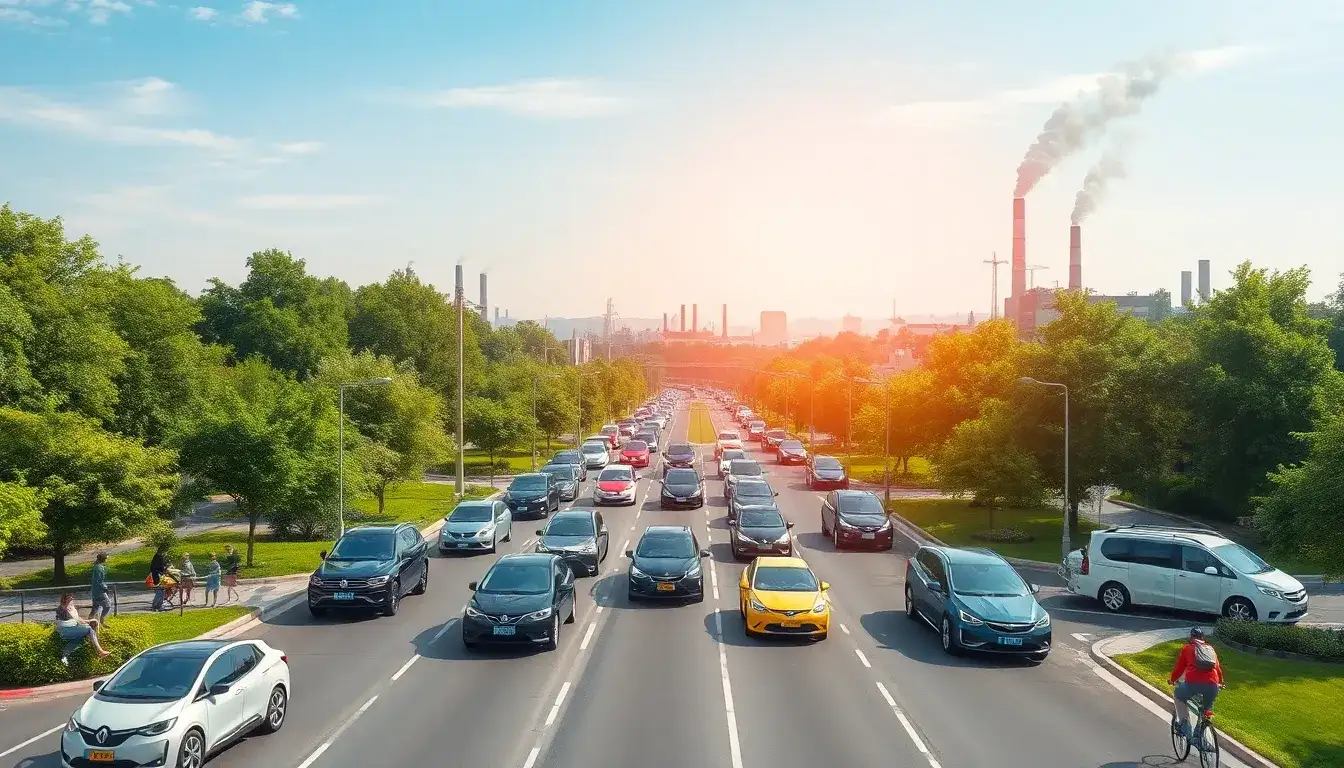
Electric vehicles (EVs) contribute to reducing air pollution and its associated health problems primarily by producing zero tailpipe emissions. Unlike gasoline or diesel-powered cars, EVs do not emit harmful pollutants such as nitrogen oxides (NOx), carbon monoxide (CO), hydrocarbons (HC), and particulate matter (PM) during operation, which are major contributors to urban smog and respiratory diseases.
Reduction of Tailpipe Emissions
- EVs eliminate toxic tailpipe emissions completely because they do not have a combustion engine. This absence of combustion means no direct emissions of NOx, CO, HC, or particulate matter from the vehicle itself, significantly improving local air quality.
- This reduction in emissions leads to less smog and lower concentrations of ground-level ozone, both of which are linked to respiratory and cardiovascular health problems.
Impact on Particulate Matter (PM2.5 and PM10)
- Studies indicate that switching from internal combustion engine (ICE) vehicles to battery electric vehicles (BEVs) results in a 6-42% reduction in particulate matter emissions (PM2.5 and PM10), which are harmful airborne particles linked to lung disease and other health issues.
- Even though EVs tend to be heavier, which can increase tire and brake wear-related particles, regenerative braking technology in EVs reduces brake wear and thus lowers particulate emissions compared to conventional vehicles without regenerative braking.
Health Benefits From Reduced Air Pollution
- Lower air pollution due to EV adoption correlates with improved respiratory and cardiovascular health outcomes. Reduced exposure to toxic pollutants decreases the incidence of asthma, lung cancer, heart disease, and premature deaths associated with poor air quality.
- Regions with high adoption of EVs have seen measurable improvements in air quality and public health, demonstrating the dual benefits of EVs in mitigating climate change and reducing health risks linked to polluted air.
Continued Improvement with Cleaner Electricity
The environmental benefits of EVs increase as the electricity grid becomes cleaner. As more renewable energy is integrated and fossil fuel use declines, the overall emissions associated with EV charging decrease, further reducing air pollution over time.
In summary, by eliminating tailpipe emissions and reducing particulate matter release through regenerative braking, EVs improve air quality and help mitigate health problems caused by air pollution such as respiratory and cardiovascular diseases. This effect strengthens with the decarbonization of the electric grid, making EVs a key technology for cleaner air and better public health.
Original article by NenPower, If reposted, please credit the source: https://nenpower.com/blog/how-do-evs-contribute-to-reducing-air-pollution-and-its-associated-health-problems/

