

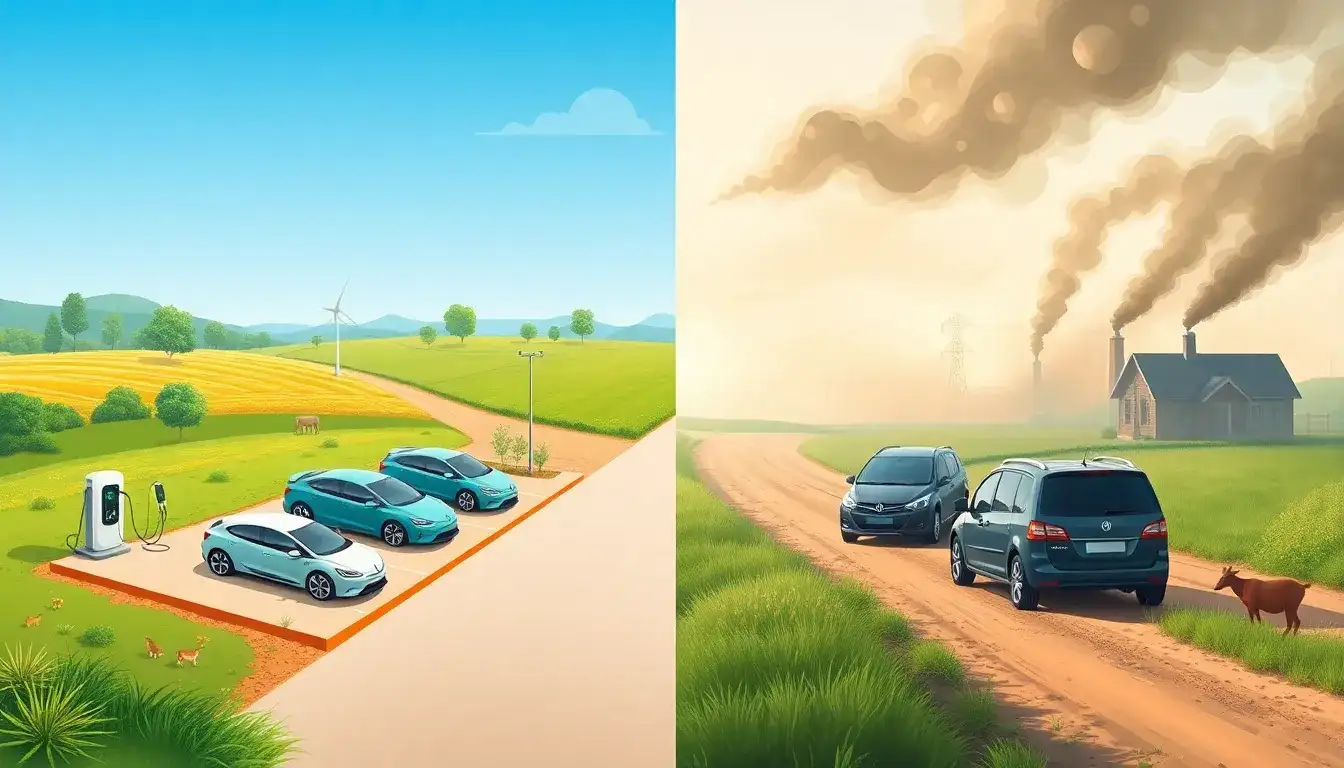
Benefits of EVs Over Traditional Vehicles
- Zero Tailpipe Emissions: Battery Electric Vehicles (BEVs) produce no tailpipe emissions, significantly reducing air pollution in rural areas compared to traditional vehicles. Hybrid Electric Vehicles (HEVs) and Plug-in Hybrid Electric Vehicles (PHEVs) also emit fewer emissions when operating in electric mode.
- Lower Greenhouse Gas Emissions: EVs tend to have a lower carbon footprint than gasoline-powered cars, especially if the electricity used for charging is generated from renewable sources. This helps mitigate climate change effects, such as increased wildfires, storms, and heatwaves, which are particularly relevant in rural regions.
- Reduced Brake Dust Pollution: EVs often use regenerative braking, which means they produce less brake dust compared to conventional vehicles, further reducing pollution.
Challenges and Considerations
- Energy Source: The environmental benefits of EVs depend on the source of electricity used for charging. If the electricity is generated from fossil fuels, the overall emissions reduction might be less significant.
- Infrastructure Limitations: Rural areas often face challenges with charging infrastructure, which can limit the widespread adoption of EVs.
Overall, EVs can significantly reduce pollution in rural areas, offering both health and environmental benefits, especially if coupled with renewable energy sources. However, the availability of charging infrastructure remains a crucial factor for their adoption.
Original article by NenPower, If reposted, please credit the source: https://nenpower.com/blog/how-do-evs-compare-to-traditional-vehicles-in-terms-of-overall-pollution-in-rural-areas/

