

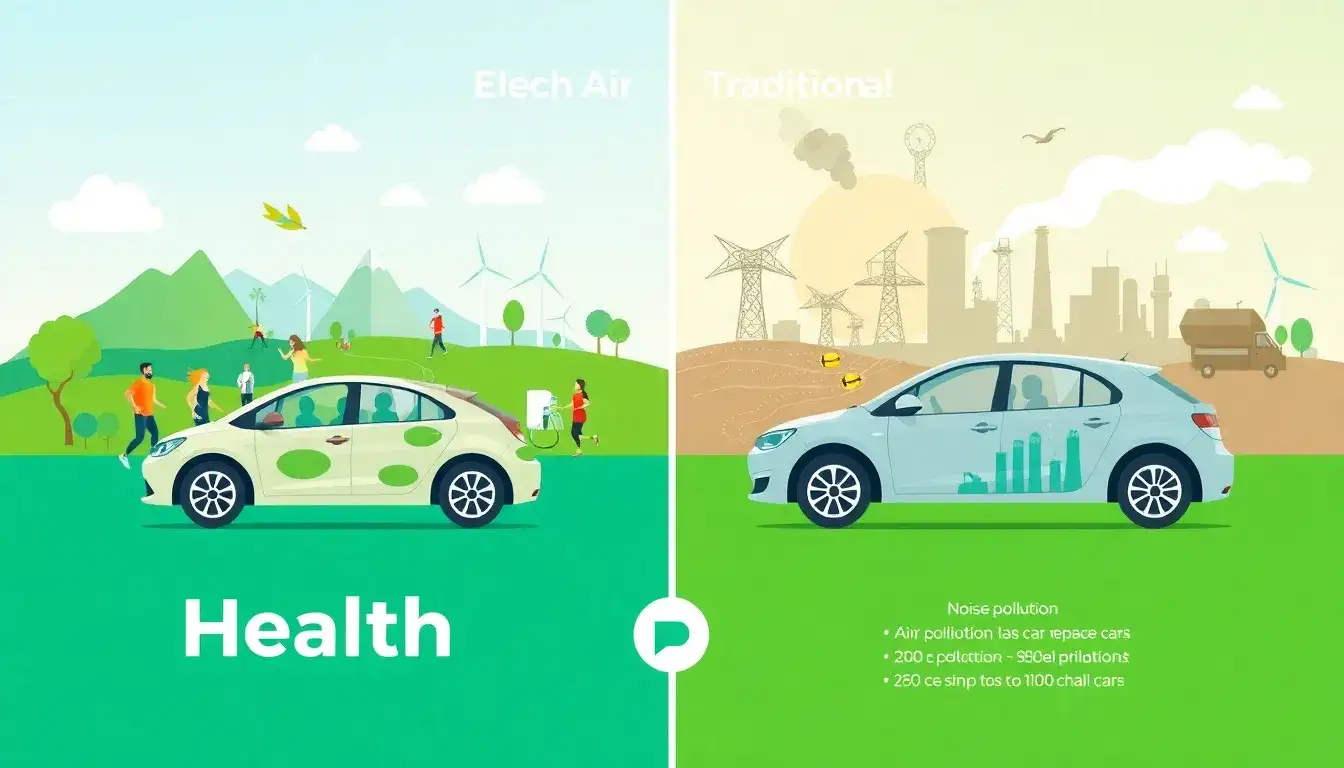
Electric vehicles (EVs) generally offer significant overall health benefits compared to traditional internal combustion engine (ICE) vehicles due to their lower emissions of air pollutants that contribute to respiratory and cardiovascular diseases.
Emissions and Air Quality Impact
- Traditional gasoline cars emit large quantities of carbon dioxide (CO2) and harmful pollutants such as ozone precursors and particulate matter directly from their tailpipes, which degrade air quality and worsen health conditions. In contrast, EVs produce zero tailpipe emissions.
- Although EV manufacturing initially results in higher emissions due to battery production, this is offset by the much lower emissions during vehicle operation. On average, gasoline cars emit about 410 grams of CO2 per mile over their lifespan, while EVs emit about 110 grams, resulting in roughly a 73% lifetime emissions reduction with EVs.
- It takes about 1.4 to 1.9 years for an EV to “break even” with a gasoline car in terms of carbon emissions, after which the EV life cycle emissions are lower.
Health Benefits from Reduced Air Pollution
- The shift to EVs reduces exposure to harmful pollutants like fine particulate matter (PM2.5) and ozone, both of which are linked to premature deaths and chronic health issues such as cardiovascular and respiratory diseases.
- Studies modeling EV adoption in the US estimate that a 25% replacement of conventional vehicles with EVs could prevent hundreds of premature deaths annually by reducing PM2.5 and ozone levels. For example, one study estimated 437 deaths avoided from PM2.5 reductions and 98 deaths avoided from reduced ozone.
- As EV adoption rises to 75% combined with clean energy sources for electricity generation, the health benefits increase significantly, avoiding large economic damages and improving community health. However, if EVs are charged predominantly with electricity from combustion-based power plants, health benefits are greatly diminished or can even become adverse, underscoring the need for clean electricity grids alongside EV adoption.
Impact on Disadvantaged Communities
- Air pollution disproportionately affects minorities and disadvantaged communities. Increasing EV adoption improves air quality in urban areas and thus contributes to reducing health disparities related to pollution exposure.
Summary
| Aspect | Electric Vehicles (EVs) | Gasoline Vehicles (ICE) |
|---|---|---|
| Tailpipe Emissions | Zero | High (ozone precursors, PM, CO2) |
| Lifecycle CO2 Emissions per mile | ~110 grams | ~410 grams |
| Time to Emissions Break-Even | 1.4 to 1.9 years | N/A |
| Health Impact | Reduced deaths from pollution | Increased deaths from pollution |
| Air Quality Benefits | Significant, especially with clean electricity | None |
| Impact on Disadvantaged Communities | Reduces pollution exposure | Disproportionately harms |
In conclusion, EVs markedly improve overall health impacts compared to traditional vehicles through substantial reductions in harmful air pollutants, with the greatest benefits realized when EVs are powered by clean energy sources. This leads to fewer pollution-related deaths and better air quality, especially benefiting vulnerable populations.
Original article by NenPower, If reposted, please credit the source: https://nenpower.com/blog/how-do-evs-compare-to-traditional-cars-in-terms-of-overall-health-impacts/

