

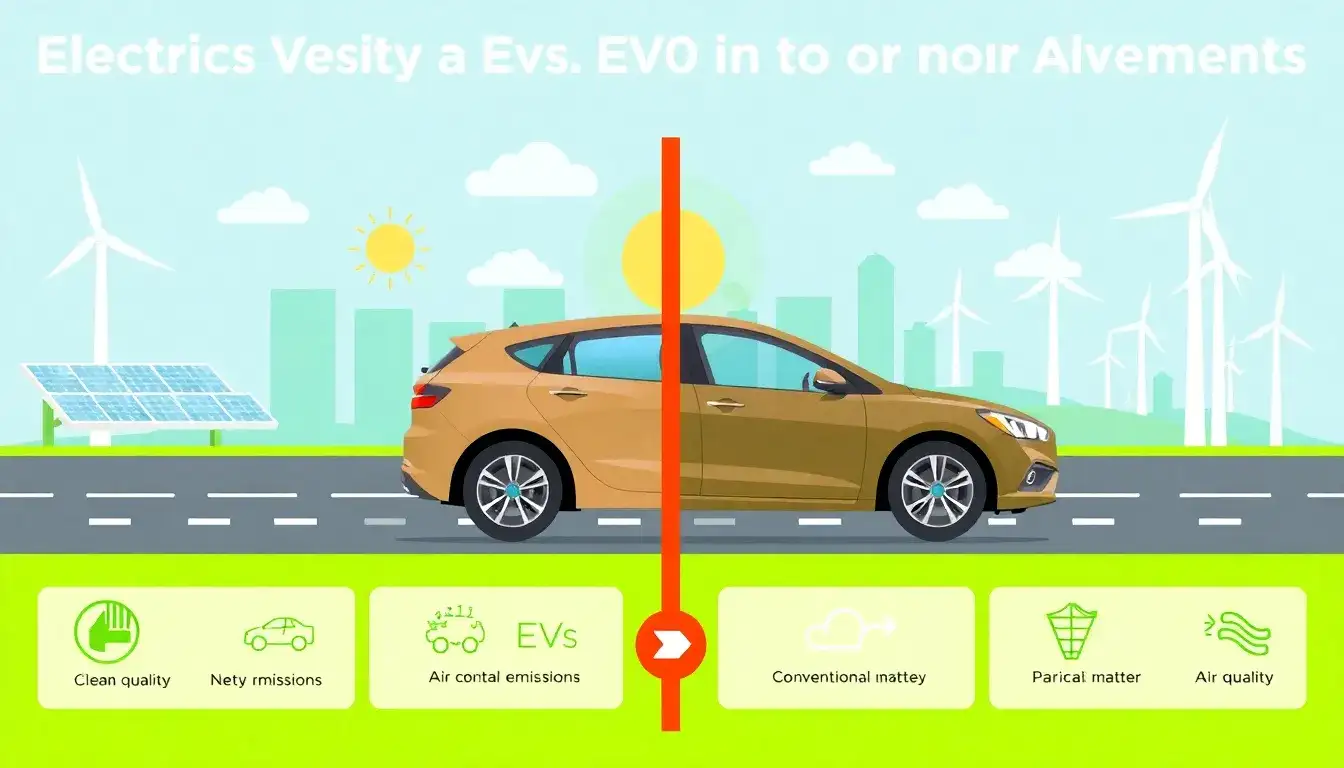
When comparing electric vehicles (EVs) to other clean energy solutions in terms of air quality improvement, several factors come into play. Here’s how EVs stack up against other options:
Electric Vehicles
- Basic Advantage: EVs produce zero tailpipe emissions, which is a significant advantage over traditional combustion engine vehicles. This means they do not emit pollutants like nitrogen oxides (NOx), carbon monoxide (CO), and hydrocarbons (HC) directly from the vehicle.
- Impact on Air Quality: Studies show that widespread adoption of EVs can improve air quality by reducing particulate matter (PM2.5 and PM10) and other pollutants. However, the extent of improvement depends on factors like the source of electricity used to charge the vehicles and the weight of the EVs.
- Regenerative Braking: Some EVs use regenerative braking, which can further reduce emissions by capturing kinetic energy and converting it back into electricity, thereby increasing efficiency.
Other Clean Energy Solutions
- Renewable Energy Sources:
- Solar and Wind Power: These sources can significantly reduce air pollution by displacing fossil fuels as energy sources. When used to generate electricity for EVs, they further enhance air quality improvements.
- Advantages: These options reduce both local and global emissions, as they do not produce pollutants during operation.
- Fuel Cells and Hydrogen Vehicles:
- Operation: Fuel cells convert chemical energy into electricity, producing only water and heat as byproducts. This makes them a clean alternative, similar to EVs, but with the potential for longer driving ranges without charging.
- Challenges: Hydrogen production is often energy-intensive and might rely on non-renewable energy sources unless derived from renewable sources (green hydrogen).
- Public Transport and Non-Motorized Options:
- Impact: Promoting public transport, cycling, and walking can reduce the number of vehicles on the road, leading to fewer emissions overall.
- Benefits: These options not only improve air quality but also contribute to reduced traffic congestion and healthier lifestyles.
Comparison Summary
- EVs vs. Traditional Vehicles: EVs are far superior in terms of air quality due to zero tailpipe emissions.
- EVs vs. Other Clean Energy Solutions: While EVs improve local air quality significantly, renewable energy sources like solar and wind provide broader environmental benefits by reducing emissions from energy generation. Fuel cells and hydrogen vehicles offer another clean alternative but face challenges in production and infrastructure.
- Comprehensive Approach: Combining EVs with renewable energy sources and non-motorized transport options can maximize air quality improvements across regions.
Overall, EVs are an important component of improving air quality when compared to traditional vehicles. However, integrating them with other clean energy solutions can provide comprehensive environmental benefits.
Original article by NenPower, If reposted, please credit the source: https://nenpower.com/blog/how-do-evs-compare-to-other-clean-energy-solutions-in-terms-of-air-quality-improvement/

