

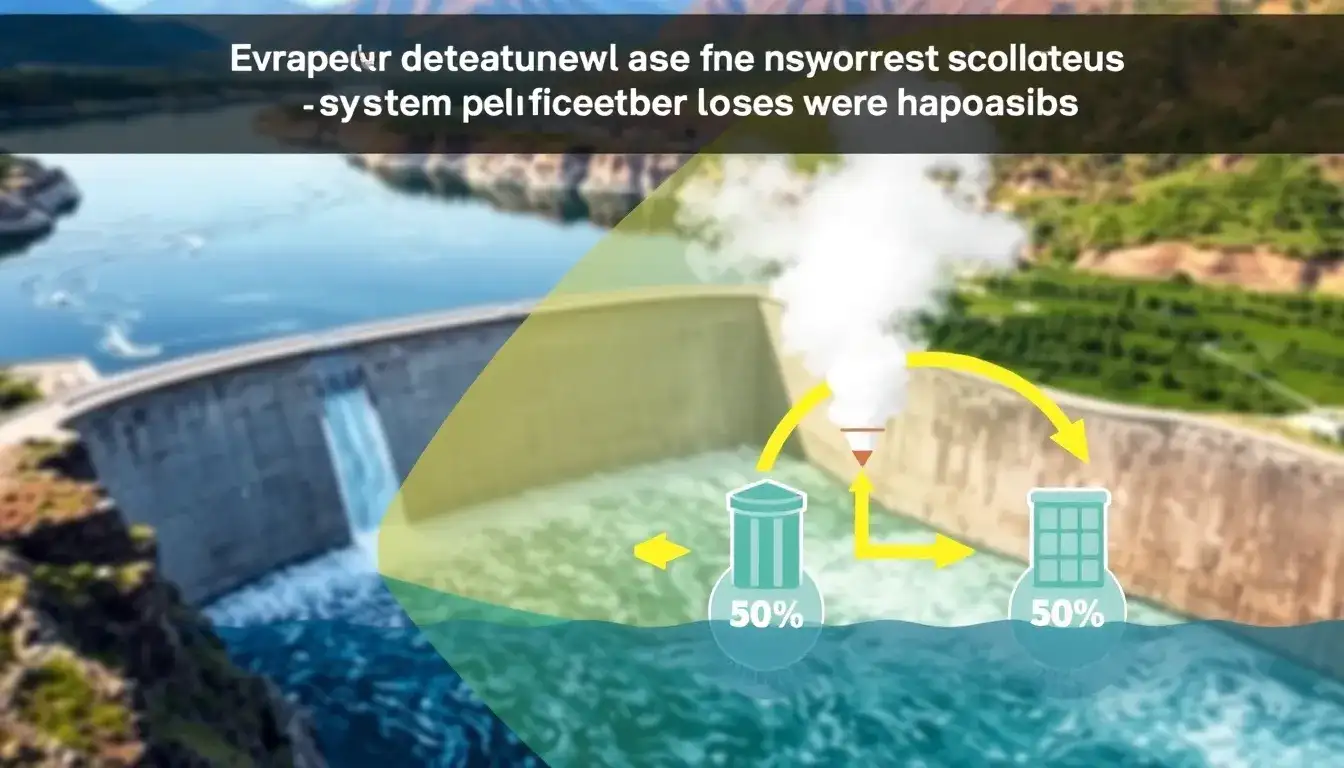
Evaporation losses in pumped hydroelectric energy storage (PHES) systems primarily affect water volume, which translates to reduced energy storage capacity and operational costs. Here’s how they impact efficiency:
- Direct energy loss: Evaporation reduces the volume of water available for energy generation. Since PHES relies on gravitational potential energy from water height differences, less water means reduced energy output during discharge.
- System efficiency factors:
- Round-trip efficiency (typically 75-85% for PHES) isn’t directly reduced by evaporation but requires additional energy to compensate for water losses through replenishment.
- Economic losses occur from purchasing replacement water and managing reservoir levels, particularly in arid regions where evaporation rates can reach hundreds of acre-feet annually.
- Environmental dependencies:
- Climate-driven variations: Evaporation rates differ significantly by location, with hotter/drier climates experiencing greater losses.
- Reservoir design: Open-loop systems (connected to natural waterways) may experience different evaporation patterns compared to closed-loop systems.
- Mitigation strategies:
- Geographic siting in cooler/humid regions.
- Floating covers or chemical monolayers (though rarely used due to scale challenges).
- Water reuse planning with local authorities to secure sustainable supplies.
While evaporation represents a smaller water loss compared to other industrial uses, its cumulative effect on long-term operations necessitates careful system design and water management strategies.
Original article by NenPower, If reposted, please credit the source: https://nenpower.com/blog/how-do-evaporation-losses-impact-the-overall-efficiency-of-pumped-hydroelectric-energy-storage/

