

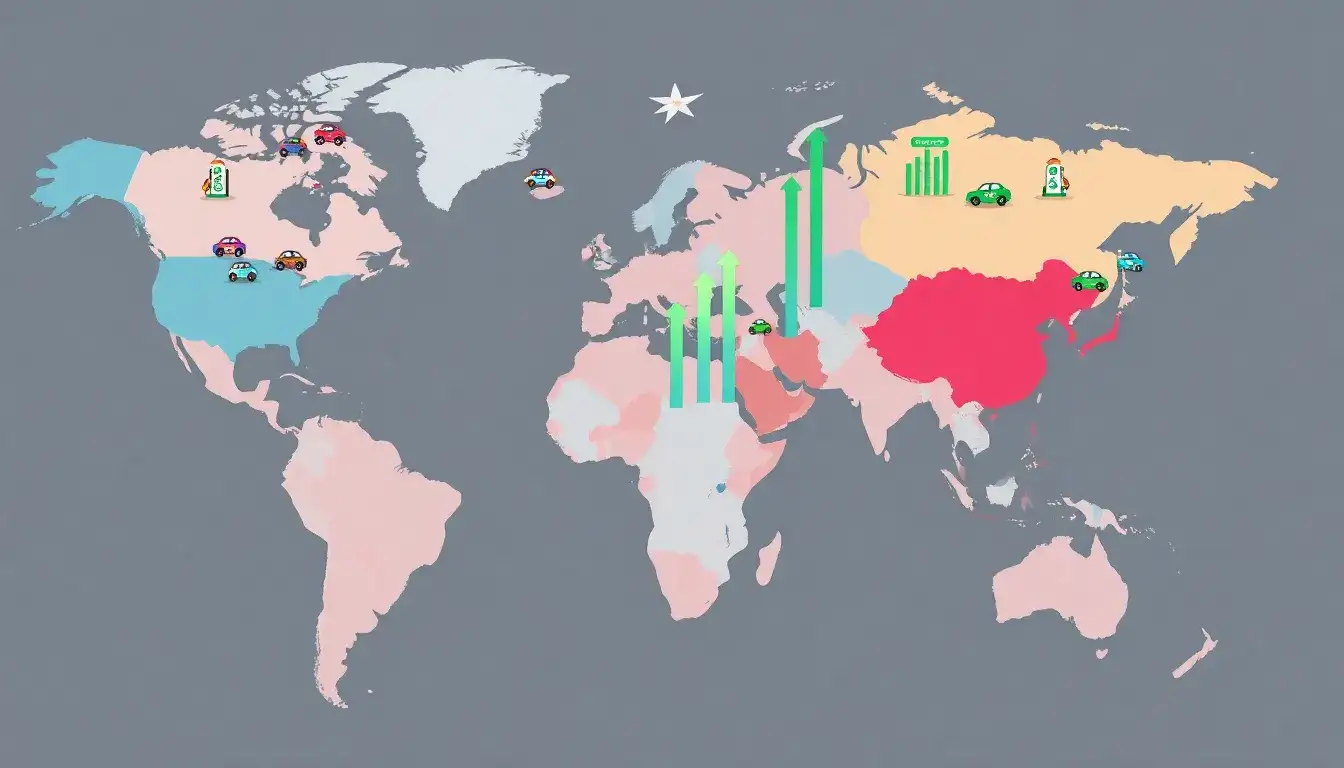
Electric vehicle (EV) subsidies significantly influence adoption rates across different regions by lowering the effective purchase cost and thereby encouraging more consumers to switch to EVs. The impact of these subsidies varies depending on the form of incentive, regional policies, and market dynamics.
Impact of EV Subsidies on Adoption Rates
Direct Purchase Rebates Increase EV Registrations
Studies show that direct purchase rebates are an effective financial incentive for increasing battery electric vehicle (BEV) adoption. Specifically, rebates have been found to increase new BEV registrations by about 8% for every thousand dollars of incentive offered, and between 2011 and 2015, these rebates lifted overall BEV registrations by roughly 11%. This suggests that direct subsidies at the point of sale provide a clear and tangible benefit to buyers, making EVs more affordable and attractive.
Tax Credits and Other Incentives
State income tax credits appear to have less statistically significant effects on EV adoption compared to direct rebates, possibly due to complexities in claiming them or limited temporal variation in their application. However, federally enacted tax credits, especially those allowing an immediate discount at the point of sale (such as the Clean Vehicle Tax Credit in the U.S.), have contributed to substantial growth in EV sales, helping triple sales since recent policy implementations like the Inflation Reduction Act.
Subsidies and Market Growth
The broader impact of subsidies extends beyond immediate adoption rates. They help stimulate manufacturing investments and supply chain development, such as battery production in North America, which further supports EV market growth and electrification trends. Moreover, economic analyses indicate that EV tax subsidies can yield significant societal benefits, with studies quantifying approximately $1.87 in benefits for every $1 spent by the government in the U.S., considering climate and industrial gains.
Elasticity of Demand Among Income Groups
Research focusing on low- and middle-income buyers reveals these groups to be highly responsive to subsidies. A decrease in the buy-price of EVs by 10% can increase demand by about 32-34%, illustrating that subsidies can be particularly effective for expanding EV uptake among price-sensitive consumers.
Regional Variations in Subsidy Impact
United States
Federal and state-level incentives have driven notable increases in EV adoption. The U.S. Inflation Reduction Act, with its sizable investments and point-of-sale credits, has been a particularly strong catalyst for growth, doubling manufacturing investments and increasing EV sales significantly.
Canada
Canadian EV adoption has seen rapid growth supported by purchase incentives, with about 1 in 7 cars sold being electric in recent years. However, the phase-out or exhaustion of subsidy programs has led to concerns about potential dips in adoption, mirroring European experiences where the removal of subsidies caused sales spikes just before expiration followed by significant declines (10-15 percentage points over the subsequent year).
Europe
Europe’s experience with subsidy phase-outs, such as in Germany, has demonstrated that removing incentives leads to temporary surges in sales (as buyers rush to benefit before subsidies end), followed by noticeable drops in adoption rates, reflecting the critical role subsidies play in maintaining EV market momentum.
Summary
- Direct rebates and point-of-sale credits are the most effective subsidies for boosting EV adoption, increasing registrations significantly in multiple studies.
- Tax credits can support adoption but may be less impactful if not easily accessible or immediate.
- Subsidies stimulate broader market and manufacturing growth, fostering a positive feedback loop for EV adoption.
- Low- and middle-income consumers respond strongly to subsidies, which is key for equitable adoption growth.
- Regions that phase out subsidies often see a decline in adoption rates, highlighting the importance of sustained incentives during the market transition.
Thus, EV subsidies serve as a critical driver of adoption rates, with direct financial incentives at purchase proving especially influential across diverse markets. The removal or reduction of these subsidies can sharply reverse adoption gains, underscoring their role in facilitating the transition to electric transportation.
Original article by NenPower, If reposted, please credit the source: https://nenpower.com/blog/how-do-ev-subsidies-impact-the-adoption-rates-in-different-regions/

