

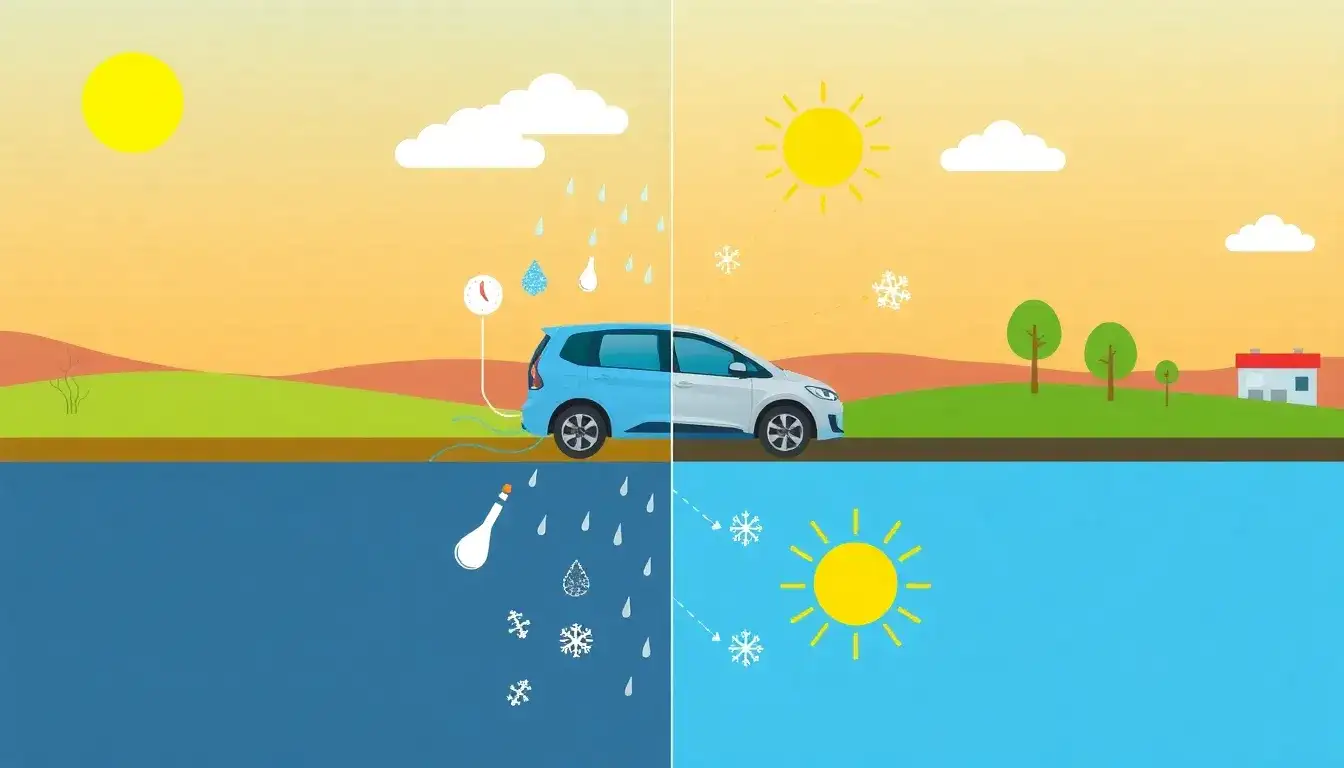
Electric vehicle (EV) range varies significantly with weather conditions, primarily influenced by temperature, but also by other factors such as wind, altitude, and road conditions.
Temperature Impact on EV Range
- Cold Weather: Cold temperatures have the most pronounced negative effect on EV range. As temperatures drop, EV range can decrease by up to 50% because more energy is required to heat the cabin and maintain battery temperature. For example, at around 5°F (-15°C), EVs may only achieve about 54% of their rated range, meaning a 250-mile rated range vehicle might only travel roughly 135 miles. This loss is mainly due to battery inefficiencies in cold and energy consumption for heating systems.
- Optimal Temperature: The ideal temperature for EV efficiency is about 70°F (21.5°C), where EVs can achieve slightly better than their rated range—on average about 15% better or even peak at 115% efficiency. At these temperatures, batteries operate most efficiently, and cabin heating or cooling demand is minimal.
- Hot Weather: High temperatures also reduce EV range, but the impact is less severe compared to cold weather. Heat causes battery management systems to use power to cool batteries and the cabin. This energy use leads to decreased range, though typically to a lesser degree than in cold conditions.
Other Weather Factors Affecting Range
- Wind: Wind can affect aerodynamic drag significantly. A strong headwind (e.g., 10 m/s) can reduce EV highway range by about 19%, while a tailwind of similar strength can boost range by roughly 6-7%. Side winds have a moderate impact. Wind influences the amount of energy needed to overcome air resistance.
- Altitude: Higher altitudes generally improve EV range due to lower air density, which reduces aerodynamic drag. However, road conditions associated with altitude, such as snow or rain, can increase rolling resistance, requiring more battery power and reducing range.
- Road Weather Conditions: Snow, ice, and wet roads increase rolling resistance, making the vehicle require more energy per mile, thus reducing range even if the battery performance isn’t directly affected.
- Additional Atmospheric Conditions: Factors such as solar radiation, air pressure, and humidity play minor roles compared to temperature and wind but can slightly influence range through effects on cabin heating/cooling and air density.
Summary
| Weather Condition | Effect on EV Range | Approximate Impact |
|---|---|---|
| Optimal Temperature (~70°F / 21.5°C) | Range can exceed rated range (up to ~115%) | +15% range over rated baseline |
| Cold Weather (~5°F / -15°C) | Battery and cabin heating drain energy | Up to 50% reduction in range |
| Hot Weather | Battery/cabin cooling uses energy | Moderate reduction, less than cold |
| Strong Headwind | Increased aerodynamic drag | Up to ~19% range reduction |
| Tailwind | Reduced aerodynamic drag | Up to ~6-7% range increase |
| High Altitude | Lower air density reduces drag | Favorable for range, but dependent on road conditions |
| Snow/Rain/Ice on Road | Increased rolling resistance | Higher energy use, reduces range |
In conclusion, EV range is highly sensitive to cold temperatures and wind conditions, with cold weather being the most significant factor that reduces driving range. Hot weather and road conditions also contribute to range variability but typically to a lesser extent than cold weather or strong headwinds.
Original article by NenPower, If reposted, please credit the source: https://nenpower.com/blog/how-do-ev-ranges-vary-by-weather-conditions/

