

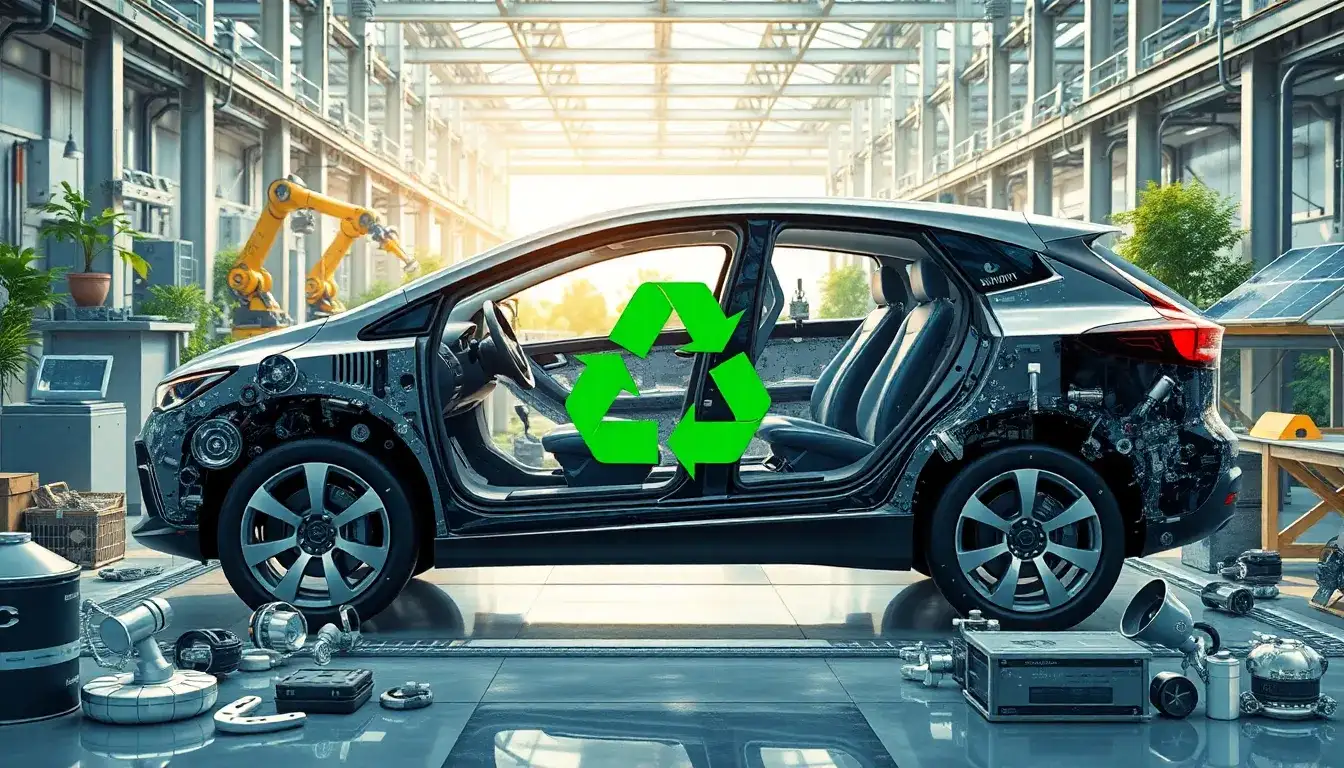
EV manufacturers ensure the recyclability of materials used in their vehicles through several strategies:
Strategies for Ensuring Recyclability
- Incorporation of Recycled Materials:
- Companies like Tesla and BMW are actively incorporating recycled materials into battery production. This involves recovering valuable metals from spent batteries and reintegrating them into new battery cells.
- Use of Sustainable Materials:
- Automakers are increasingly using recycled plastics in interior trim, underbody panels, and other components to reduce reliance on virgin plastics.
- Materials like aluminum and carbon fiber are chosen for their lightweight and recyclable properties, reducing environmental impact.
- Closed-Loop Recycling Systems:
- BMW has implemented a closed-loop recycling approach for battery materials, ensuring materials are continuously cycled back into production.
- Volkswagen aims for 90% battery recycling rates and plans for closed-loop systems at all battery plants.
- Collaboration with Recycling Companies:
- Companies partner with specialized recycling firms like Redwood Materials to develop efficient recycling technologies for lithium-ion batteries and other components.
- Eco-Design for End-of-Life Management:
- Manufacturers like Renault design vehicles with recyclability in mind, focusing on easy disassembly and reuse of materials.
These strategies collectively help EV manufacturers optimize material usage, minimize waste, and promote sustainability throughout the vehicle lifecycle.
Original article by NenPower, If reposted, please credit the source: https://nenpower.com/blog/how-do-ev-manufacturers-ensure-the-recyclability-of-materials-used-in-their-vehicles/

